
Nov. 20, 2026

19 Min read

Insurance

Share :


Most people buy insurance for peace of mind when an unexpected event occurs, and that support comes into play when you file a claim. In simple terms, an insurance claim is a formal request asking your insurance company to provide the financial coverage promised in your policy, whether for a medical emergency, a car accident, property damage, or the loss of a family breadwinner.
While buyers often spend considerable time comparing quotes, reading brochures, and selecting plans, they rarely look into how claims are actually processed and settled. This gap in understanding often leads to avoidable delays, repeated requests for extra documents, or even claim rejections when support is needed most.
This guide explains how insurance claims work in India, breaking down every step from the first intimation to final settlement. It covers the required documents for different policies, the key differences between cashless and reimbursement claims, common reasons for claim rejection, regulatory turnaround times, and the grievance redressal process if an issue arises.
Key factors behind claim disputes and rejections:
To understand how claims function under real-world pressure, consider two contrasting scenarios of families facing abrupt emergencies:
While a health emergency, a vehicle accident, and a life claim follow distinct administrative paths, the basic assessment principles remain consistent. The insurer confirms that the policy was active on the date of the incident, that the event falls within the scope of coverage, and that the claimed amount matches the policy limits. Understanding this evaluation process in advance turns what can feel like an intimidating hurdle into an orderly, manageable step.
In certain situations, such as early claims or cases involving notable discrepancies, the insurer may also verify whether material details were disclosed accurately when the policy was purchased. Routine claims with standard documentation, however, focus primarily on validating the incident and processing the settlement.
An insurance policy operates as a conditional policy: the purchaser pays fixed premiums at set intervals, and the underwriter assumes defined financial liabilities within explicit parameters. The claim is the administrative instrument that converts that dormant promise into a concrete financial disbursement.
| Term | Practical Meaning |
| Policyholder | The individual or entity who owns the policy and pays the scheduled premiums. |
| Insured | The specific person, asset, or liability covered against financial perils under the policy. |
| Nominee | The individual authorized to receive the policy payout upon the death of the insured, who holds the proceeds on behalf of the legal heirs unless qualified as a beneficial nominee. |
| Sum Insured / Sum Assured | The absolute financial ceiling that the underwriting firm agrees to pay out for covered losses under the policy terms. |
| Deductible | A pre-agreed upfront sum that the policyholder must absorb out-of-pocket before the insurer begins to pay. |
| Co-Payment | A mandatory cost-sharing clause specifying the fixed percentage of every admissible claim amount the policyholder must pay. |
| Waiting Period | A defined period post-purchase during which specified conditions, diseases, or treatments remain strictly excluded. |
| Exclusions | Explicit situations, medical conditions, perils, or events itemised in the policy that are not covered. |
Operational Insight: An insurance claim is never approved automatically simply because an intimation has been registered or an invoice attached. Every submission undergoes a structured assessment against technical covenants, policy riders, sub-limits, and regulatory rules, and that evaluation process is what separates an immediate claim release from an unexpected rejection.
All insurance activity across India operates under the statutory oversight of the Insurance Regulatory and Development Authority of India (IRDAI). The authority mandates rules regarding policyholder protection, turnaround benchmarks, and institutional grievance escalation frameworks.
| Stakeholder | Primary Operational Responsibility |
| Policyholder / Nominee | Initiates formal intimation, completes prescribed claim petitions, and furnishes all primary documentary proof. |
| Insurance Underwriter | Verifies risk parameters, assesses policy status and validity, authorises liability, and disburses approved payouts. |
| Third-Party Administrator (TPA) | Independent entity licensed by IRDAI to manage hospital processing for health insurance, desk audits, and cashless approvals. |
| Independent Licensed Surveyor | A qualified professional is deputed to physically assess the loss quantum, structural damage, and salvage values in motor and property claims. |
| Medical Scrutiny Team | Qualified physicians within TPAs or in-house desks who validate clinical necessity, active lines of treatment, and standard bill rates. |
| Empaneled Networks | Healthcare institutions and automotive repair facilities maintaining cashless service tie-ups directly with insurers. |
(Note: Pure term life, personal accident, and critical illness policies represent fixed-benefit policies rather than indemnity covers; they disburse predetermined policy lump sums upon the occurrence of a verified event, independent of variable invoice measures).
[ Incident / Loss Event Occurs ]
↓
[ Step 1: Immediate Intimation ] → Obtain Claim Reference Number (CRN)
↓
[ Step 2: Loss Mitigation ] → Protect remaining assets / clinical triage
↓
[ Step 3: Document Compilation ] → Gather original invoices, summaries & KYC
↓
[ Step 4: Verification & Audit ] → Surveyor loss assessment / TPA medical scrutiny
↓
[ Step 5: Claim Decision ] → Full Approval / Deductions Applied / Repudiation
↓
[ Step 6: Final Payout ] → Direct Cashless Clearing OR Bank Transfer (NEFT)
Intimate the Claim: Notify your insurer within 24 to 48 hours via their app or helpline, save the Claim Reference Number, and file an FIR if theft, collision, or third-party injury is involved.
Prevent Further Loss: Prioritize patient safety, avoid running damaged vehicles, photograph the scene, and secure remaining assets.
Submit Documents: Send the signed claim form, KYC records, original invoices, medical summaries, or police reports within 15 to 30 days.
Complete Verification: Coordinate with the surveyor for vehicle or property damage assessments, or ensure the hospital provides case records to the TPA.
Review the Decision: Check the settlement breakdown for approved amounts, standard deductions like co-pays or consumables, or the cited clause if rejected.
Receive Payout: Settle out-of-pocket consumables at the network desk for cashless claims, or verify the direct bank credit for reimbursement and life settlements.
Policy Parameters: Sum Insured = ₹5,00,000; Co-payment = 10% on admissible expenses; Room Rent Cap = No capping.
Gross Hospital Bill Incurred: ₹4,00,000 (following planned surgical treatment).
Non-Payable Deductions: ₹20,000 (unlisted consumables, hygiene packs, admin charges, registration fees).
Admissible Base Expense: ₹4,00,000 − ₹20,000 = ₹3,80,000.
Mandatory Co-Payment (10%): 10% of ₹3,80,000 = ₹38,000 (borne by the patient).
Insurer Payout: ₹3,80,000 − ₹38,000 = ₹3,42,000.
Total Out-of-Pocket Expense for Policyholder: ₹38,000 (co-pay) + ₹20,000 (consumables) = ₹58,000.
Disclaimer: This calculation is purely illustrative for educational purposes. Actual claim settlements depend on your specific policy terms, deductibles, co-pays, sub-limits, non-payable item deductions, and medical audit findings. Consult your insurer or policy document for exact coverage details.
Policy Parameters: Private vehicle collision; Comprehensive policy without Zero Depreciation add-on; Compulsory policy deductible = ₹1,000.
Authorized Garage Estimate: ₹40,000 total repair cost.
Estimate Breakdown: Metal sheet repairs & paint labor = ₹28,000; Plastic, rubber, and nylon replacement parts = ₹12,000.
Standard Regulatory Depreciation: Plastic, rubber, and nylon components attract a mandatory 50% regulatory depreciation deduction without an active zero-depreciation rider.
Depreciation Deduction: 50% of ₹12,000 = ₹6,000.
Net Payable Parts Cost: ₹12,000 − ₹6,000 = ₹6,000.
Approved Subtotal (Labor + Depreciated Parts): ₹28,000 + ₹6,000 = ₹34,000.
Compulsory Deductible Subtraction: ₹34,000 − ₹1,000 = ₹33,000.
Insurer Payout: ₹33,000.
Total Borne by Vehicle Owner: ₹6,000 (depreciation) + ₹1,000 (compulsory excess) = ₹7,000. (Note: A zero-depreciation add-on would have covered the ₹6,000 parts deduction, leaving only the ₹1,000 compulsory deductible).
Disclaimer: This calculation is purely illustrative for educational purposes. Actual claim settlements depend on your specific policy terms, deductibles, co-pays, sub-limits, non-payable item deductions, and medical audit findings. Consult your insurer or policy document for exact coverage details.
| Insurance Class | Mandatory Paperwork Required for Processing |
| Common to All Claims |
|
| Health Insurance Claims |
|
| Life Insurance (Death Benefit) |
|
| Motor Insurance Claims |
|
| Property & Home Claims |
|
| Travel Insurance Claims |
|
| Root Cause of Repudiation | Underwriting Reality | Actionable Mitigation Strategy |
| Non-Disclosure / Material Misstatement | Concealing chronic ailments (hypertension, diabetes), lifestyle habits (tobacco, alcohol), or prior surgeries at proposal gives insurers legal grounds to void the policy for breach of utmost good faith. | Maintain complete, transparent disclosure during the proposal stage; never permit intermediaries to complete health declarations without your direct review. |
| Lapsed Policy & Unpaid Premiums | Submitting a claim after the policy has lapsed past its statutory grace period renders the policy void, releasing the underwriter from liability. | Establish automated bank mandates (e-NACH/auto-debit) and maintain active calendar alerts ahead of renewal dates. |
| Active Waiting Periods | Treatment claims filed for pre-existing diseases or specific scheduled conditions (e.g., hernia, joint replacement, cataract) during initial or specific waiting periods are inadmissible. | Review policy schedules for 1-year, 2-year, or 4-year waiting periods; verify coverage terms prior to scheduling elective interventions. |
| Explicit policy Exclusions | Expenses for cosmetic enhancements, intentional self-injury, obesity treatments, unproven therapies, or accidents caused under the influence of alcohol or driving without a valid license fall outside policy terms. | Thoroughly review the explicit exclusion annexure in your policy document to avoid filing claims for non-payable events. |
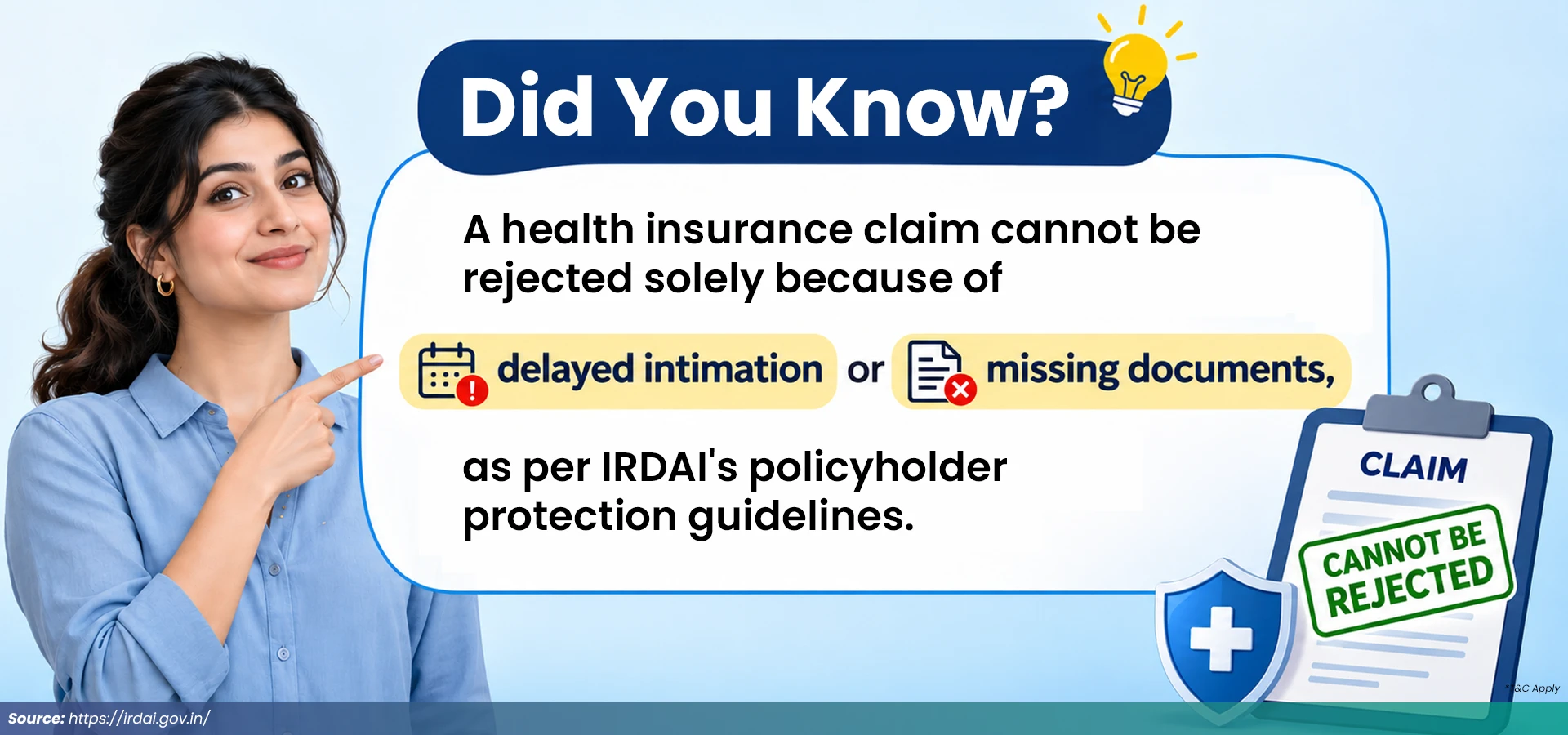
| Delayed Intimation of Loss | Exceeding the mandated 24- to 72-hour notification timeline prevents the insurer from verifying damage or conducting timely clinical audits, often resulting in denial. | Notify the insurer immediately via electronic or mobile channels; establish a timestamped digital paper trail as soon as the event occurs. |
| Missing or Discrepant Documentation | Incomplete discharge summaries, missing original invoices, altered bills, or discrepancies in patient or owner identity trigger administrative holds and potential denial. | Maintain complete physical and digital dossiers of all hospital and repair papers; verify that names and dates match across all records. |
| Lack of Medical Necessity | Hospitalizations conducted exclusively for diagnostic evaluation, health screening, or recovery without an active line of medical management are routinely rejected by medical desks. | Ensure that hospital admissions are supported by formal attending physician orders that explicitly state clinical necessity for in-patient care. |
| Fraudulent or Inflated Claims | Exaggerated repair bills, fabricated pharmacy receipts, or staged accident circumstances lead to immediate repudiation, policy cancellation, and possible legal prosecution. | Ensure all submitted repair invoices and medical claims accurately reflect actual services rendered and approved pricing structures. |
[ Claim Repudiation Letter Received ]
↓
[ Level 1: Analyze Written Grounds & Policy Clauses ]
↓
[ Level 2: Submit Formal Written Appeal to Company GRO ] (Resolution within 30 days)
↓
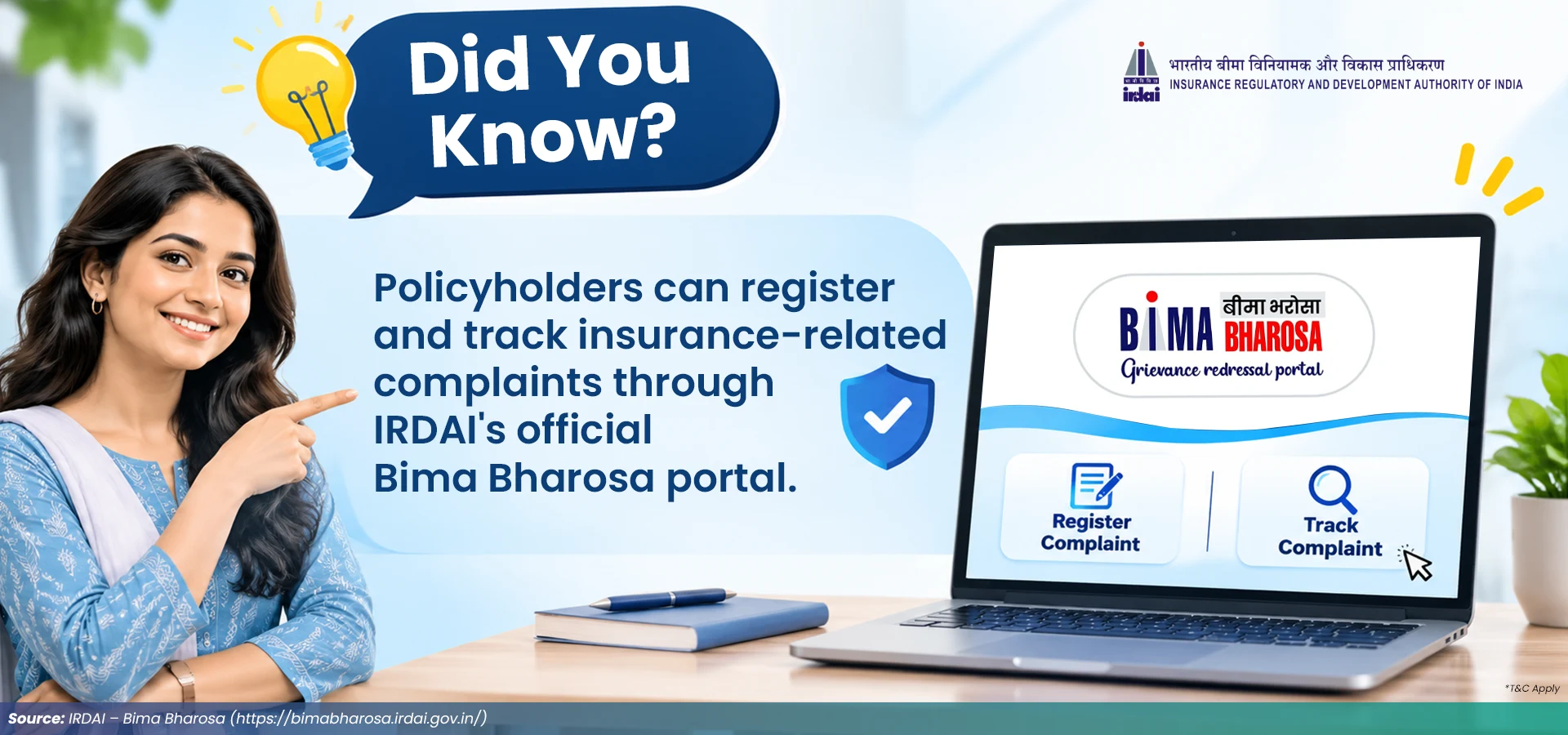
[ Level 3: Escalate via IRDAI Bima Bharosa Portal ]
↓
[ Level 4: File Complaint with Regional Insurance Ombudsman ] (Claims up to ₹50 Lakh)
↓
[ Level 5: Consumer Disputes Commission / Civil Court ]
IRDAI sets strict operational turnaround benchmarks to protect consumers from unnecessary administrative delays:
| Claim Category | Mandatory Regulatory Benchmark |
| Life Insurance Claims | Must be settled within 30 days of receiving all necessary documents. If an investigation is required, it must be initiated promptly and completed within 90 days, with final claim determination completed within 30 days thereafter. |
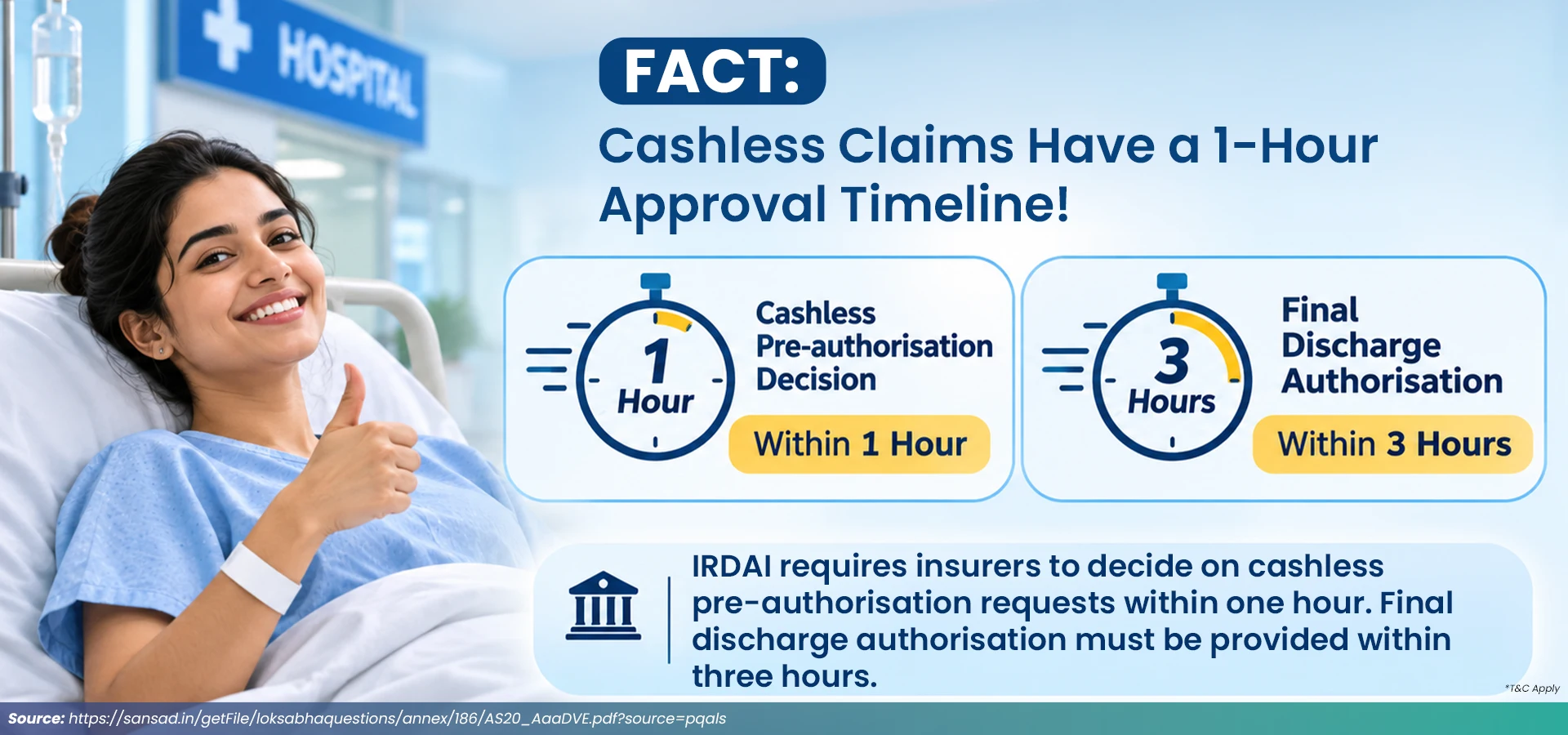
| Cashless Health Authorizations | Initial emergency pre-authorization decisions are typically expected within a few hours of request. Final discharge clearances must be processed promptly upon receiving the finalized hospital bill and summary. |
| Health Reimbursement Claims | Must be evaluated and settled within 30 days from the date the last required evidentiary document is formally submitted to the insurer or TPA. |
| Motor & Property Claims | Deputed surveyors must submit their loss assessment reports within 30 days of appointment. Insurers must issue settlement approval and disburse payments within 30 days of receiving the final report and supporting records. |
Statutory Penal Interest: If an insurer delays settlement of an approved claim beyond the mandated regulatory deadlines, it is required by law to pay penal interest on the final amount—typically calculated at 2% above the prevailing bank rate—for the entire duration of the delay.
| Assessment Parameter | Cashless Settlement Mechanism | Standard Reimbursement Mechanism |
| Primary Payor at Service | The underwriter settles approved expenses directly with the network provider. | The policyholder pays the complete invoice upfront at discharge or repair completion. |
| Facility Selection | Strictly restricted to empaneled network hospitals or accredited auto garages. | Accessible at any registered healthcare facility or licensed automotive repair workshop. |
| Upfront Out-of-Pocket Expense | Limited to non-payable consumables, policy deductibles, co-pays, and sub-limit caps. | The policyholder must fund 100% of the incurred invoice initially before seeking recovery. |
| Pre-Authorization Requirement | Mandatory formal pre-authorization required prior to planned interventions. | Not required; standard loss notification is issued during or immediately after the event. |
| Claimant Paperwork Burden | Primarily coordinated between the provider’s billing desk and the insurer/TPA. | The claimant must preserve, assemble, self-attest, and submit every original physical document. |
| Settlement Clearance Timing | Completed directly at the point of hospital discharge or vehicle release. | Disbursed via electronic bank transfer (NEFT) following multi-stage document scrutiny. |
| Stage / Channel | Operational Mechanism | Purpose & Expected Milestone |
| Identifier Generation | Claim Reference Number (CRN) | The unique tracking code generated during initial loss intimation, required for every query. |
| Digital Channel: Web Portal | Insurer / TPA Official Website | Enter the CRN and policy number under the “Track Claim” section for live status logs. |
| Digital Channel: Mobile App | Provider Self-Service Application | Real-time tracking dashboard with in-app notifications and document re-upload features. |
| Assisted Channel: Call Center | 24/7 Dedicated Support Helpline | Phone support to check claim status by verifying identity and quoting the CRN. |
| Assisted Channel: Physical Desk | Local Branch / Facility Helpdesk | In-person follow-up at the branch office or the hospital/garage insurance coordination desk. |
| Milestone 1 | Claim Registered & Logged | Initial loss intimation is acknowledged and formal claim file is opened in the system. |
| Milestone 2 | Under Technical / Medical Review | Clinical audit desk (health) or licensed surveyor (motor/property) assesses admissibility and quantum. |
| Milestone 3 | Additional Information Requested | The insurer issues an administrative query for missing invoices, reports, or KYC documentation. |
| Milestone 4 | Claim Determination / Approved | Scrutiny concludes; the underwriter issues approval (full or partial) or a formal repudiation notice. |
| Milestone 5 | Disbursement / Settlement | Approved funds are released via electronic bank transfer (NEFT) or settled directly with the network provider. |
Navigating insurance jargon, policy riders, and complex claim protocols shouldn’t be a burden you carry alone during an emergency. When you secure your insurance through Finkeda, you get more than just a policy you gain a dedicated claims partner standing firmly in your corner. From helping you choose the right coverage with transparent terms to actively handholding you through hospital pre-authorizations, surveyor coordination, paperwork verification, and dispute resolution, our expert claim support team works relentlessly to ensure your claims are processed smoothly and without unnecessary deductions. Through Finkeda by your side, you and your family can focus entirely on recovery and peace of mind, knowing that your financial safety net is managed by professionals who care.
An insurance policy’s true value is ultimately proven at the claims desk. While insurance policies and regulatory frameworks can seem complicated, a clear understanding of the claims lifecycle helps policyholders navigate unexpected emergencies with confidence.
By intimating claims promptly, maintaining organized medical and financial records, understanding policy sub-limits, and choosing network facilities whenever practical, you can dramatically reduce processing delays and avoid unexpected claim disputes. When disagreements do arise, Indian insurance regulations offer clear escalation pathways—through company grievance desks, online portals, and the Insurance Ombudsman—to ensure policyholders have access to fair, transparent dispute resolution.
Taking the time to review your policy terms, understand documentation requirements, and share claim procedures with your family today ensures that your coverage provides reliable financial support when you need it most.
A formal request by a policyholder or nominee asking the insurer to pay for a covered loss or emergency.
Regulated by the IRDAI, it operates on utmost good faith and loss verification. You report the incident, submit proof, the insurer or surveyor assesses the loss, and approved funds are paid out.
Intimate: Inform the insurer immediately to get a Claim Reference Number (CRN).
Mitigate: Prevent further damage and prioritise emergency care.
Submit: File the completed claim form with original bills, reports, and KYC.
Scrutinise: The insurer, TPA, or surveyor verifies loss and medical necessity.
Decide: Claim is approved, partially settled, or repudiated.
Disburse: Payout via direct cashless discharge or bank transfer.
Common: Duly filled claim form, policy copy, KYC proof, and a cancelled cheque.
Health: Hospital discharge summary, final itemized bills, prescriptions, and diagnostic reports.
Life: Original policy, death certificate, nominee KYC, and treating doctor’s statement (plus FIR/postmortem for accidents).
Motor: RC copy, driver’s license, repair estimate, damage photos, and FIR (for theft/third-party damage).
Life: Death claims, maturity claims, survival benefits, and riders (disability/critical illness).
Health: Inpatient hospitalisation, day-care procedures, pre/post-hospitalization, and critical illness lump sums.
Motor: Own-damage (vehicle repair), third-party liability (mandatory), and total loss/theft.
Other: Property/fire, travel delay/baggage loss, and personal accident covers.
Concealing past medical conditions or habits (non-disclosure).
Policy lapse due to unpaid premiums.
Claims filed within active waiting periods.
Uncovered expenses listed under explicit policy exclusions.
Delayed intimation or missing/inconsistent paperwork.
Lack of documented clinical necessity for hospitalisation.
Life: Within 30 days of receiving all documents (investigations take up to 90 days).
Cashless Health: Initial approval in a few hours; discharge clearance on receiving the final bill.
Health Reimbursement: Within 30 days of final document submission.
Motor/Property: Within 30 days of receiving the surveyor’s loss report.
Note: Delays past IRDAI timelines attract penal interest at 2% above the bank rate.
Cashless: Insurer pays the empaneled hospital or garage directly; you pay only non-covered items, deductibles, and co-pays.
Reimbursement: You pay the full bill upfront out-of-pocket at any registered facility and get eligible costs refunded via bank transfer after document review.
Quote your Claim Reference Number (CRN) on the insurer’s website portal, mobile app, 24/7 call center, or directly at the hospital/garage insurance desk.
(Finkeda Tip: If an insurer stalls past statutory deadlines, escalate step-by-step: first to the company’s GRO, then via IRDAI’s Bima Bharosa portal, and finally to the Insurance Ombudsman.)
Disclaimer: This guide is prepared solely for educational and informational purposes and does not constitute formal legal, financial, underwriting, or healthcare advisory services. Insurance policies, procedural requirements, exclusion clauses, deductible provisions, co-payment rules, and regulatory turnaround standards vary significantly across insurance providers, individual products, and periodic regulatory updates issued by the Insurance Regulatory and Development Authority of India (IRDAI). Numerical scenarios, calculation models, and operational situations presented throughout this guide are entirely hypothetical and are provided solely to explain operational principles. Actual settlement amounts depend entirely on specific policy terms, independent surveyor findings, clinical audits, and the terms of the underlying policy. Filing an insurance claim does not guarantee financial approval or full reimbursement. Policyholders are advised to review their policy documents thoroughly, confirm current claims protocols directly with their insurer, and consult licensed insurance advisors or legal professionals before making formal policy decisions.
Share :
Like:
0