
Sep. 04, 2026

12 Min read

Travel

Share :


If you’ve ever organized a corporate retreat, you know that choosing a location is often the easiest part. The real challenge is coordinating flight schedules, hotel room blocks, ground transportation, and the event agenda for a group that could range from a small team of 14 to a large, multi-city gathering of 500 employees. On a management meeting slide, a three-day offsite looks simple, but in reality, airline seats are scarce during peak travel times, hotel departments need weeks to reserve banquet halls and conference rooms, transportation vendors need headcounts and arrival times for every flight, and an events team needs all of these details before they can book.
This blog covers how companies can organize corporate travel, why using one dedicated, responsible corporate travel booking partner saves money and sanity versus planning with multiple vendors, and what happens when planning is either started too late or distributed among too many people.

Managing corporate group travel requires a disciplined operational framework from flight booking strategies and hotel coordination to realistic planning timelines and common pitfall management. This article breaks down the essential principles of executing seamless corporate travel, evaluating whether to manage logistics in-house or through a single specialized partner.
Once the core logistics model is established, the article examines how these principles apply to real-world programs with strict budgets and deadlines. Three distinct case studies show how these operational rules work in practice:
But one thing remains the same:
Great corporate travel doesn’t happen by chance. It’s coordinated.
Then you can continue with:
Flights → Stays → Transfers → Experiences → One Seamless Plan
The guide concludes with practical navigation tips based on your team’s planning stage and answers the most frequently asked questions about group travel execution. If you already have a destination and headcount, you can jump directly to the sections on ground coordination or common challenges; otherwise, start from the beginning to build a complete end-to-end strategy.
It is tempting to assume that booking travel for a group of employees is simply the same process as booking a personal holiday, just repeated many times over, but anyone who has tried to manage even a modest group of thirty people will tell you that this assumption falls apart almost immediately, because when you have multiple travelers who must arrive together, stay in the same property, and follow a shared schedule of meetings and events, every decision has a ripple effect on everyone else. A single traveler missing a connecting flight is an inconvenience, but forty employees who need to check into the same resort within two hours for a welcome dinner that has been paid for and scheduled with an entertainment vendor is a logistical nightmare.
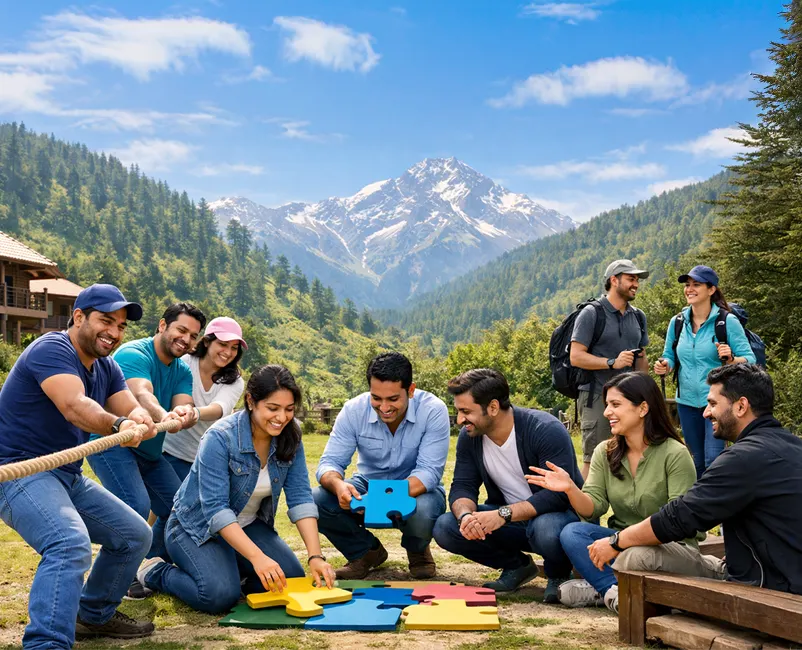
This is why corporate retreat planning has developed its own practices, vendor relationships, and contingency approaches that go beyond what a general travel agent or DIY booking approach can offer. Finkeda brings this specialized approach to every program it handles. Whether it is a MICE event, a leadership retreat, an annual offsite, a dealer meet, an incentive trip for top performers, a product launch or a reward trip for high achieving employees, the travel and event plans must work together.
Companies often make the costly mistake of booking flights individually rather than in a block when organizing group travel. Logistics managers often don’t know about group fare structures or don’t have time to negotiate them before retreat. HR or administration often arranges travel, venue, event vendor, and internal budget approvals. Sending employees a list of dates and letting them book tickets through their preferred channel is easiest under pressure. It may seem efficient in the short term because it removes one task from an already full plate, but it almost always costs the company more than a single block booking because every employee pays the airline’s website fare at the time they book, with no group discount, negotiated flexibility, or fare protection. Reschedules or cancels flights. It also fragments the company’s picture because there is no single record of who is confirmed on which flight, no easy way to track last-minute changes, and no leverage to negotiate with the airline. Group and series fare arrangements from Finkeda aim to address this inevitable failure.
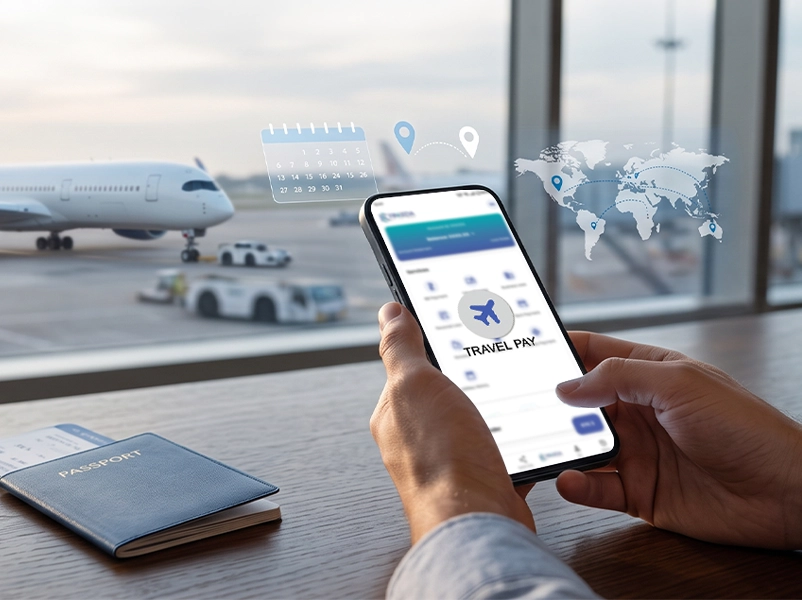
When it comes to genuine corporate flight booking, the smarter and more cost-effective approach usually involves several specific tactics working together rather than any single trick, and this is the approach Finkeda applies as standard practice for every group it books. Group airfare and series fare arrangements, for instance, allow a company to lock in a discounted block of seats across one or more flights well in advance, rather than paying whatever the going rate happens to be on the day each individual employee decides to book, and such arrangements alone can make a meaningful difference to the overall travel budget when you are moving seventy-five or more people at once.
After a certain group size, direct airline negotiations become worthwhile because airlines are often willing to offer better rates, more flexible cancellation terms, or additional baggage allowances in exchange for a large block booking, which is rarely available to someone booking through a standard retail channel. Finkeda maintains ongoing airline relationships to secure these terms. Flexible group policies, especially name changes where the airline allows it, are just as important because any meaningful-sized group will have a few last-minute substitutions. Whether due to an employee falling ill, a schedule conflict emerging, or someone being pulled onto a different project at the last moment, and without flexible policies in place, each of these small disruptions can turn into an expensive change fee or, worse, a completely wasted ticket.
Early flight blocking becomes especially important for destinations that see high seasonal demand, whether that is a domestic favorite like Goa, Kerala, or Kashmir during peak tourist months or an international destination like Bali, Thailand, or Dubai, where flight capacity on popular routes can fill up surprisingly quickly, and Finkeda typically begins this blocking process as early as the destination is confirmed. All of this is really what separates genuine b2b flight booking from ordinary retail travel planning, because the entire approach is built around predictability, volume, and long-term vendor relationships rather than the one-off convenience that a typical leisure traveler is looking for.
A professional group travel management team like Finkeda adds value by coordinating flights, hotels, and ground transport to work as a single, continuous experience rather than three separate transactions around the same dates. Finkeda’s team meets with the company to determine dates, budget ceilings, headcount, and any special needs like dietary restrictions or accessibility. After budget planning, the team suggests realistic destinations based on the budget and calendar, and once a destination is chosen, flight blocking and hotel confirmation often happen simultaneously because hotel and flight availability decreases with time.
For international programs, visa processing has to be layered in at this stage as well, since visa timelines can vary dramatically depending on the destination country and the passport profile of the traveling group, and this is one of the areas where Finkeda’s documentation support tends to save companies the most time. Once flights and hotels are locked in, attention shifts to ground transportation, event planning, and eventually tour execution itself, with a post-event feedback stage at the very end that is often skipped by companies trying to save time, even though it is one of the most valuable steps for improving the next retreat.
Specifically for hotels, a real corporate booking entails a lot more than just reserving a block of rooms. Meeting rooms, conference facilities, banquet spaces, early check-in/late check-out, negotiating travel schedules so employees don’t have to wait in the lobby for hours, and, most importantly, a unified billing arrangement to keep the finance team from having to figure it all out.
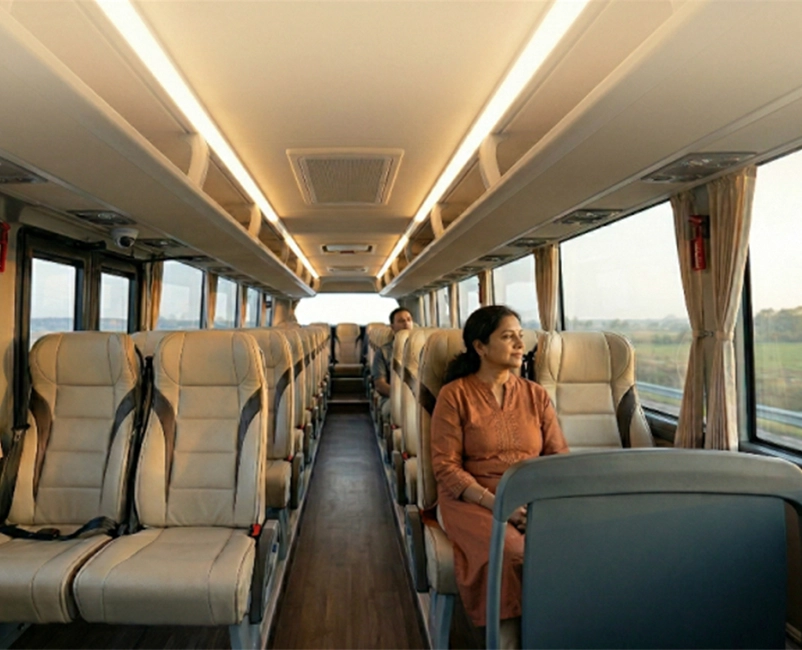
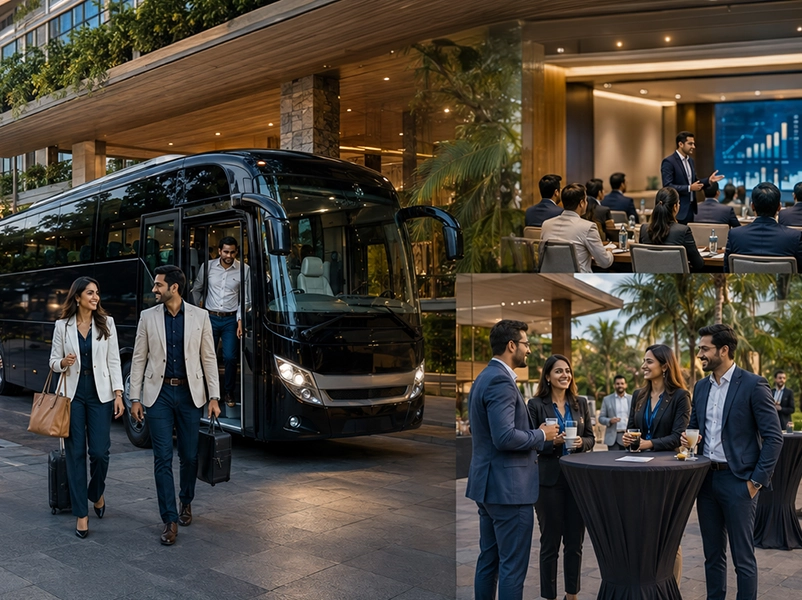
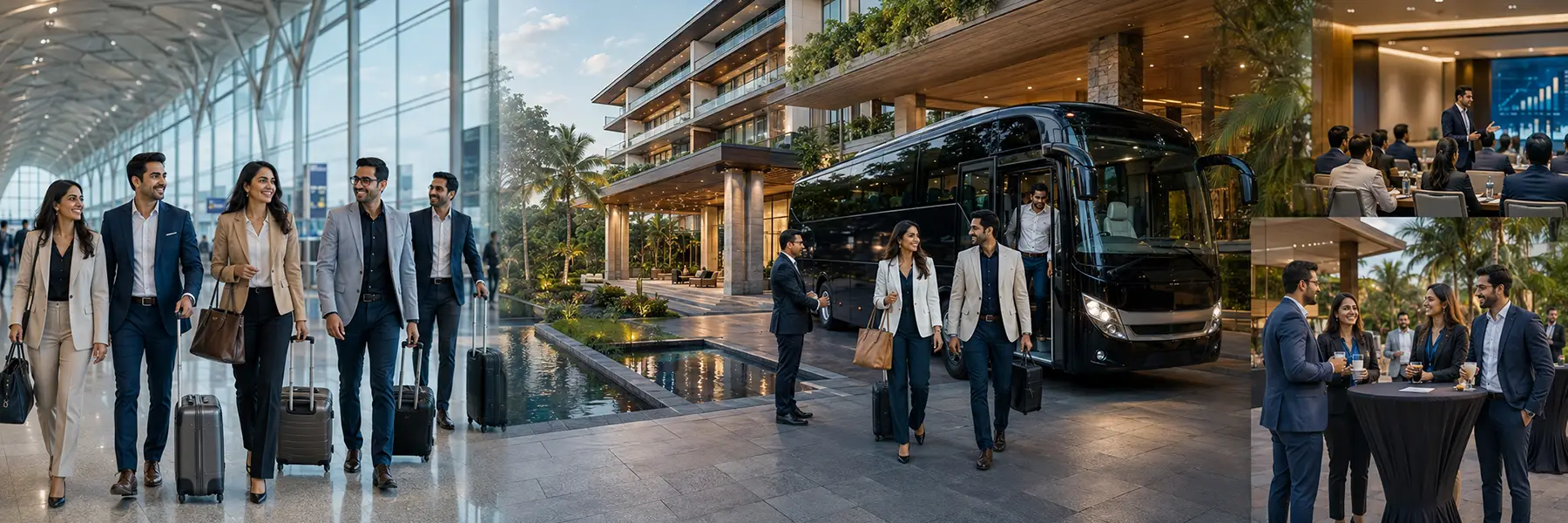
Ground services are what ultimately stitch the entire experience together on the actual days of the retreat, and this usually includes airport transfers timed precisely against flight arrival windows; luxury coaches for moving larger groups efficiently between the airport, hotel, and event venues; VIP vehicles reserved specifically for senior leadership or key guests; shuttle services running on a loop between different parts of a resort or between multiple properties; and meet-and-assist staff positioned at the airport itself to make sure that employees are guided smoothly from the moment they land, rather than left to figure out transport on their own in an unfamiliar city or country, a level of ground coordination that Finkeda builds into every itinerary by default.
The honest answer to how much lead time a company needs really depends on the size of the group and whether the retreat is domestic or international, but there are some reasonably reliable benchmarks that Finkeda recommends based on the programs it has run in the past. For smaller groups, roughly in the range of ten to twenty-five people, a lead time of about four to six weeks is usually sufficient, since smaller room blocks and smaller flight allocations are easier for hotels and airlines to accommodate even on relatively short notice.
Once you move into medium-sized groups of twenty-five to seventy-five people, that window really needs to stretch closer to eight or ten weeks, particularly if the retreat involves securing dedicated meeting rooms or banquet spaces at the hotel, since these facilities tend to book up faster than standard guest rooms and often require separate confirmation from the property’s events team, something Finkeda tracks closely for every medium-sized program.
For large groups in excess of seventy-five people, and especially anything close to the five hundred mark, the planning window really should extend out to three or four months at least, and this becomes even more critical for international destinations like Bali, Thailand, Vietnam, Singapore, Malaysia, or destinations across Europe, where visa processing timelines, seasonal flight capacity constraints, and hotel availability during peak periods can all combine to make last-minute planning truly risky rather than just inconvenient, which is why Finkeda always pushes for an early planning start on programs of this scale.
When flights, hotels, and ground transport are each booked from three or four totally separate vendors, there is a very specific kind of chaos that can emerge. When something goes wrong with any part of the trip, such as a delayed flight, an overbooked hotel, or a late-arriving coach, there is no single point of accountability to manage the disruption and adjust the rest of the schedule. Instead, the company’s own internal team ends up scrambling to call each vendor separately while employees wait around not knowing what is happening.
Working with a single corporate travel booking partner like Finkeda, which offers genuine b2b tour packages, usually solves this problem directly because it comes with a dedicated account manager who understands the entire program and an on-ground tour manager who is present during the retreat and can make real-time decisions if something changes. This setup typically includes 24-hour emergency support so a problem that arises at 2 a.m. in a foreign city does not have to wait until business hours back home to be addressed, as well as real-time coordination between all trip components.
Moreover, having one accountable partner, like Finkeda, often results in much cleaner documentation, as travel itineraries, visa paperwork, insurance documents, hotel vouchers, flight tickets, and emergency contact lists can be consolidated in one package instead of getting lost in a multitude of email threads and vendor portals. Also, this partner is typically able to manage risk effectively, including travel insurance, medical support arrangements, and structured responses to flight disruptions, rather than leaving the company to handle crisis management as it arises.
Due to the importance of transport and accommodation running on time, Finkeda’s single coordinated approach is especially useful during the actual event portions of a retreat, such as a gala dinner, awards night, structured team-building activity, or full conference setup with audio-visual support, branding elements, entertainment, and cultural performances.
Despite the best planning process, there are a handful of recurring challenges that tend to show up over and over again across corporate group travel programs, and Finkeda’s teams are trained to flag these early on, rather than allow them to surface as surprises later on. Perhaps the most common one is budget unpredictability, as final costs can vary a lot depending on what destination is chosen, the specific travel dates, the overall group size, the category of hotel, availability of flights on desired dates, and event requirements, so a budget set months in advance can change once real quotes arrive.
Most group retreats have at least a few employees drop out or join last minute, which can be costly without flexible airline and hotel policies. Group contracts with Finkeda include flexibility from the start. Visa delays can affect international programs, especially in destinations with varied embassy workload or documentation requirements.
When it comes down to it, one of the most common causes of failure is a lack of proper ground execution. Even the most meticulously planned itinerary can fall apart in the blink of an eye if there isn’t a devoted tour manager to deal with hiccups like a late coach, a room block problem at check-in, or an unresolved scheduling conflict between two sections of the program.

Specific Finkeda programs demonstrate how these principles apply to a group, budget, and timeframe. A three- to four-night Goa offsite for 180 employees focused on relaxation, informal team bonding, and a loose schedule. Event choreography was less important than ensuring room blocks, beach access, and evening entertainment without employee intervention.

A Jim Corbett reward and recognition trip for 50 people focused on structured recognition ceremonies. Nature-based experiences made hotel banquet evening program timing more important than for the larger, more casual Goa program.

A third example, a sales meet–style group travel program in Rishikesh for 40 participants, combined structured working sessions during the day with adventure and outdoor activities in the afternoons and evenings over three nights. This required tight coordination between the conference facilities for formal sessions and the outdoor activity vendors for the more experiential parts of the trip.
Finkeda uses the same fundamental principles with all of the groups it manages, regardless of their objectives or group size. These include pre-booked flights, centralized hotel reservations with one billing, meticulously planned ground transfers right up to the arrival window, and a tour manager present to absorb any
When planning a business trip, logistics are just as crucial as picking a location, but they usually get neglected until the last minute. Successful businesses always coordinate their travel arrangements in advance, whether it’s for an annual offsite, a dealer meet, an incentive trip, or a large-scale leadership retreat.
Finkeda blocks flights as early as possible for every group booking to secure better rates and avoid limited availability closer to travel dates.
An organized corporate travel process, such as requirement gathering and budget planning, flight blocking and hotel confirmation, ground transportation, and event planning, which Finkeda manages under one team rather than multiple vendors, works best for this coordination.
Medium-sized groups need eight to ten weeks, while large groups, especially international ones, benefit from three to four months of planning. From the first conversation, Finkeda advises clients.
Centralizing bookings under one platform or partner like Finkeda creates a single point of accountability, centralizes documentation and communication, and allows for real-time coordination that reduces the risk of gaps between transport schedules, hotel arrangements, and the on-site event program.
The challenges include unpredictable budget shifts, last-minute changes to the traveling headcount, visa processing delays for international destinations, the complexity of coordinating split arrival logistics across multiple cities, and execution gaps when there is no dedicated tour manager. Finkeda includes a tour manager in every program for unexpected disruptions.
Disclaimer: This article is for general informational purposes only and does not constitute professional travel or business advice. Travel costs, flight and hotel availability, group fares, itineraries, visa requirements, cancellation policies, timelines, and other services may vary depending on the destination, travel dates, group size, service providers, and applicable terms. Services and arrangements mentioned are subject to availability and confirmation. Please verify the latest details, inclusions, pricing, and applicable terms with Finkeda or the relevant service provider before making a booking.
Share :
Like:
1