
Sep. 25, 2026

16 Min read

Insurance

Share :


When you start your search for a life insurance policy, the number of life insurance plans available in the market can be overwhelming. All of them are designed to solve a different financial problem. Some plans are made to financially protect your family only if you die, while others are made to help you save money slowly over time, grow your wealth with market-linked returns or provide you with a steady income after retirement. First and foremost, you need to understand that there is no one ‘best’ life insurance plan for everyone in India The best life insurance plan is entirely dependent on your income, age, dependents, financial objectives and risk appetite.
In this article we will discuss the major types of life insurance in India in a simple and detailed manner. We will describe the key benefits of each plan and give you a practical framework for deciding which type of policy will be the best for your situation. Whether you’re a young professional buying your first life insurance policy, a parent thinking about your child’s future, or someone approaching retirement and considering a steady stream of income, this guide is meant to make the decision easier, not more difficult.
Life insurance is one of the most important financial decisions you will ever make, but most people find it confusing because there are so many different types of life insurance plans to choose from, each designed for a specific purpose. Here are the eight main types of life insurance in India: 1. Term Insurance (Pure Protection) 2. Unit Linked Insurance Plans (ULIPs) 3. Endowment Plans (Savings) 4. Whole Life Plans 5. Child Insurance Plans 6. Group Insurance Plans 7. Money Back Plans 8. Annuity Plans (Retirement) Along the way you’ll find a comparison table, a practical framework to pick the right policy, a walk-through of the buying process and a summary of the tax breaks available under the Income Tax Act. And if ever you think you need some help customising a plan to your specific goals, you don’t have to do it alone. You can call the Finkeda Team, and we can talk you through your options based on your age, income and financial priorities, or send us an email, and one of our advisors will talk you through your options. You will get a policy tailored to your needs instead of generic recommendations.

A life insurance policy is a contract between you and an insurance company. For the regular or lump sum premium you pay, the insurer is obligated to pay a sum of money to your family or nominee in the event of your death during the term of the policy, and in many cases, an additional benefit if you survive the term. In the event that your income suddenly stops, this contract will protect your family financially in case something unexpected happens. But before you make that choice, you should learn about the different kinds of life insurance because not all of them work the same.
Let us look at the most popular types of life insurance in India, what each plan offers, who it is best for and what are the benefits that are usually offered.
| Key Point | Details |
| Safety | Term insurance is often the cheapest and purest form of life insurance. It is purely for protection and has no savings element. So it makes sense for people who are primarily concerned about ensuring their family won’t have to struggle financially when they die. |
| Policy Term | You choose a tenure. The duration is typically from ten to forty years. |
| If the insured person dies | If the insured person passed away during that time, the nominee gets a death benefit that can help provide a replacement for years of lost income. |
| Maturity Benefit | A regular term plan does not provide any money back if the insured lives the whole term. This is why the premiums are much lower than other types of life insurance plans. |
| Variations | Level cover plans—these provide the same sum assured throughout the life of the policy. Increasing cover—The amount of money paid out increases over time to keep up with inflation. Plans that provide a form of cover that reduces over time, usually linked to repaying a debt such as a mortgage. Plans with Return of Premium benefits. |
| Riders | Many insurance companies have “riders” that you can add to your basic policy for a small extra charge to make it stronger.
These can include an accidental death benefit, a critical illness benefit, a waiver of premium in case of disability, and more. |
| Key Point | Description |
| What is a ULIP? | ULIPs, or unit-linked insurance plans, are single products which provide a life cover and an investment component. |
| For what purpose is the premium? | A portion of the premium you pay is life insurance cover, the rest is invested in market linked funds of your choice. Depending on your risk appetite, you can choose equity funds for higher growth potential, debt funds for stability or a mix of both. |
| Who is it appropriate for? | These plans are more suited for those looking at wealth creation in the long run rather than instant liquidity. After all, ULIPs are investment products, and they do have a lock-in period of five years. |
| Flexibility | Such flexibility is one of the great life insurance benefits of ULIPs. Most insurers allow switching from one fund to another as your financial objectives or risk appetite change during the life of the policy. |
| If the policyholder passes away | The person who bought the policy dies during the term. The nominee usually gets the sum assured or the fund value, whichever is higher at that time. |
| Maturity Benefit | The maturity benefit is the amount of accumulated fund value that a policyholder receives upon his or her survival of the term. |
| Primary Concept | Particulars |
| Exactly what is an endowment plan? | An endowment plan is intended for individuals who desire the security of life insurance and a structured approach to saving money. |
| How is the premium utilised? | Life insurance protection is provided by a portion of your premium during the policy term, while the remaining portion accumulates as a savings component. The insurer may also declare periodic bonuses based on its performance. |
| When the insured individual passes away | In case of the death of the insured person during the policy term, the nominee usually gets the sum assured along with the accumulated bonuses. |
| If the policyholder outlives | If the policyholder is alive at the time of maturity, he/she will be getting the full maturity benefit, which is normally the sum assured plus all the bonuses that are accrued over time. |
| For whom is it suitable? | These features make endowment plans attractive to those who are not comfortable with the market fluctuations of ULIPs but want their life insurance premiums to go towards a retirement account or a child’s education. |
| Key Point | Details |
| What is a whole life insurance policy? | A whole life insurance plan, as the name suggests, covers the life of the insured person for the whole of his or her life – typically until the age of ninety-nine or one hundred, depending on the insurer. |
| How is it different from term insurance? | The policy is very different from a term plan, which is valid for a certain number of years. |
| The good stuff | A whole life policy typically has a death benefit for the nominee and, depending on the terms of the policy, a survival benefit if the policyholder outlives the coverage period. |
| Insurance rates | Whole life plans cost more than term insurance because they cover you for a much longer period of time. |
| Protect Your Finances | They provide peace of mind knowing your family receives financial protection regardless of the cause of death, as long as the policy remains in force. |
| Good for whom? | This type of life insurance policy is generally preferred by people who are looking for financial security for their family throughout their entire life and some sort of long-term savings, rather than protection for only a certain number of working years. |
| Key Point | Details |
| What is a child insurance plan? | A child insurance plan aims at covering the financial targets associated with your child, like higher education and a wedding. |
| What comprises it? | These plans typically include a life insurance policy that safeguards the parent who is the policyholder and a savings component that accumulates over time. |
| Premium Waiver Benefit | Most of the child plans also have a waiver of premium benefit in case the parent dies during the policy term. This means the plan is still on track, but there’s no need to pay premiums from now on, and the child will get the payouts as planned at each milestone. |
| What’s the benefit? | This is the feature that makes child insurance plans so valuable. The benefit ensures that a child’s future financial needs are protected even if the parent is no longer around to keep paying the premiums. |
| Who is it for? | This option is often one of the more thoughtful types of life insurance plans to consider for parents wishing to be proactive in securing funds for their child’s future while still maintaining a life insurance policy of their own. |

| Key Point | Details |
| What is group insurance? | Group insurance plans insure many people under one contract rather than insuring each person separately. |
| Typical Example | The most common example is an employer. The company purchases a master policy to cover the lives of all employees. |
| Premiums | The employer normally pays the premium, but sometimes the company and its employees share the cost. This is called an employee group scheme. |
| Period of Coverage | Such a policy only protects employees for the time they are working for the organisation. |
| When Coverage Ends | It typically terminates when they leave, unless they opt to convert or maintain the coverage themselves, depending on the insurer. |
| Benefit for Staff | Group insurance provides the employee with a feeling of financial security without any effort on his part and at no personal cost. |
| Employer’s Benefit | Employers view this benefit as an essential component of developing confidence and loyalty in the workforce. |
| Key Point | Details |
| What are Money Back Plans? | Money-back plans provide life insurance coverage and periodic payouts during the term of the policy instead of a lump sum payout at the end. |
| Regular Payments | These periodic payments are usually calculated as a certain percentage of the sum assured and are meant to help the policyholders to manage regular or large expenses as they occur, such as medical expenses, home maintenance or school fees. |
| If the assured dies | If the life assured dies at any time during the term of the policy, the nominee will get the full death benefit irrespective of the number of payouts already made. |
| If the insured is alive | If the policyholder is alive at maturity, the balance of the sum assured and any bonuses earned will be paid. |
| Who is it for? | Money-back plans suit those who like the discipline of a savings-linked life insurance policy but also like the convenience of having access to funds at specified intervals rather than waiting until the end of the term. |
| Main Benefit | This benefit is because they are available over a range of tenures and provide consistent liquidity. |
| Key Point | Details |
| What are annuity plans? | Annuity plans are a form of life insurance that can help you create a regular income stream for your future years, especially retirement. |
| Annuity Types | There are essentially two types of annuities, called deferred annuity plans and immediate annuity plans, and which one is right for you depends mainly on when you want the income to start. |
| Annuity of Postponement | A deferred annuity plan can help you build a retirement corpus during your working years. You can opt for a traditional endowment-style plan or a ULIP depending on your risk appetite. |
| Immediate Annuity Policy | An immediate annuity plan, in contrast, is for people who are ready to get a steady income right away and usually involves a single lump sum payment called the purchase price. |
| Cash Alternative | In some deferred annuity plans, on vesting, the policyholder is allowed to cash a part of the accumulated corpus, and the rest is used to generate regular annuity payments. |
| Who is it for? | Annuity plans are generally a big talking point for anyone who wants to get serious about retirement planning. |
| Plan Type | Brief | What is distributed? | Optimal for |
| Life Insurance Term | Protection only, fixed-term life assurance | Death benefit only, or premium refund under variants of return of premium | Income replacement and the settlement of financial commitments, such as loans |
| Unit-linked insurance policies (ULIPs) | Life insurance with market-linked investments | The higher of the death benefit sum assured or maturity benefit with bonuses | Life Insurance for Building Long-Term Wealth |
| Endowment Schemes | Life Insurance Savings and Bonuses – Guaranteed | Death benefit or maturity benefit with bonus | Focused saving towards a specific financial goal |
| Comprehensive Life Plans | Life insurance is offered to ninety-nine or one hundred years old | Death Benefit / Maturity Benefit | Lifetime protection and long-term savings |
| Children’s Health Insurance Programmes | Savings linked to your child’s developmental milestones with the flexibility to waive the premium | Death benefit + milestone payments | Money for a child’s education or wedding party |
| Group Insurance Plans | One master policy for life insurance covering all members of a group | At death | Staff welfare and benefits at the workplace |
| Offers of Money Back | Term life insurance with level payments for the life of the policy | Death or maturity benefit plus regular payouts | Life insurance and routine costs |
| Annuity Options | Income annuities for retirement: immediate or deferred? | Periodic annuity payouts (sometimes with a death benefit) | Setting up or obtaining a retirement income |
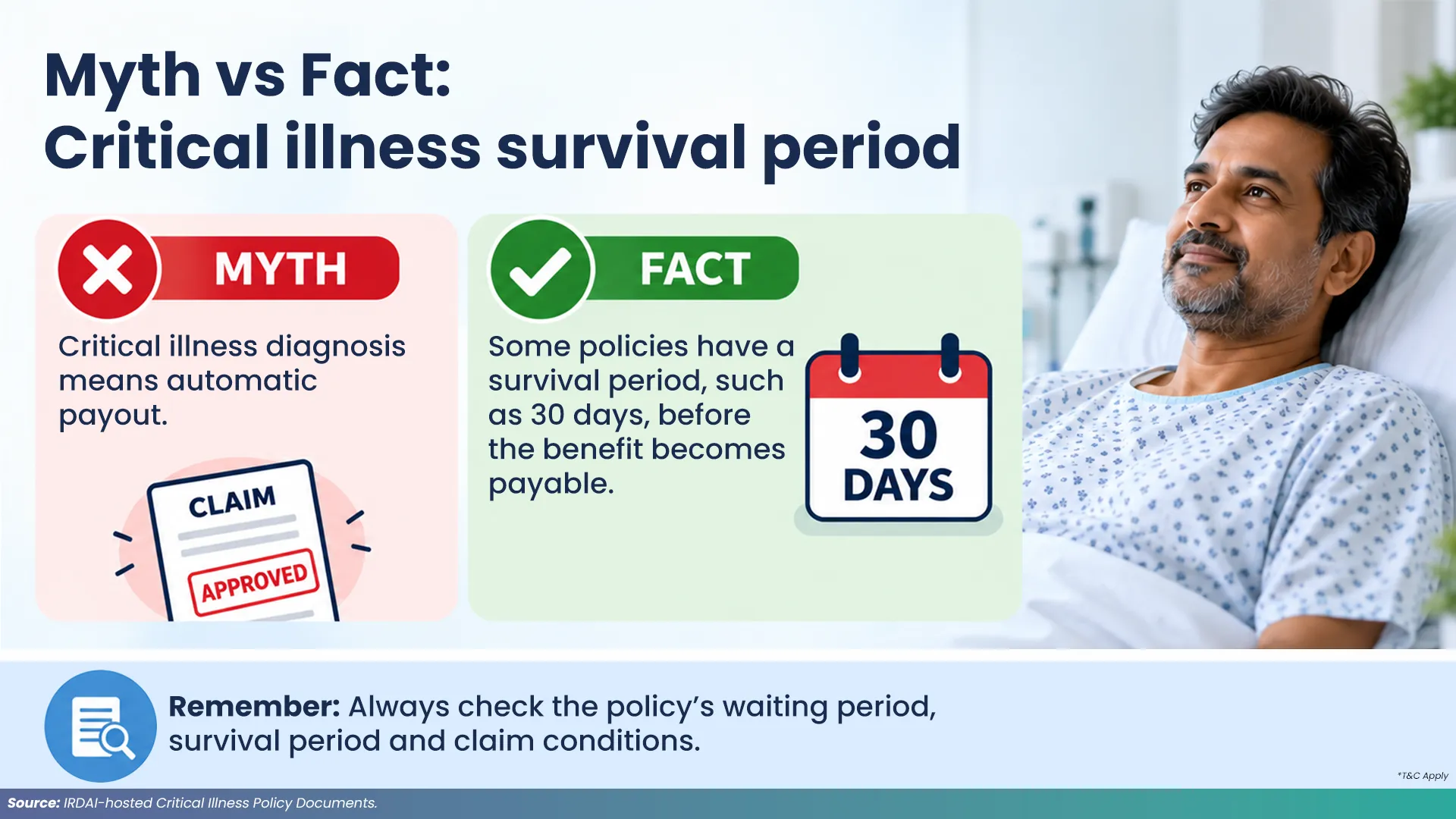
Before You Buy: Do not rely only on general comparisons or illustrations. Review the policy document, premium, coverage, exclusions, waiting or survival periods, applicable charges and claim conditions before making a purchase.
There are many different kinds of life insurance policies. It’s a matter of some practical considerations that you should analyse carefully before making a decision.
Before looking at different options, be clear about what you want from the policy. If your main concern is what will happen to your family’s money when you die, a simple protection plan such as term insurance could be a good option. If you are looking to save money for a long-term goal, such as your child’s college, retirement or a big purchase, you might want to consider an endowment plan or a ULIP. These plans combine savings and protection.
The sum assured is the amount of money your family will receive if something happens to you, so it needs to be enough to really look after them, paying for things like their schooling, daily living expenses and any debts such as a home loan. Instead of just choosing a random number, take the time to work out what your family will need in the future. This will help you to get the right amount of coverage and not go overboard.
The policy term is simply the duration of your coverage, and most people don’t realise how important it is to get this right. Shorter terms typically have lower premiums, but if your responsibilities go beyond the policy’s expiration, your family could be unprotected later. A longer term costs more but gives your family a much longer safety net and peace of mind in general. This is especially important if you have young children or a long loan repayment period.
Riders are optional add-ons that can be added to your base policy for a relatively small additional premium. They can be meaningful in increasing the coverage of your policy. Typical examples are accidental death benefit riders, critical illness riders and disability riders. These riders allow you to customise your coverage to suit your particular concerns without having to purchase a completely different policy.
Finally, before you sign up for life insurance, do some research on the insurance company itself. Check their claim settlement ratio, read customer reviews and check the clarity of their policy documents and terms and conditions. A company is as good as the policy that backs it. That’s why it’s just as important to pick the right type of plan as it is to pick an insurer with a good, consistent track record of honouring claims.
Policyholder Tip: Policy features, benefits, exclusions, premiums and eligibility conditions may vary between insurers and products. Always read the policy wording, terms and conditions before purchasing.
Once you have decided on the kind of life insurance plan that is best for you, the next step is to buy it. In India there are generally two routes available.
If you prefer a more personal experience, you can buy a policy in person at an insurer’s branch or from an authorised third party or agent. Usually you’ll see an advisor to talk through your options and confirm the precise terms, conditions and premium amount. Then you fill out a paper proposal form with all the required information and send it to underwriting for review before the policy is issued.
Many people like to buy life insurance online these days, as it is more convenient and faster. You can check out the different life insurance plans offered by the company on their website or mobile app. You can also compare the features and use the inbuilt calculators to get an idea of the premiums or returns. Once you select a plan, you fill out the proposal form online, upload the necessary documents and make the payment online after the underwriting team reviews and approves your application.
One of the often ignored benefits of life insurance is the tax relief attached with most policies under the Income Tax Act, 1961, which could make these plans even more attractive from a financial planning perspective.
The premiums paid for life insurance are also generally eligible for a deduction of up to one point five lakh rupees per annum under section 80C. This figure is part of the total limit, common with other tax-saving instruments like the Public Provident Fund, National Savings Certificates, etc. For those who are still under the old tax regime, this deduction is one of the most used methods to reduce the taxable income and also provide financial protection to their families.
The premium paid for health-related riders in your policy can also be claimed for a further deduction under section 80D; it is available under the old tax regime. This deduction is limited to twenty-five thousand rupees per year or fifty thousand rupees if the policy is for a senior citizen. This benefit is a valuable resource for families managing multiple types of coverage, as it applies to premiums paid on your behalf, your spouse, your children and your parents.
Usually, taxes are not levied on maturity proceeds or death benefits under most life insurance policies, as long as the premium paid does not exceed a specified percentage of the sum assured, etc. This is a huge plus, as your family won’t have to pay taxes on the money they get at the end, whether it’s a death benefit or a maturity payment.
Important Note: Tax benefits on life insurance policies are subject to applicable provisions of the Income Tax Act and may vary depending on the policy, premium amount and applicable tax regime. Please verify the latest tax rules before making a financial decision.
India has a huge variety of life insurance shapes and sizes. Each plan offers a means to fulfil a particular financial requirement, be it fundamental protection, long-term savings, market-linked growth, or income during retirement. ULIPs, endowment plans, whole life plans, child insurance plans, group insurance plans, money-back plans and annuity plans are the most common types of life insurance plans. a plan that best suits your age, financial objectives, and risk tolerance. Apart from the basic safety and savings, most policies also come with tax breaks under Sections 80C, 80D and 10(10D), which makes it a double whammy.
Don’t take your time while it comes to selecting a life insurance policy, because the plan you choose today will directly impact how well your family is protected in the years to come. Know what each type of life insurance plan actually covers, then compare it fairly to your goals, income and obligations. If you still have questions, don’t hesitate to talk to a financial advisor. The most important thing about the policy you select is that it meets the needs of you and your family today and in the future. It is true regardless of whether you opt for a plain term plan, an endowment policy to save, a market-linked ULIP or an annuity for retirement.
Not sure what kind of life insurance is right for you? The Finkeda team is here to help.
The four most commonly discussed types of life insurance plans are term insurance, endowment plans, ULIPs, and annuity plans, although the broader market in India also includes whole life plans, child insurance plans, group insurance plans, and money-back plans.
Depending on the plan, life insurance benefits can include a death benefit for your family, a maturity or survival benefit if you outlive the policy term, periodic payouts during the policy term, market-linked investment growth, and tax deductions on the premiums you pay, along with tax-free payouts in most cases.
Yes, many people in India hold multiple policies together, such as a term plan for pure protection alongside a ULIP or an endowment plan for long-term savings, since combining plans often allows you to meet several financial goals at once rather than relying on a single policy to do everything.
For someone buying life insurance for the first time, a term insurance plan is generally considered a strong starting point because it offers a large amount of coverage at a comparatively low premium, making it easier to secure meaningful protection for your family early in your career.
Most life insurance policies in India offer tax benefits under Sections 80C, 80D, and 10(10D) of the Income Tax Act, although the exact benefit available can depend on the type of plan, the premium amount, and whether you are filing under the old or the new tax regime, so it is worth checking the specifics of your chosen policy.
Disclaimer: This article is for general informational and educational purposes only and should not be considered financial, insurance or tax advice. Policy terms, benefits, premiums, tax treatment and regulations may vary depending on the insurer, policy and applicable laws. Please read the policy document carefully and consult a qualified professional before making any insurance-related decision.
Readers are encouraged to confirm the accuracy and relevance of the data before making any significant decisions.
Share :
Like:
0