
Sep. 28, 2026

18 Min read

Digital Banking

Share :


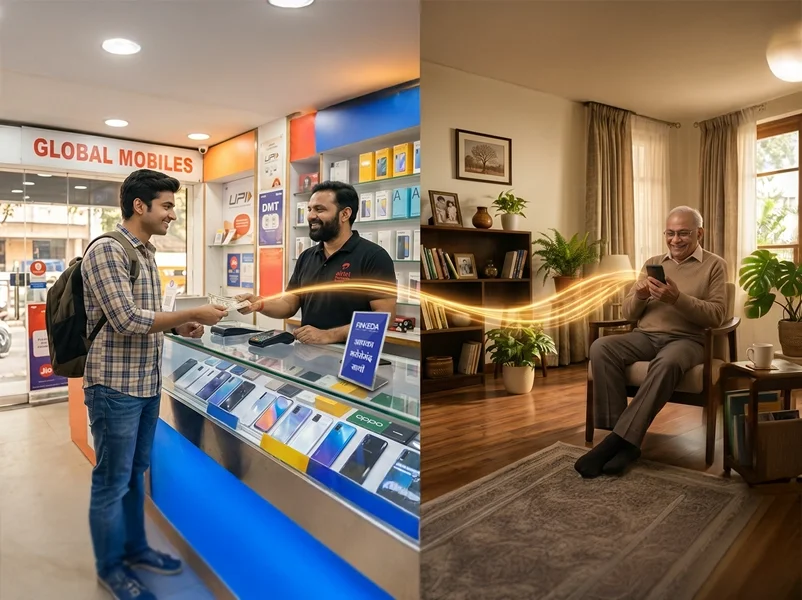
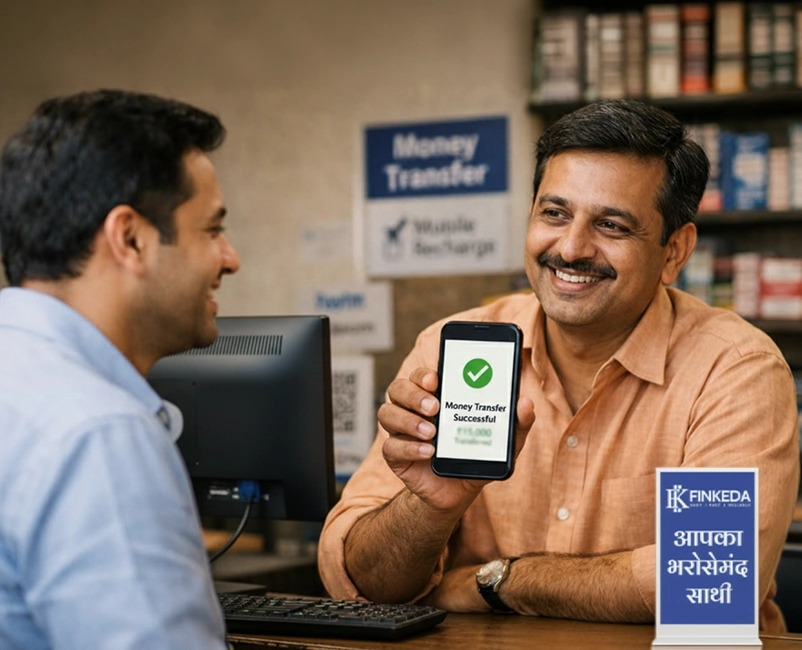
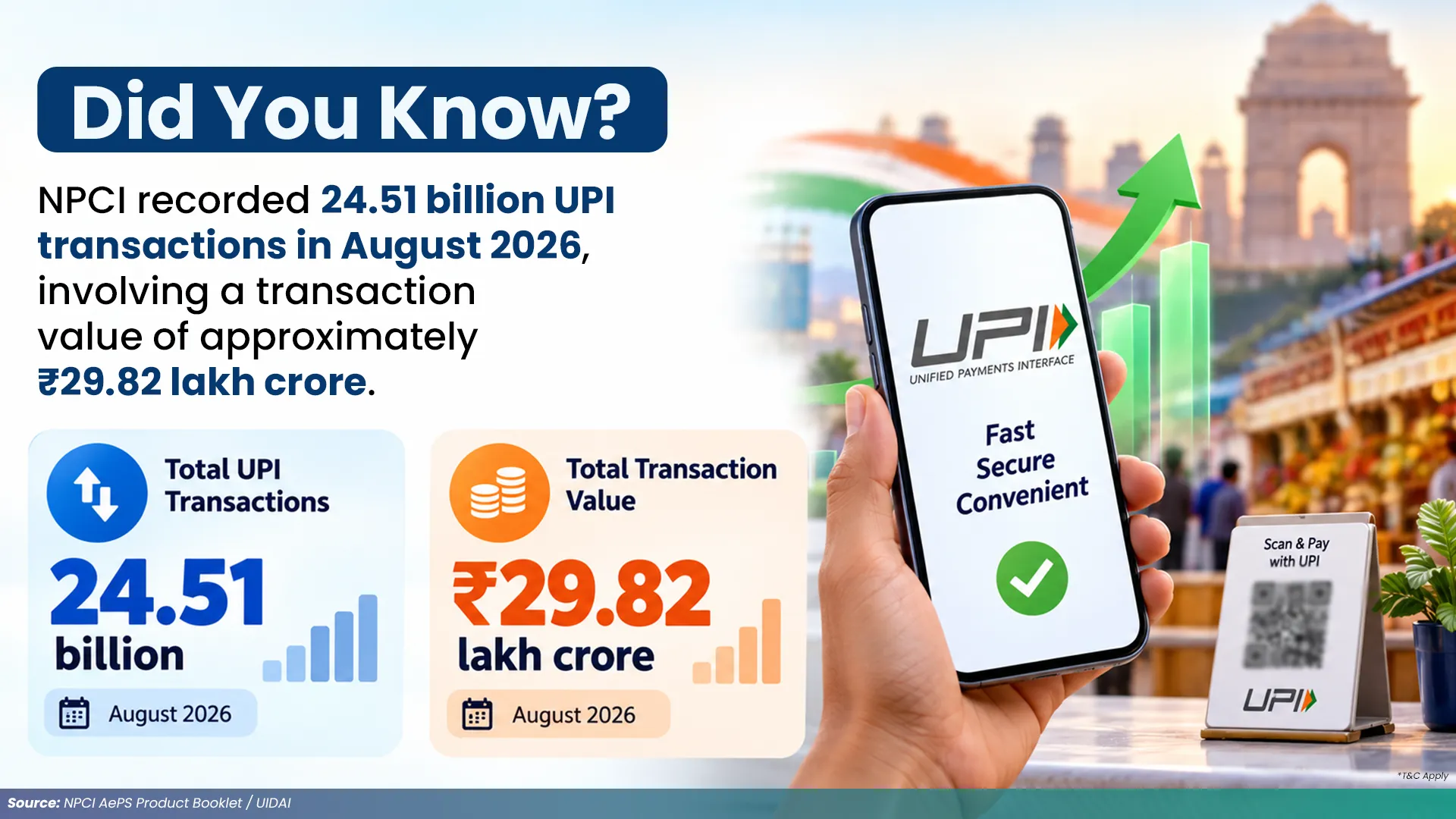
If you’ve spent any time in India over the last few years, you’ve almost certainly encountered two payment technologies without ever stopping to ask what makes them different: the Unified Payments Interface, which most people just call UPI, and the Aadhaar Enabled Payment System, which everyone shortens to AePS. Both were Designed by the National Payments Corporation of India with the same underlying mission: to pull as much of the country’s money movement as possible out of cash and cheques and into something instant, traceable, and available at any hour, yet their paths to that goal are almost opposite in spirit. UPI assumes you’re holding a smartphone with a working data connection and enough comfort with menus and PIN codes to trust an app with your bank account, while AePS was shaped around the reality that a huge share of the population, particularly outside the big cities, doesn’t fit that description at all and instead needs a way to reach their money using nothing more than the Aadhaar card they already have and a fingerprint that can’t be forgotten, lost, or stolen the way a card or a phone can be. Once you see the two systems through that lens, the differences between them stop feeling like a technical footnote and start explaining almost everything about who ends up using which one, and why a retailer trying to serve a mixed neighbourhood of smartphone owners and non-smartphone owners often ends up needing both to run side by side rather than picking just one.
This piece walks through exactly what UPI is and how a transaction actually moves through it from the moment you tap “pay” to the moment the money lands in someone else’s account, then does the same for AePS, tracing what happens between a customer’s fingerprint touching a merchant’s device and that money reaching their hand in cash. From there it lays out a proper side-by-side comparison of the two, including a plain-language flow of how each transaction is processed, before getting into the part most comparison articles skip entirely: a breakdown of which system actually makes sense depending on who you are, whether that’s a college student splitting a dinner bill, A grandmother collecting her pension at the local shop, a migrant worker sending money home, or a kirana store owner weighing whether to become a merchant partner for a platform like Finkeda, which today offers both AePS services through a single retailer network. Along the way, you’ll find answers to the specific questions people keep typing into search bars: whether UPI or AePS is safer, whether the same bank account can be used for both, and which of the two actually works better for someone living in a village with patchy internet. You’ll also find a few myths worth clearing up and a look at where both systems seem to be headed next.
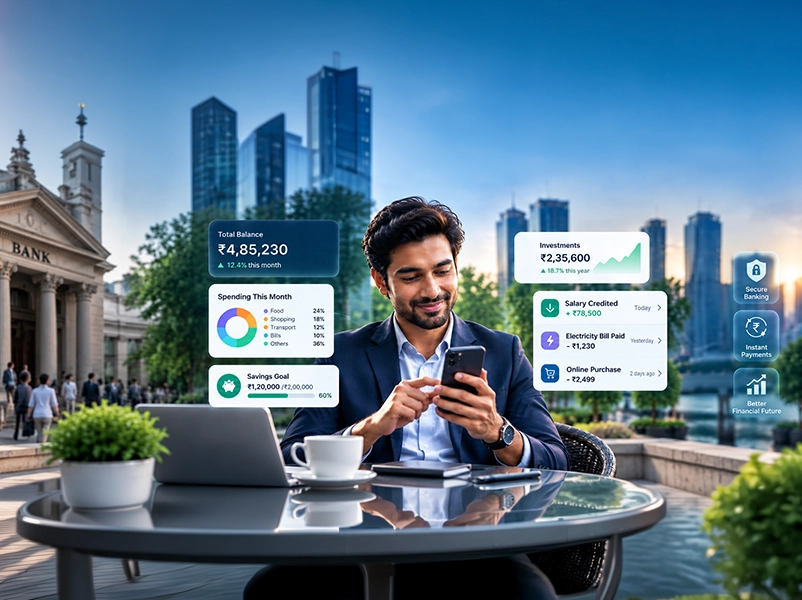
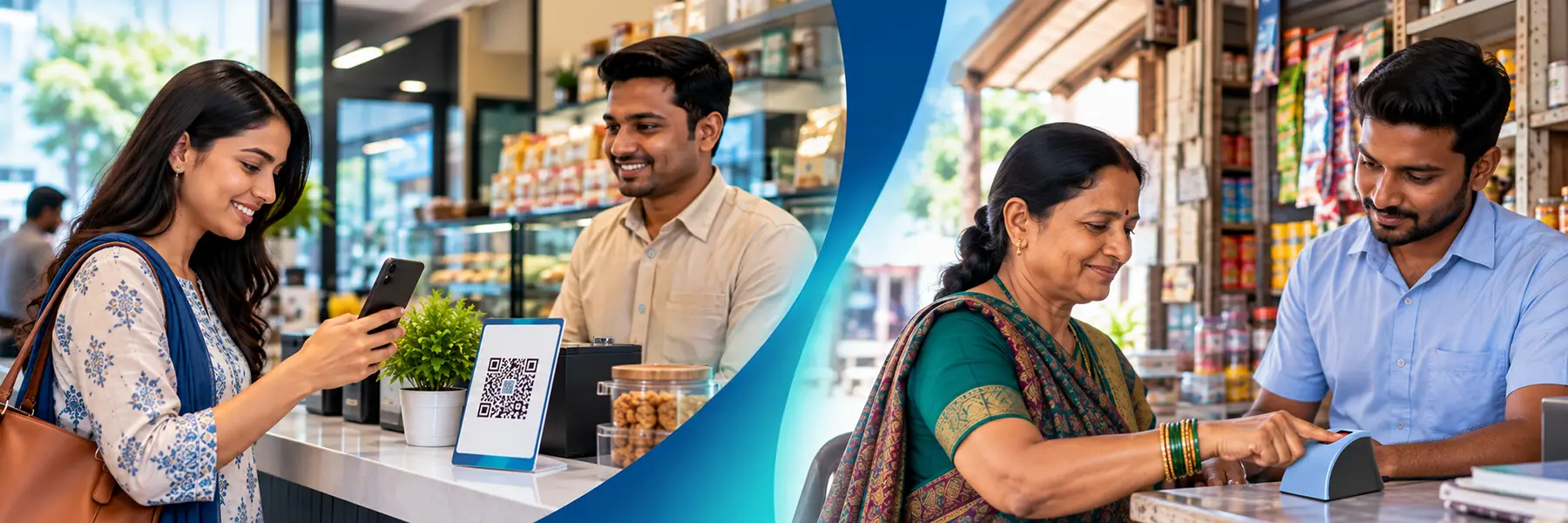
The Unified Payments Interface is, at its core, a way of teaching bank accounts to talk to each other instantly through a mobile app, without either party ever having to read out an account number, an IFSC code, or a card number over the phone. Instead, every user gets a Virtual Payment Address, sometimes just called a UPI ID, that looks something like a simplified email address, and this single identifier can be linked to one or several bank accounts sitting inside apps such as Google Pay, PhonePe, Paytm, or BHIM. When you want to pay someone, you either scan the QR code sitting at their counter or type in their VPA, enter the amount, and confirm it with a UPI PIN that only you know, and within a matter of seconds NPCI’s UPI switch has verified the request with both banks and moved the money across. It’s worth remembering that this entire chain of events depends on your phone actually being online, since the moment your signal drops in the middle of a payment, the transaction either stalls or fails outright, which is one of the quieter reasons UPI hasn’t been able to fully replace older systems in areas where mobile networks are inconsistent.
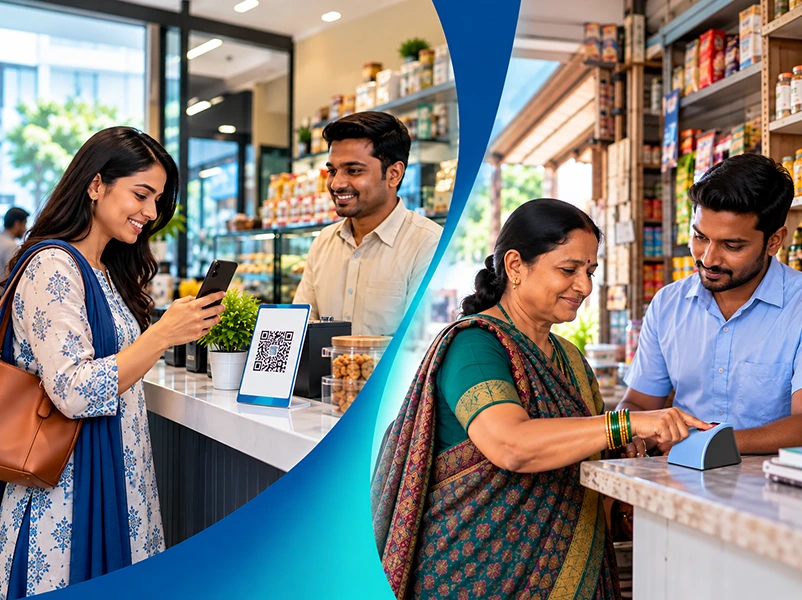
UPI is different from digital wallets and net-banking transfers that came before it because it is built to work with other systems. This means you never have to use the same app to pay someone, because all UPI apps, regardless of which bank or fintech made them, talk to each other in the same language. This is a big reason why a fruit seller can take payment from a customer using a totally different app, without having to worry about whether or not the two apps will work together. They can do this because they have a QR code sticker on their item. UPI has become more than just a way to send money from one person to another. It can also be used to pay phone and electricity bills, shop online, set up autopay for subscriptions, and even get small credit lines linked to UPI. which is why for a huge share of urban and increasingly semi-urban India, it has simply become the default way money moves, day to day, without anyone consciously deciding to switch away from cash; it just happened.
Where UPI leans entirely on a smartphone and an app, the Aadhaar Enabled Payment System was built around the opposite assumption that the customer might not own a smartphone at all, might not have reliable internet, and might not feel comfortable navigating menus in a language or script they’re not fluent in, and yet still deserves a fast, secure way to reach their own bank account.
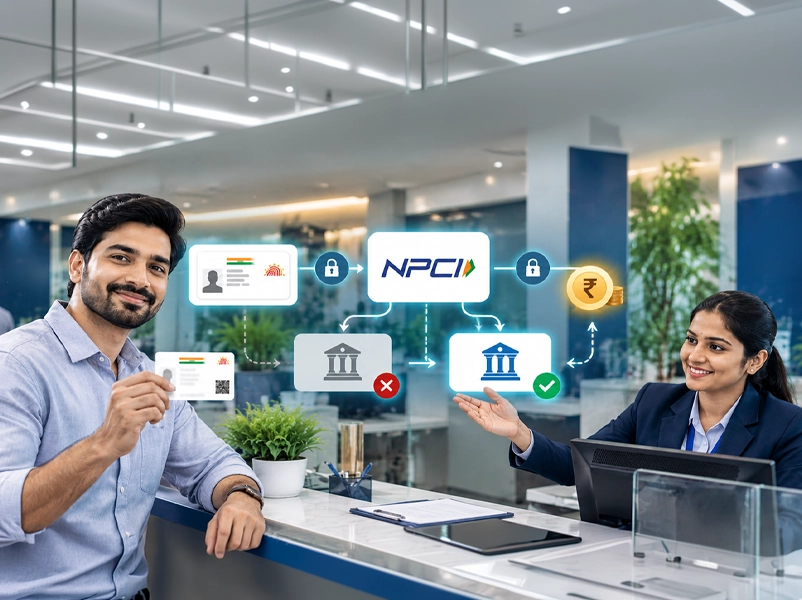
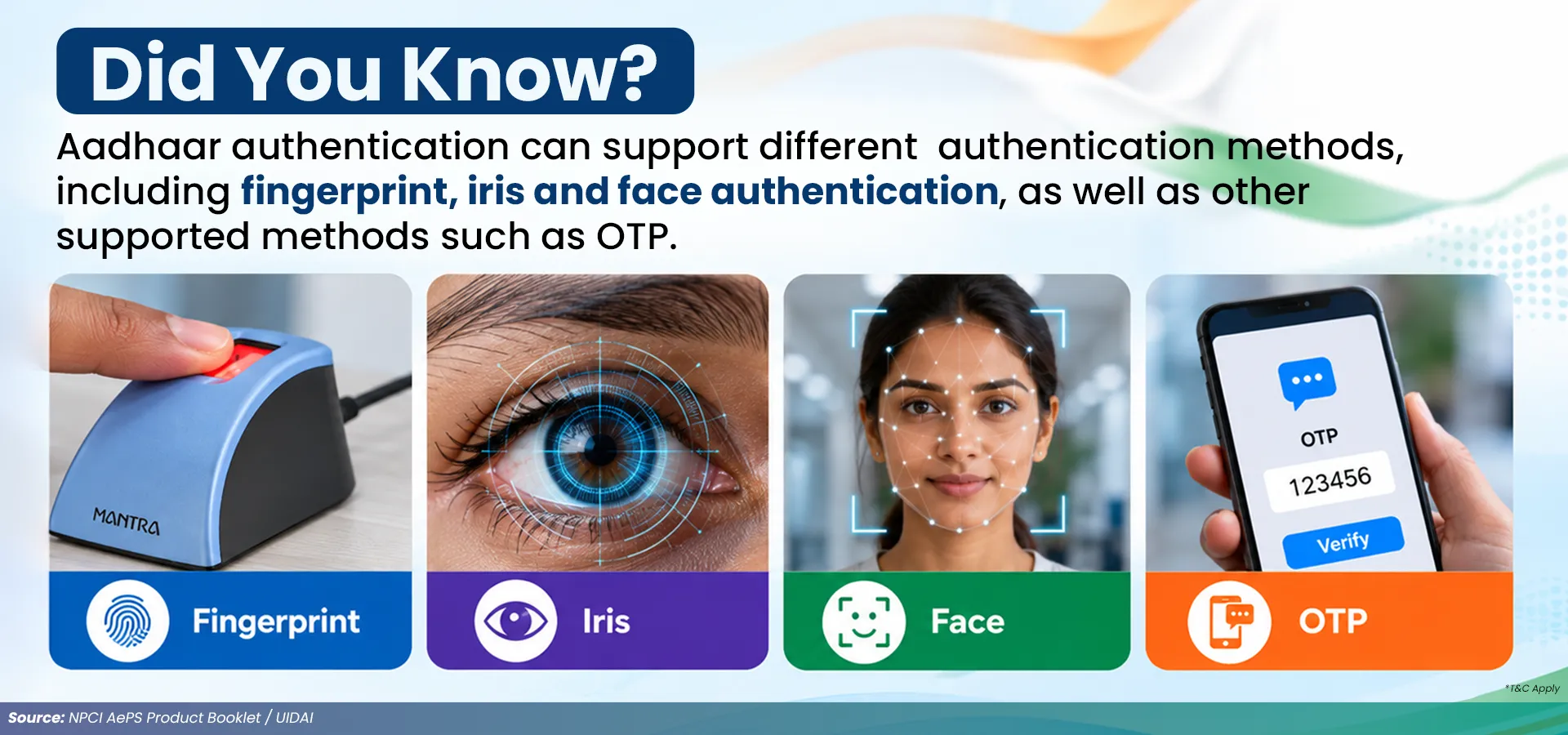
AePS solves this problem by shifting the transaction interface from the customer’s phone to a supported biometric-enabled device operated by an authorised banking agent.
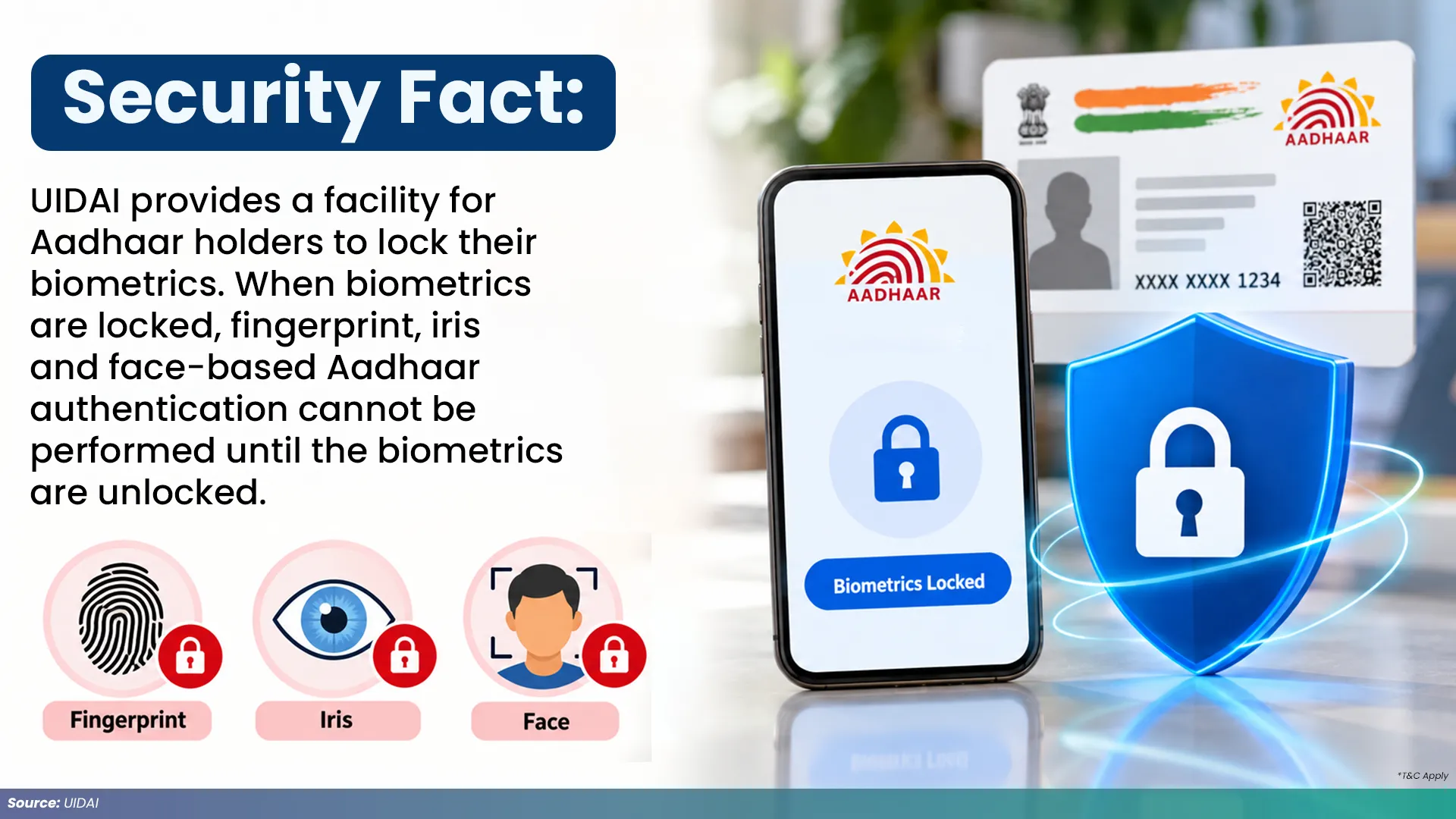
Security is fundamental to every AePS transaction. Since the system relies on biometric authentication, the devices used for Aadhaar-based authentication must meet applicable security and certification requirements.
UIDAI-certified biometric devices are designed to provide secure biometric capture and protect sensitive authentication data during the transaction.
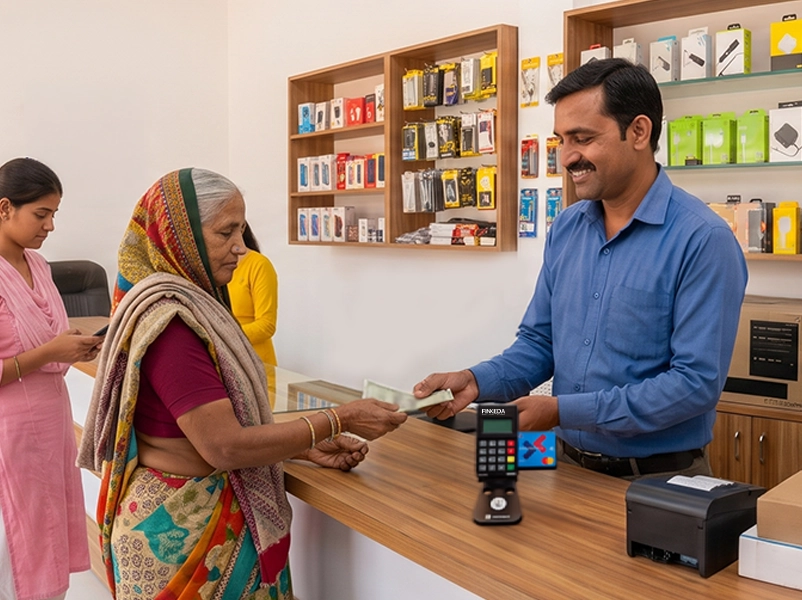
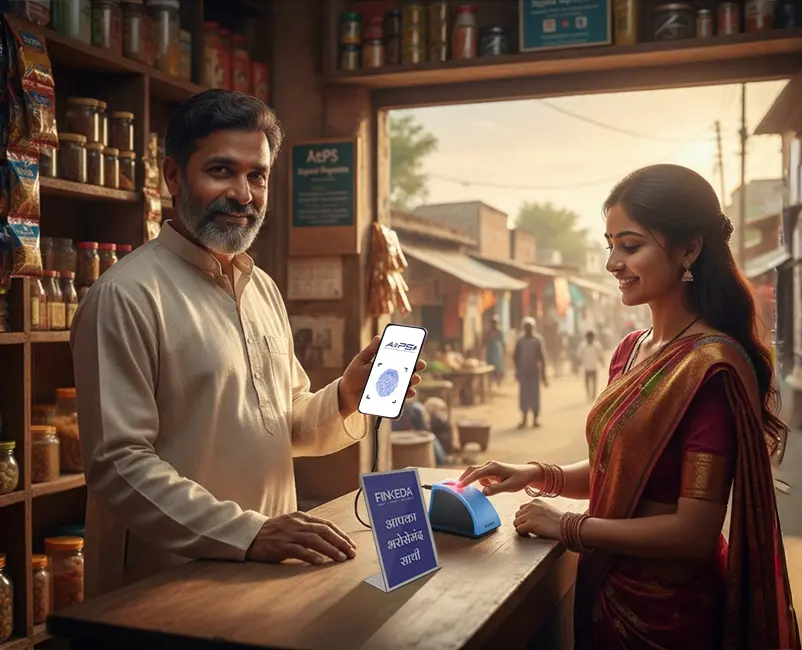
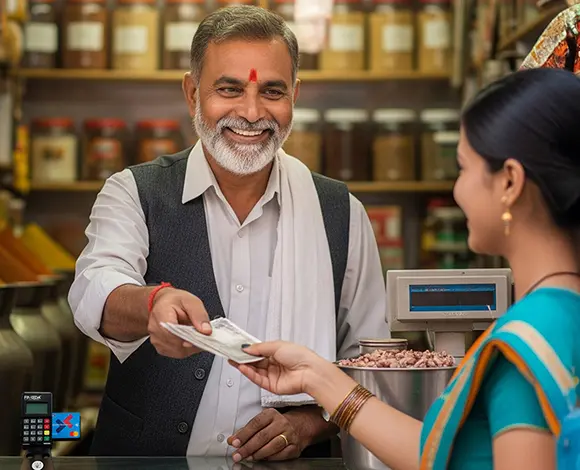
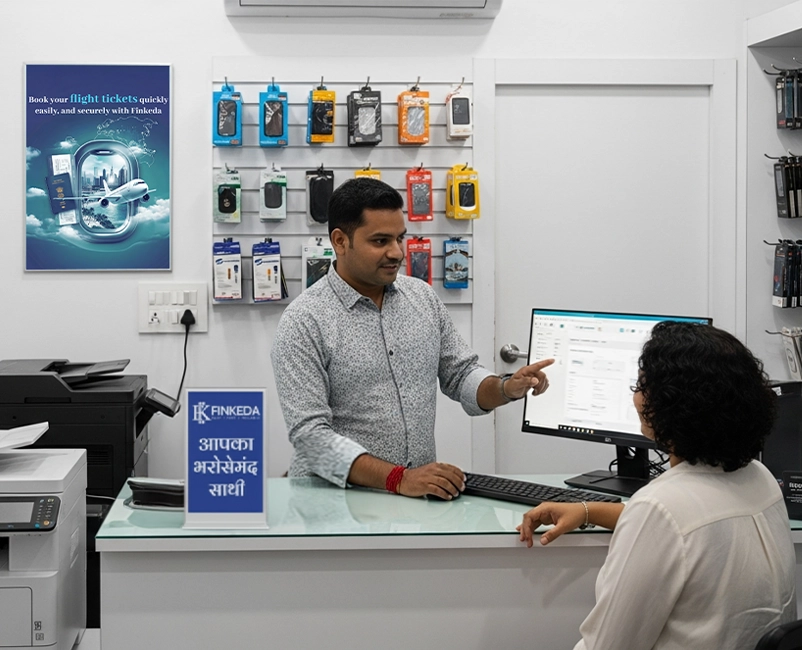
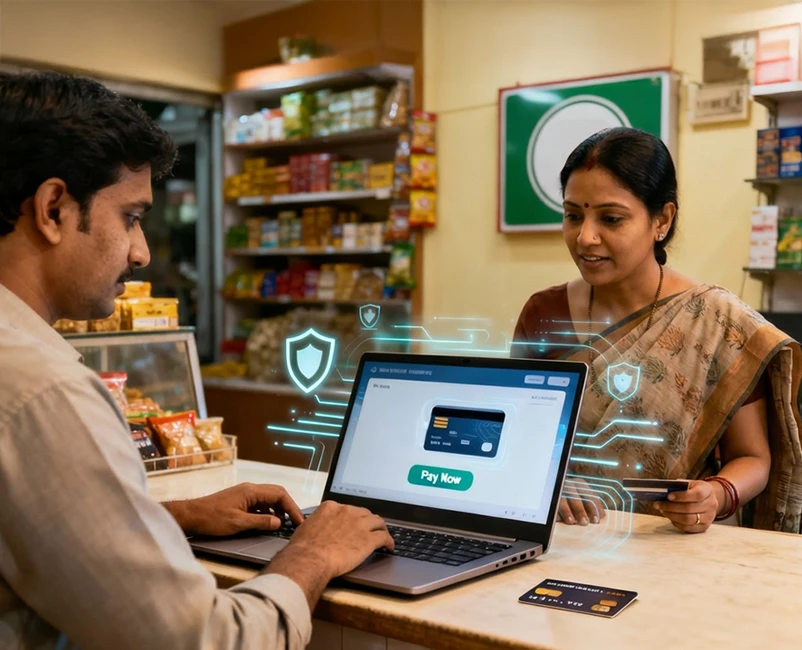
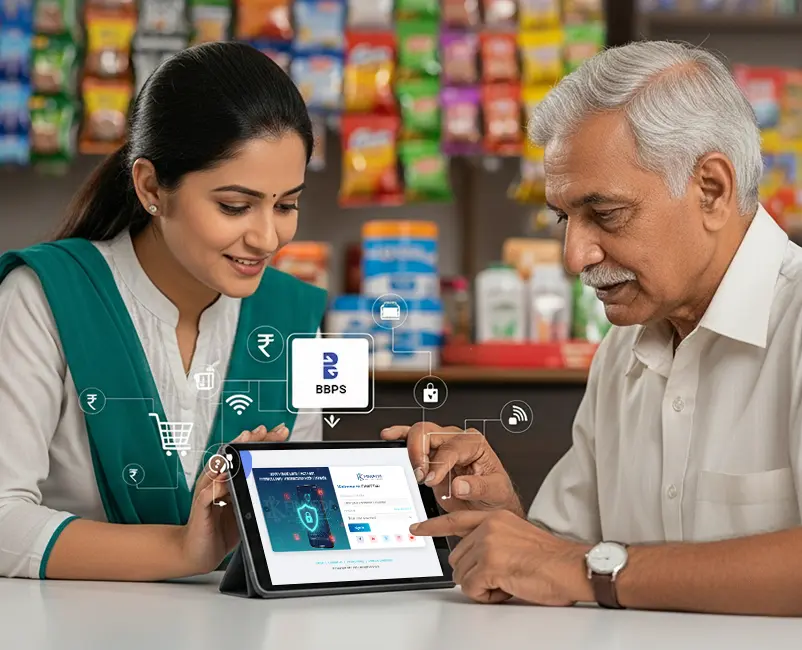
This service is operated by a trained local retailer, often someone running a kirana store or working as a business correspondent for a fintech network such as Finkeda, which has built much of its rural presence around exactly this kind of merchant point. To complete a transaction, the customer Securely shares their Aadhaar details with the retailer, following the applicable verification process. choose from available services such as cash withdrawal, balance enquiry, mini statement and, where supported, cash deposit and then places a finger against a small scanner attached to the machine. That biometric reading gets checked in real time against the UIDAI database, and once it matches, the customer’s bank authorises the request and the retailer hands over the cash or completes whatever service was requested, usually printing out a small receipt as proof.
There’s something quietly elegant about how AePS sidesteps almost every barrier that keeps rural India away from formal banking: no card to lose, no PIN to forget, no app menu to get confused by, and the customer does not need to use their own smartphone to access the service, as the transaction is initiated through an authorised AePS touchpoint. .This is also exactly why so many government welfare programmes, from old-age pensions to MGNREGA wages, route their payouts through Aadhaar-linked accounts that recipients then withdraw via AePS, since the system was never meant to compete with UPI for online shopping or bill payments in the first place its entire reason for existing is to put basic banking within arm’s reach of someone who has been left out of the smartphone-driven wave that UPI rode in on.
| UPI | AePS | |
| What you need | Smartphone, internet, a UPI app | Aadhaar number and a fingerprint or iris scan |
| How you’re verified | UPI PIN plus device security | Biometric match against the UIDAI database |
| Where the transaction happens | Your own phone, from anywhere | At an authorised agent’s supported biometric device, in person |
| What it’s mainly used for | Sending money, online shopping, bill payments | Cash withdrawal, deposit, balance enquiry, pension payouts |
| Who it suits best | Smartphone owners with steady internet | People without smartphones, or in low-connectivity areas |
| Card needed | No | No |
| Typical cost | Usually free for personal transfers | Free or a small merchant service charge |
If you are having difficulty determining which option pertains to your circumstances, the two most relevant rows are indeed the first and the fifth, which you already have access to, along with the intended users of the system. The two responses typically dictate all subsequent outcomes.
Note: AePS services, authentication methods, supported devices, eligibility, transaction limits and applicable charges may vary depending on the bank, service provider and authorised agent. Please verify the latest applicable details with the relevant bank or official NPCI/UIDAI sources before using the service.
A UPI transaction, walked through in plain steps, looks like this: you open the app, tap pay, either scan a QR code or type in the receiver’s UPI ID, enter how much you want to send, confirm it with your PIN, and within seconds NPCI’s switch has verified the request with both banks and pushed the money through, all without you ever leaving your phone. An AePS transaction follows a very different path because the customer isn’t the one operating any screen at all; they walk up to a merchant, often a Finkeda retailer if that’s the network active in their area, give their Aadhaar number, and pick their bank from a list on the device, choose whether they want to withdraw, deposit, or just check a balance, place their finger on the scanner, wait a couple of seconds while UIDAI confirms the match, and then either receive cash or a printed statement once the bank has authorised it on the back end. Both routes ultimately settle through the same NPCI infrastructure, which is why neither is objectively slower or faster than the other in practice. The real difference is where the transaction begins and what kind of proof of identity it asks for.
Open the app
↓
Tap Pay
↓
Scan a QR code or type in the receiver’s UPI ID
↓
Enter how much you want to send
↓
Confirm it with your PIN
↓
NPCI’s switch verifies the request with both banks
↓
Money is pushed through
↓
Transaction completed within seconds
Visit an authorised AePS merchant.
↓
Select the required service
↓
Securely provide the required Aadhaar and bank details.
↓
Provide consent and complete biometric authentication.
↓
The transaction is processed.
↓
Receive cash, transaction details or the requested service
Both routes ultimately settle through the same NPCI infrastructure
The UPI
Transaction begins on your phone.
Identity proof: UPI PIN
AePS
Transaction begins at a merchant.
Identity proof: Aadhaar/VID and biometric authentication, as applicable
The real difference is where the transaction begins and what kind of proof of identity it asks for.
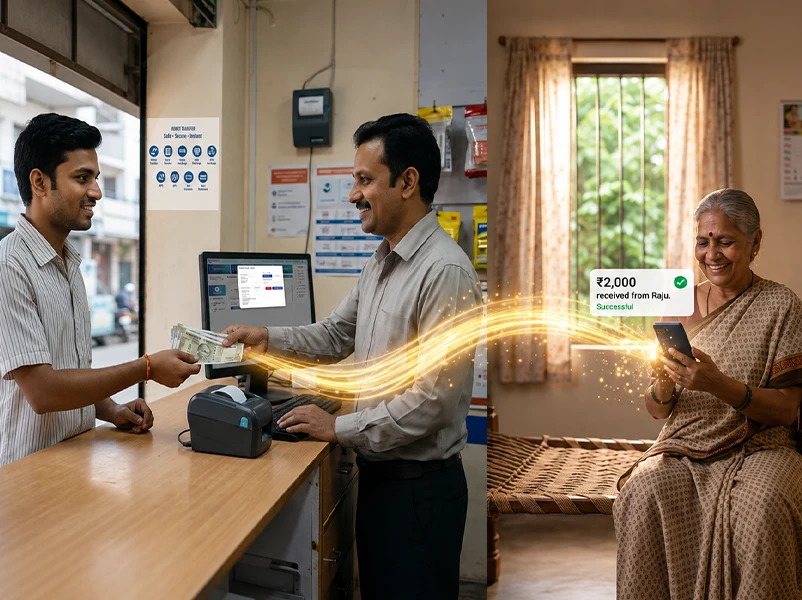
People often frame the UPI versus AePS question purely as a technology comparison, but in day-to-day life the better way to think about it is simply asking what kind of fund transfer you’re trying to make. If you owe a friend money for dinner, UPI wins without any contest, since all you need is their UPI ID or a QR code, and the transfer lands in seconds. If you need cash in hand and don’t have a debit card or a nearby ATM, that’s a job for AePS, since it lets you pull money straight from your account without any plastic involved. Government payouts, whether that’s a pension or a wage credit under a scheme like MGNREGA, are increasingly structured to be collected through AePS specifically because the system doesn’t assume the recipient owns a smartphone, whereas paying a shopkeeper or checking out on a shopping app is squarely UPI’s territory, since AePS was never designed to function as a retail payment method between a buyer and seller in that sense. And for someone living in a village who needs money quickly but doesn’t want to travel into town to reach a bank branch, a local AePS point run by a network like Finkeda, usually solves the problem faster and more simply than UPI ever could, purely because it removes the smartphone and internet dependency from the customer’s side entirely.
A student or young working professional living in a city, with a smartphone permanently in hand and data that rarely runs out, will find UPI covers almost everything they need: splitting bills, paying rent, shopping online, setting up autopay for subscriptions and the main advice worth following here is simply to keep your UPI PIN private, set sensible transaction limits inside the app, and never trust anyone claiming to be “bank support” who asks you to share it. Homemakers and senior citizens sit in a slightly more mixed category, since some are perfectly comfortable using UPI on their own phones while others would rather not deal with an app at all, and for that second group, AePS at a trusted local merchant becomes the far simpler option, particularly when the retailer is part of an established network such as Finkeda, where staff are trained to walk less tech-savvy customers through the process patiently rather than rushing them.
For rural and semi-urban customers, AePS is usually the more sensible default, not because UPI is somehow inferior but because the conditions AePS requires an Aadhaar-linked account and a working fingerprint, which are things almost everyone already has, whereas the conditions UPI requires a smartphone, stable data, and a level of comfort navigating menus are exactly what’s missing for a large share of this group; the only real caution here is to only ever transact at authorised merchant points, since an unverified device is where most AePS-related fraud tends to originate. Migrant and daily-wage workers occupy an interesting middle ground, since AePS lets them reach their home bank account from almost anywhere in the country through any AePS-enabled merchant, without being tied to their home branch or town, while UPI becomes more relevant once they’ve settled somewhere with a stable phone and data connection for everyday spending.
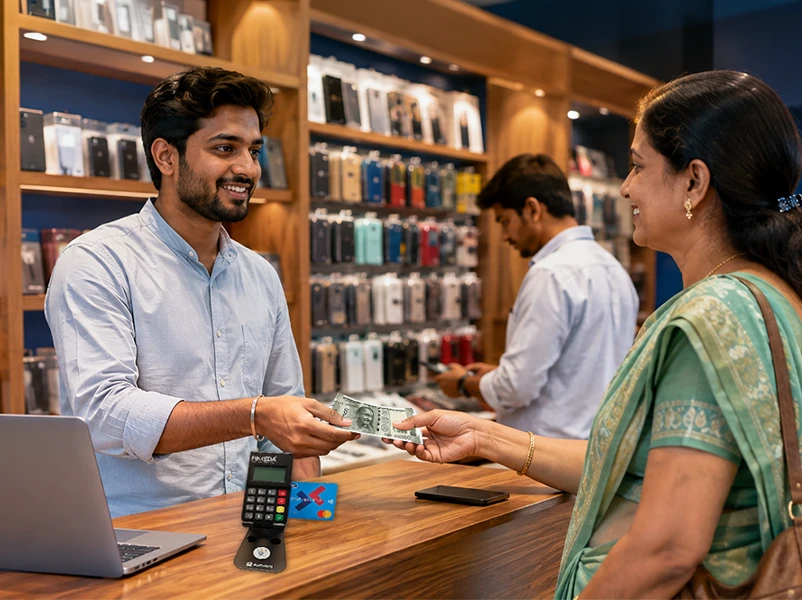
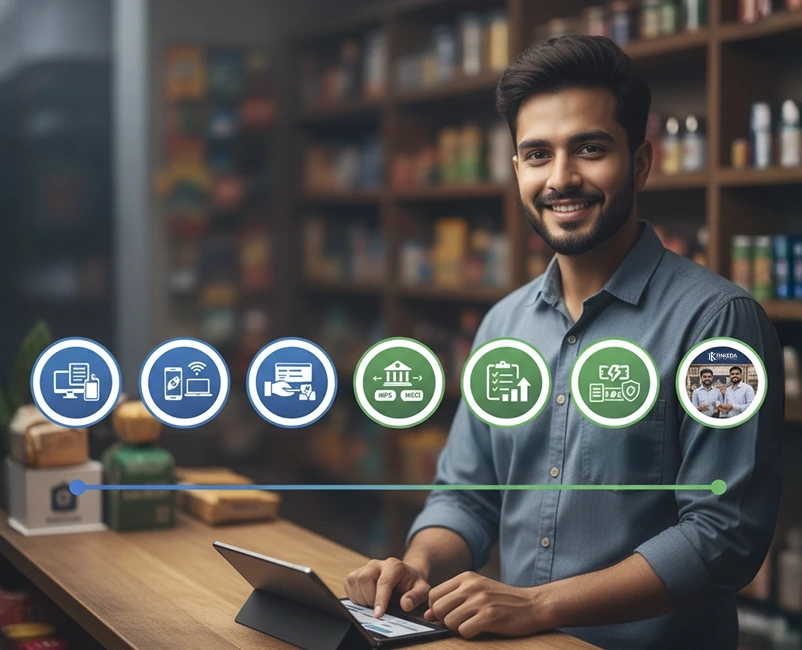
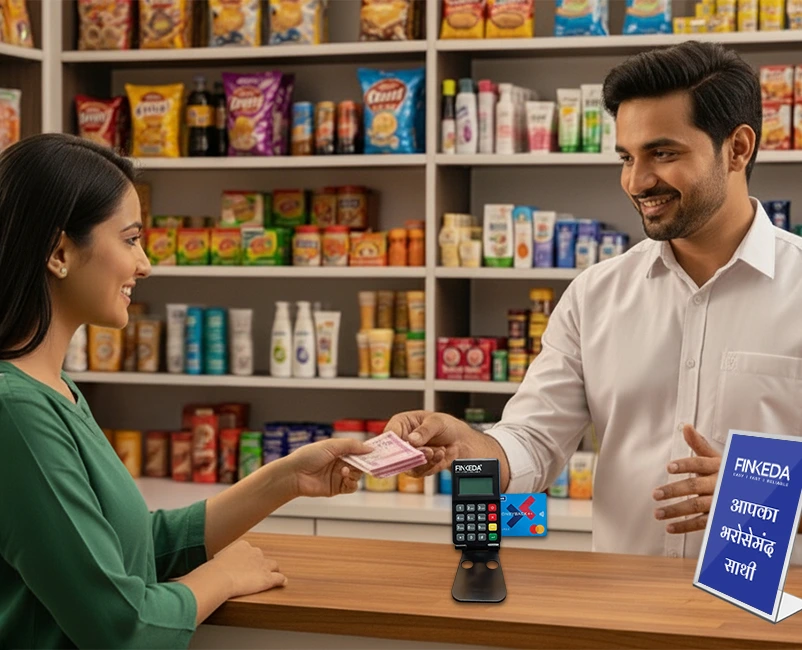
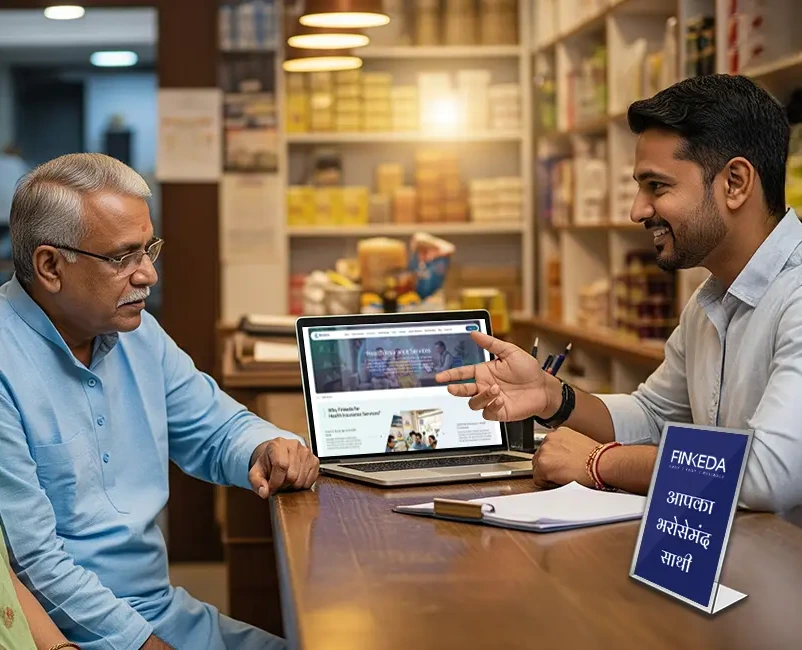
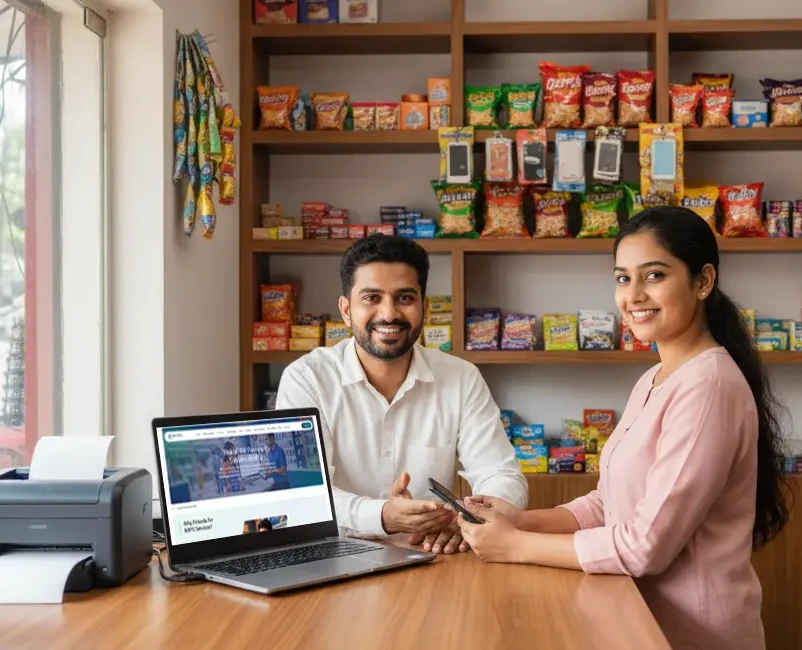
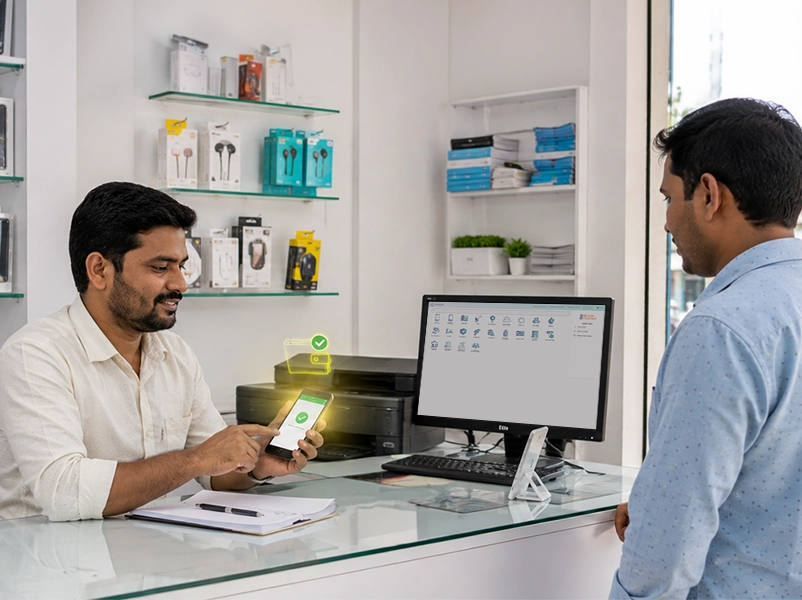
Then there’s the business side of this question, which matters just as much as the consumer side. A kirana store or small local shop that offers both UPI QR acceptance and AePS services at the same counter tends to see more footfall simply because it isn’t turning away either kind of customer and is becoming an AePS merchant, for instance, through Finkeda’s retailer programme, effectively turns that shop into a small banking point that earns commission on every withdrawal, deposit, and balance check it processes, since it mostly comes down to a micro ATM device and a biometric scanner. For anyone thinking bigger building an actual distribution business around financial inclusion rather than just running a single counter partnering with a platform like Finkeda means not having to build the backend infrastructure from scratch, since the AePS and UPI rails are already in place, and growth simply comes from recruiting and training sub-retailers across a region, which tends to work especially well in Tier 2 and Tier 3 towns where formal bank branches remain thin on the ground.
| Use Case | UPI | AePS |
| Sending money to a friend | Best choice. Use a UPI ID or QR code and transfer lands in seconds. | Not designed for this type of transfer. |
| Need cash without a debit card | Requires another way to access cash. | Best choice. Withdraw money directly from your account without plastic. |
| Government payouts | Not the primary option for assisted cash access. | Useful for pensions and wage credits such as MGNREGA, especially where customers may not own smartphones. |
| Shopping & Retail Payments | Best choice for paying shopkeepers and shopping apps. | Not designed as a retail payment method between buyer and seller. |
| Rural Customers | Useful where smartphone, internet and app access are available. | Often more convenient through a local AePS point such as Finkeda. |
| Students & Young Professionals | Covers bills, rent, shopping and subscriptions. Keep your UPI PIN private. | Less relevant for everyday digital spending. |
| Homemakers & Senior Citizens | Suitable for those comfortable using apps. | Simpler option for those who prefer assisted banking at a trusted local merchant. |
| Migrant & Daily Wage Workers | More useful with a stable phone and data connection. | Provides access to the home bank account through AePS enabled merchants. |
| Kirana & Local Shops | Accept payments through UPI QR. | Add banking services and earn commission on withdrawals, deposits and balance checks. |
| Distribution Business | Useful for digital payment acceptance. | Finkeda can provide the backend infrastructure, while businesses can focus on recruiting and training sub retailers. |
| Tier 2 & Tier 3 Towns | Works well where smartphone and internet access are strong. | Particularly useful where formal bank branches are still scarce. |
UPI works best when the customer has a smartphone and internet and wants to make digital payments.
AePS works best when the customer needs banking access without depending on a smartphone or ATM.
| Audience | Best Option | Key Points |
| Students & Young Professionals | UPI | Bills, rent, shopping and subscriptions. Keep your UPI PIN private and set transaction limits. |
| Homemakers & Senior Citizens | UPI / AePS | UPI works for those comfortable with apps. AePS is simpler for those who prefer assisted banking at a trusted local merchant like Finkeda. |
| Rural & Semi Urban Customers | AePS | Works with an Aadhaar-linked account and fingerprint, making it convenient where smartphones or stable data may be limited. Use only authorised merchant points. |
| Migrant & Daily Wage Workers | AePS + UPI | AePS provides access to the home bank account through AePS-enabled merchants. UPI is useful with a stable phone and data connection. |
| Kirana & Local Shops | UPI + AePS | Offering both services can increase footfall and help the shop earn commissions through services such as withdrawals, deposits and balance checks. |
| Distribution Business | AePS + UPI | Platforms like Finkeda provide the backend infrastructure, allowing businesses to focus on recruiting and training sub- retailers, especially in Tier 2 and Tier 3 towns. |
It’s important to explain why AePS is a better fit for rural customers, because the reasons go beyond convenience alone. A large portion of India’s rural population still doesn’t own a smartphone, and many share a single family device that isn’t always available when needed. This rules out UPI as an option before the conversation even starts, while AePS sidesteps that entirely by requiring nothing more than an Aadhaar number and a fingerprint already tied to the person, rather than a device that might be borrowed or unavailable. There’s also a literacy dimension that rarely gets mentioned: navigating a UPI app assumes a certain comfort with menus, icons, and often English text, whereas placing a finger on a scanner requires none of that. Add to this the simple psychological comfort of transacting with a shopkeeper you already know and trust rather than an anonymous app interface, the fact that most government subsidy and pension schemes are structured around Aadhaar-linked accounts to begin with, and the reality that rural mobile networks are still inconsistent enough that a UPI transaction can fail mid-way through simply because a signal dropped, and it becomes clear why platforms like Finkeda built their entire rural strategy around enabling local retailers to become AePS access points rather than pushing app downloads in areas where that approach was never going to work as well.
Yes, and this is probably the single most common misunderstanding people carry into this comparison: UPI and AePS aren’t two different kinds of accounts or two separate wallets existing away from each other; they’re simply two different doors leading into the exact same bank account. If your Aadhaar is correctly linked to your savings account, you can walk up to any authorised AePS merchant and withdraw cash through it, and if you also happen to own a smartphone, you can separately link that same account to a UPI app and use it for everyday digital payments, with neither method interfering with the other in any way. In fact, plenty of households end up running a fairly natural hybrid setup without ever really planning it that way, where the primary earning member uses UPI on their phone for daily spending while an elderly parent or another family member without a smartphone relies on AePS at the local shop for cash needs, both quietly drawing from the same underlying account. The only real prerequisite that has to be sorted out beforehand is Aadhaar seeding, making sure your Aadhaar number is properly linked to your bank account since without that one-time step, which can be completed at a branch or often through the bank’s own app, AePS transactions simply won’t go through no matter how many times you try.
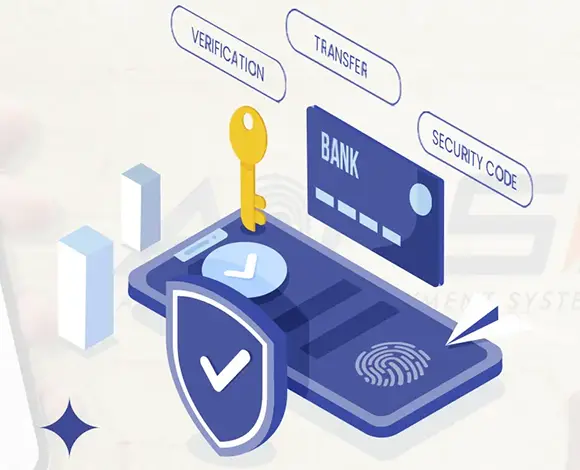
Both UPI and AePS operate within the NPCI-enabled digital payments ecosystem, but they use different methods of authentication and therefore involve different security considerations. UPI transactions are typically authorised using the customer’s registered mobile device and UPI PIN. Users should keep their UPI PIN confidential and remain alert to phishing links, fraudulent payment requests and social engineering attempts. AePS transactions use Aadhaar-based details and biometric authentication, as applicable, to access eligible banking services through authorised touchpoints. Customers should transact only through authorised and trusted merchants, protect their personal and Aadhaar-related information, and review transaction details carefully. Rather than considering one system universally safer than the other, the level of security depends on following the applicable authentication process and using authorised apps, devices and service providers.
| Safety Aspect | UPI | AePS |
| Security | Uses the registered mobile device and UPI PIN for transaction authentication. | Uses Aadhaar-based details and biometric authentication, as applicable. |
| Protection | Additional security features may vary by app and bank. | Transactions are processed through the applicable authentication process at authorised touchpoints. |
| Main Risk | Phishing links, fraudulent payment requests and social engineering scams. | Risks may include unauthorised or fraudulent merchant points and improper handling of customer information. |
| What to Do | Use authorised apps and never share your UPI PIN. | Use authorised and trusted merchant points and handle Aadhaar-related information securely. |
| Risk Area | Risks can arise from fraudulent links, payment requests or sharing sensitive credentials. | Risks can arise from unauthorised touchpoints or improper handling of sensitive customer information. |
| Simple Rule | Stay alert and protect your UPI PIN and banking credentials. | Use authorised merchants and verify transaction details before completing the transaction. |
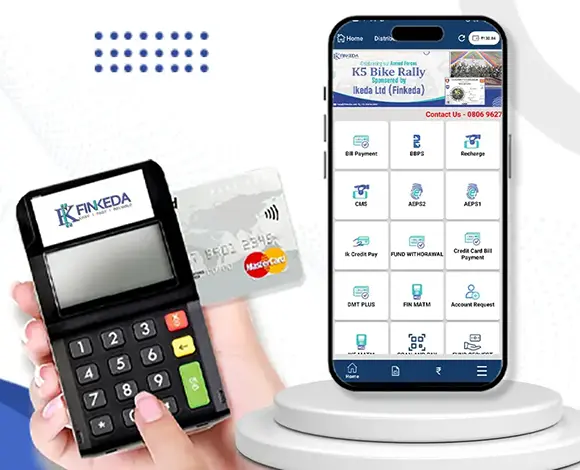
This comparison presents UPI and AePS as systems designed for different user needs, while Finkeda brings relevant services together through its retailer network. Through its AePS services, Finkeda enables local retailers to offer eligible banking services such as cash withdrawal, balance enquiry and mini statements, subject to service availability and applicable requirements. Transactions are completed through the required Aadhaar-based details and biometric authentication process, as applicable.
For shop owners and aspiring distributors, offering multiple financial services from a single service point can help them serve customers with different banking and payment needs. Finkeda provides the supporting platform and infrastructure, allowing its retailer and distribution network to offer available services through an authorised ecosystem. This approach supports the broader goal of improving access to digital and assisted financial services, particularly in rural and semi-urban areas.
| Myth | Reality |
| AePS is outdated because UPI exists. | AePS continues to serve people without smartphones or dependable internet. Both systems solve different problems. |
| A debit card is required | UPI works through app-based account linking, while AePS works through Aadhaar and biometrics. Neither requires a physical card. |
| AePS is less secure because there is no PIN | Biometric verification is strong because a fingerprint cannot be guessed or easily shared like a PIN. |
| AePS is only for rural users | Urban users also rely on AePS, especially older customers and people who temporarily do not have access to their debit card. |
| UPI and AePS compete with each other | They are designed for different needs and can work together to serve more customers. |
If you own a smartphone and have reliable internet access, UPI can be a convenient option for everyday payments, such as paying a shopkeeper or sending money to friends and family. For customers who prefer assisted banking services, do not have convenient access to a smartphone, or need services such as cash withdrawal, AePS can provide access to eligible banking services through an authorised touchpoint, subject to applicable requirements. Depending on the customer’s bank account setup and eligibility, UPI and AePS may both be used to access banking and payment services for different needs.
For shop owners and businesses looking to offer financial services, the choice does not necessarily have to be limited to one system. Platforms such as Finkeda can enable authorised retailers to offer available services, including AePS and BBPS, from a single service point, subject to applicable onboarding, service availability and regulatory requirements. This can help retailers serve customers with different payment and assisted banking needs.
UPI is a smartphone-based payment system that uses a VPA or QR code and a UPI PIN, mainly for everyday and online payments. AePS is an Aadhaar-enabled banking system that allows customers to access basic banking services at an authorised AePS touchpoint using the required Aadhaar details and biometric authentication, after providing consent. It can be used for services such as cash withdrawal, balance enquiry and mini statements, depending on the available services.
Neither is universally “better”—it depends on the user. UPI is better suited to smartphone users who want fast, app-based digital payments. AePS is better suited to people without smartphones or cards who need simple, in-person banking access, particularly in rural areas.
AePS is generally more suitable for rural customers, as it doesn’t require a smartphone, internet access on the customer’s end, or a card – just an Aadhaar-linked bank account and a fingerprint scan at a local merchant point.
Yes. Both are just different access methods for the same Aadhaar-linked bank account, so you can use UPI through a mobile app and AePS at a merchant point interchangeably.
Both are considered safe. UPI uses two-factor authentication (device + PIN) with encryption, while AePS uses biometric verification, which requires the account holder’s physical presence. Safety in both cases also depends on following good security practices, such as not sharing your UPI PIN or biometric access with anyone.
Disclaimer: The information provided in this blog is for general informational and educational purposes only. UPI, AePS and related services are subject to the terms, conditions and policies of the respective banks, NPCI, UIDAI and other applicable authorities. Service availability, charges and transaction limits may vary. Readers are advised to verify the latest information with their bank or authorised service provider before making any financial transaction.
This blog is intended solely for educational and informational purposes. Content reflects data at time of publication and may not accurately reflect current premiums, terms, or regulations. Readers are encouraged to confirm the accuracy and relevance of the data before making any significant decisions.
Share :
Like:
0