
Oct. 28, 2026

9 Min read

Insurance

Share :


The process for filing a health insurance claim in India is a formal request to your insurance company to settle or reimburse expenses incurred for approved medical treatments under your policy schedule. Understanding the health insurance claim process in India can help you handle a medical emergency with greater clarity and avoid unnecessary financial stress. In this section, you will learn how health insurance claims work, the difference between cashless and reimbursement claims, when to notify your insurer, and what to expect during the claim settlement process.
This blog will cover the two main ways to claim health insurance:
You will also understand why timely intimation, pre-authorisation and proper documentation matter, so you know what steps to take before, during and after hospitalisation.
In India, most families buy a health policy, safely tuck the schedule paper in an almirah folder, and rarely pull it out again until an urgent medical crisis strikes. But trying to understand policy approval steps at midnight from a chaotic hospital registration desk creates panic. Beyond the worry about your loved one’s immediate clinical attention, sorting out terms like ‘pre-auth’, ‘deductions’, and ‘cashless networks’ adds an unnecessary burden.
When it comes to health insurance claims, timing matters. Promptly notifying your insurer, understanding the claim process, and keeping medical bills and supporting documents organised can help you manage expenses more effectively during a hospitalisation.
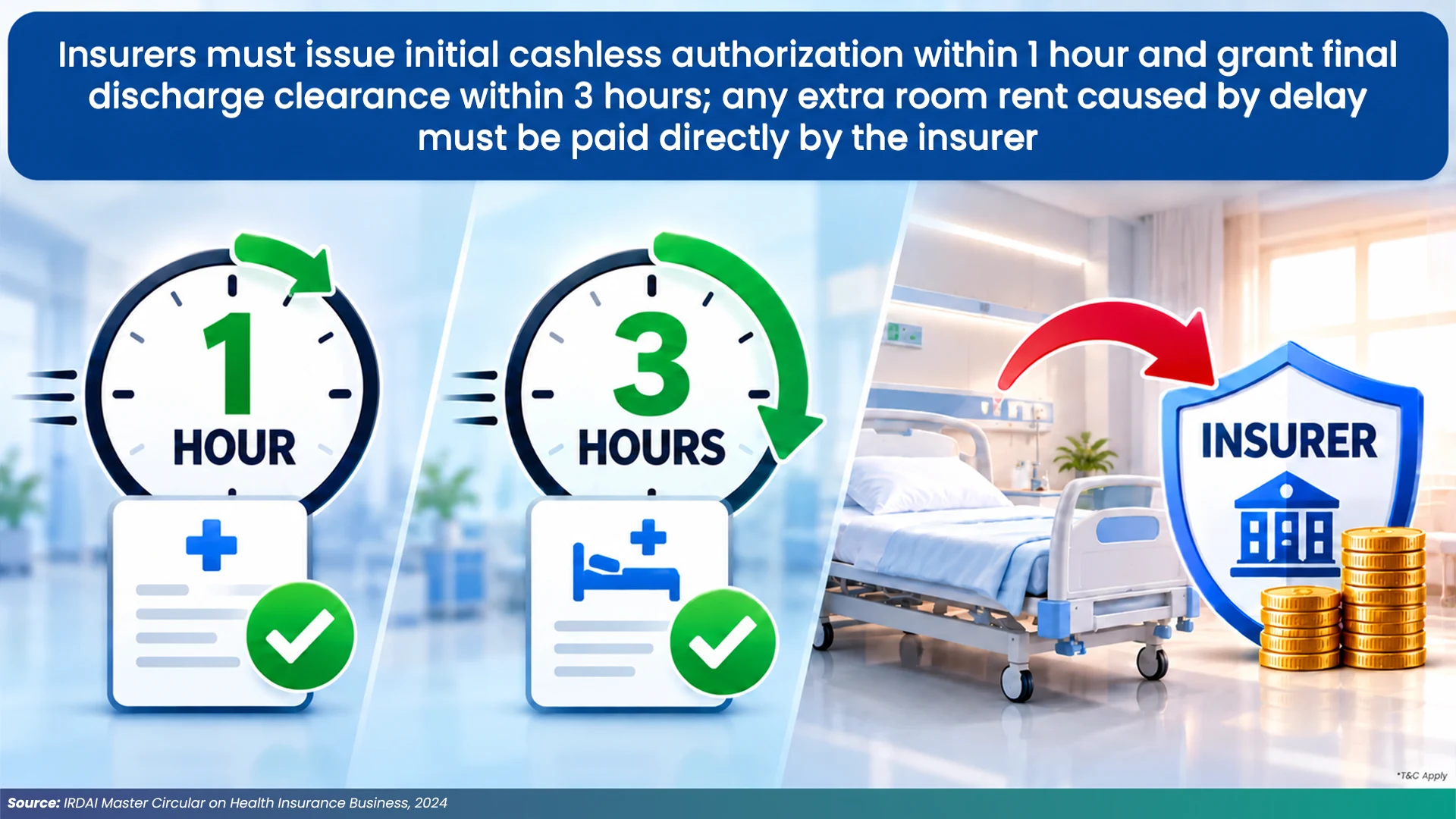
There are stringent time limits for the notification of claims that are imposed by Indian health insurers. Claim intimation is merely the initial alert that informs the company of an ongoing or planned admission; it does not require final bills or clinical records to be submitted in advance.
Disclaimer: Examples and timelines are indicative and may vary by insurer and policy terms. Please check your policy document for applicable deadlines and requirements.
A claim should be initiated whenever medical care requires active hospitalisation for 24 hours or more. Modern-day care procedures such as chemotherapy cycles, dialysis sessions, and cataract removals completed in just a few hours are also routinely covered under comprehensive plans.
A health claim is not restricted to room rents and OT fees alone:
Always preserve these external receipts so they can be filed along with your main hospitalisation claim.
Claiming every expense, however small, may not always be the most suitable option. In some situations, paying an expense out of pocket may be worth considering, depending on factors such as the claim amount, applicable deductible or co-pay, No Claim Bonus (NCB) structure, and the specific terms and conditions of your policy. Review these factors before deciding whether to file a claim.
Disclaimer: Examples and timelines are indicative and may vary by insurer and policy terms. Please check your policy document for applicable deadlines and requirements.
Having health insurance is only half the battle; knowing how to navigate the claims process is what actually saves your money and peace of mind. To understand the critical difference between cashless ease and reimbursement hurdles, consider these two contrasting real-world scenarios:
Ramesh, a Pune-based professional, was recommended for an elective gallbladder removal two weeks away. That evening, he checked his insurer’s network, confirmed the hospital was empanelled, and reached the hospital’s TPA desk five days before the surgery. His pre-authorisation form was processed, and cashless approval was received two days prior to admission. Ramesh was admitted, treated, and discharged after paying just ₹2,400 for non-medical items like gloves and administrative folders. Because he retained his earlier ultrasound and blood test receipts, he was able to subsequently claim ₹6,000 in pre-hospitalisation costs without issue.
Sunita, a Lucknow homemaker, faced a sudden crisis when her husband developed severe chest pain late at night. They rushed to a nearby clinic that was outside the insurer’s cashless network and paid the ₹1.8 lakh bill from savings over a five-day stay. Under stress, the family did not notify the insurer during admission and only contacted them three weeks post-discharge. They also misplaced several detailed pharmacy cash memos and lacked a daily breakdown of nursing charges. The claim was settled eventually, but only after tedious rounds of written delay explanations, additional physician certificates, and multiple hospital visits to retrieve duplicate bills. A simple phone call on day one would have prevented significant friction.
Disclaimer: Examples and timelines are indicative and may vary by insurer and policy terms. Please check your policy document for applicable deadlines and requirements.
For an organised reimbursement claim, please compile the following documents in a dedicated folder:
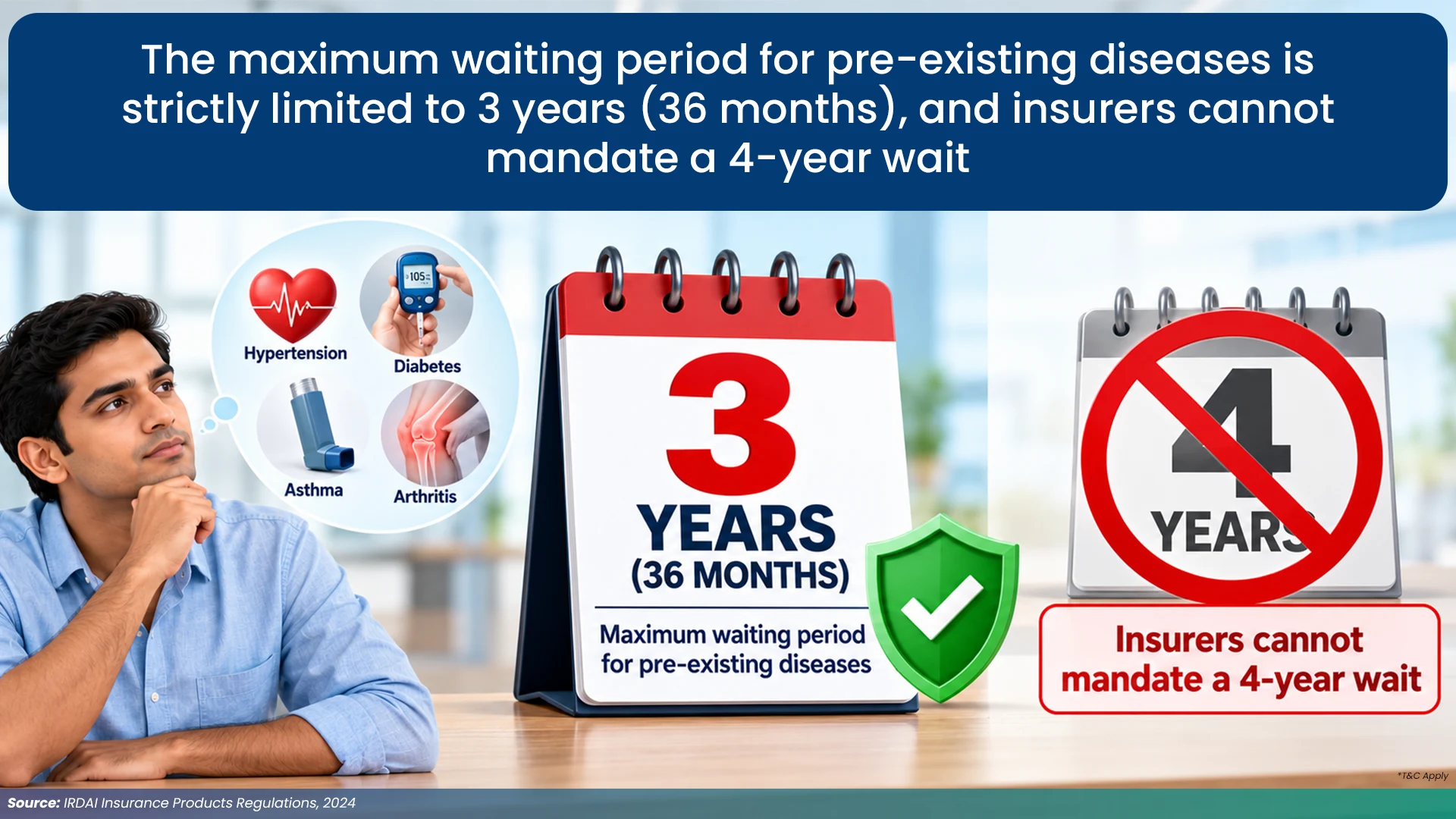
Every health insurance policy includes specific waiting periods before particular conditions become claimable:
Understanding common claim rejection triggers helps prevent avoidable mistakes:
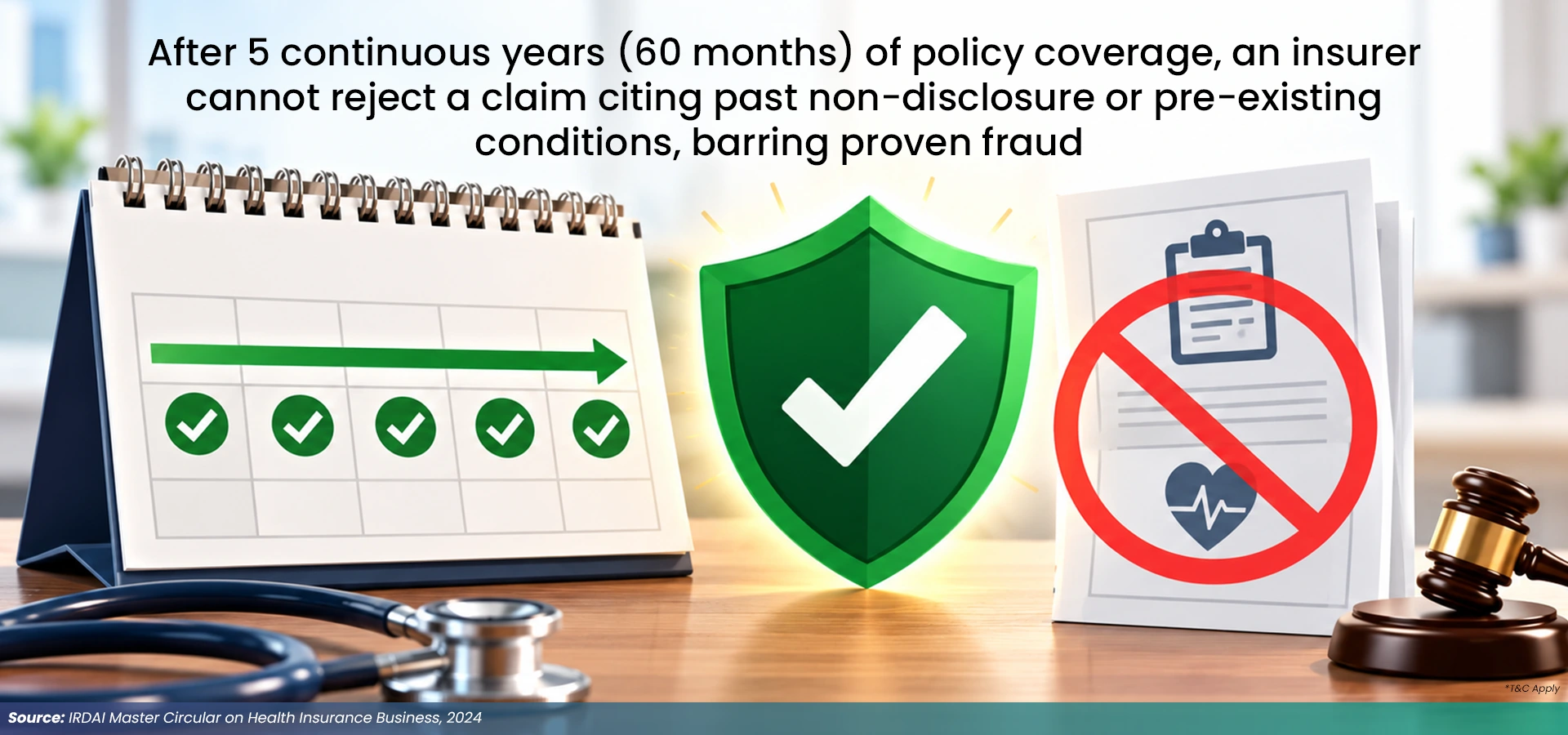
A frequent concern among policyholders is that making a substantial claim will cause the insurer to drop their cover. Under regulations enforced by the Insurance Regulatory and Development Authority of India (IRDAI), retail health policies come with guaranteed lifetime renewability. An insurer cannot cancel or deny policy renewal simply because you filed a claim.
While your accumulated no-claim bonus may reduce or reset, and base premiums may adjust over time due to age brackets or medical inflation, your continuous coverage remains intact so long as premiums are paid on time.
Buying a policy is quick, but navigating a hospital claim during an emergency requires clear guidance. When you purchase your health insurance through Finkeda, you get more than just a policy document. Finkeda can help you explore and compare available health insurance options based on factors such as cashless hospital network, waiting periods, room-rent limits and other applicable policy terms. More importantly, you get dedicated support to understand claim intimation rules, pre-authorisation steps, and document checklists upfront ensuring your family never faces confusion or claim rejections at a hospital billing counter.
Initiate the claim immediately upon admission. For scheduled procedures, notify the insurer 48 to 72 hours in advance. In emergencies, you should contact them within 24 hours of arriving at the hospital. Full documentation can follow later.
Not necessarily. For minimal bills where deductibles or co-payments apply, you may receive very little. In those situations, self-funding protects your accumulated no-claim bonus for major future medical events.
You need to notify your insurer within 24 to 48 hours for emergency treatments and 2 to 3 days prior for scheduled treatments, using the customer care line, mobile app, or insurer portal.
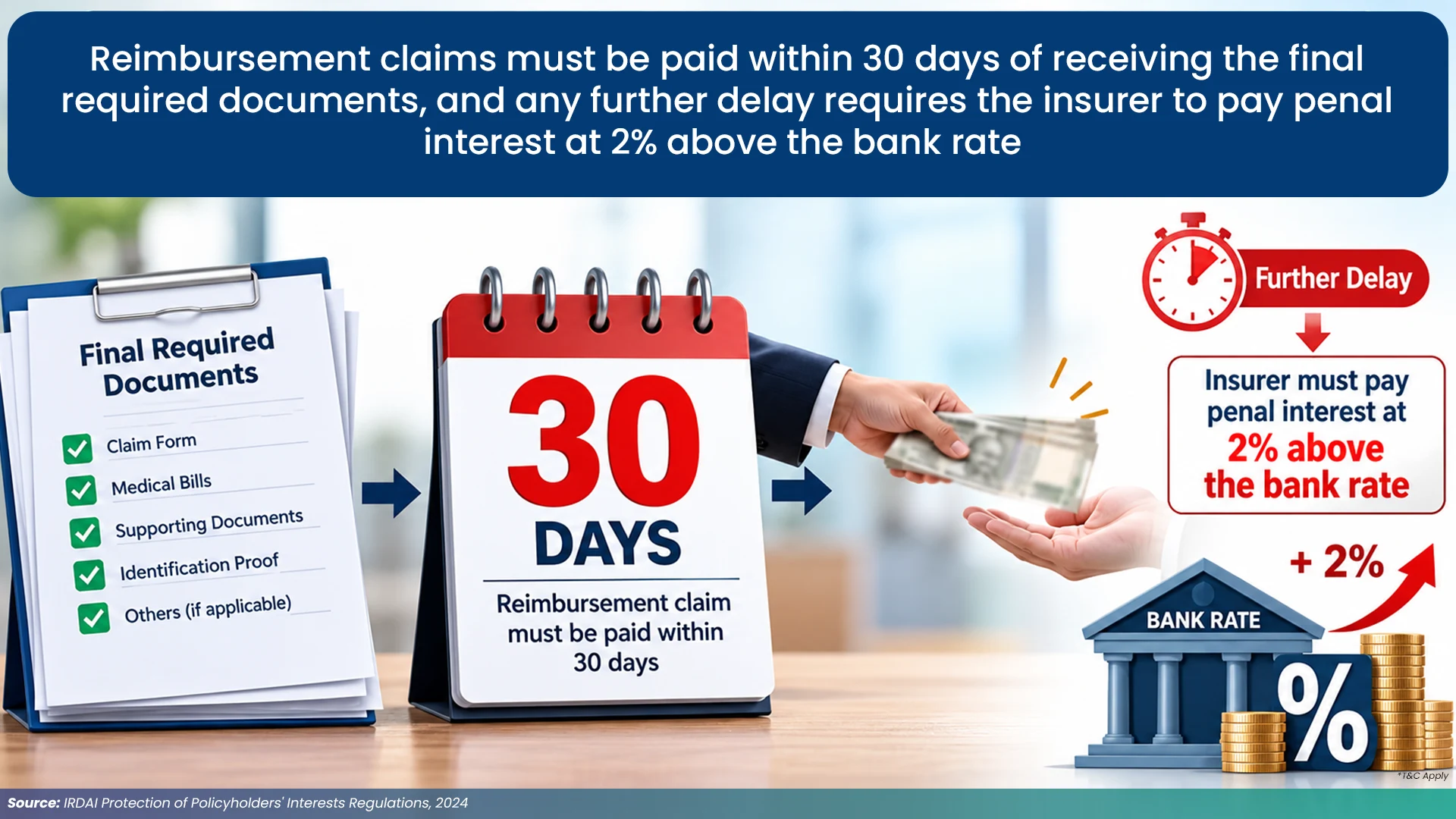
You need the signed claim form, a government photo ID, a health card, a doctor’s admission prescription, a discharge summary, itemised hospital invoices, stamped receipts, investigation reports, pharmacy bills with prescriptions, and a cancelled cheque.
No. Treatments for illnesses under active 30-day, specific disease, or pre-existing disease waiting periods are not payable. Accidental injury care is the only scenario covered from day one.
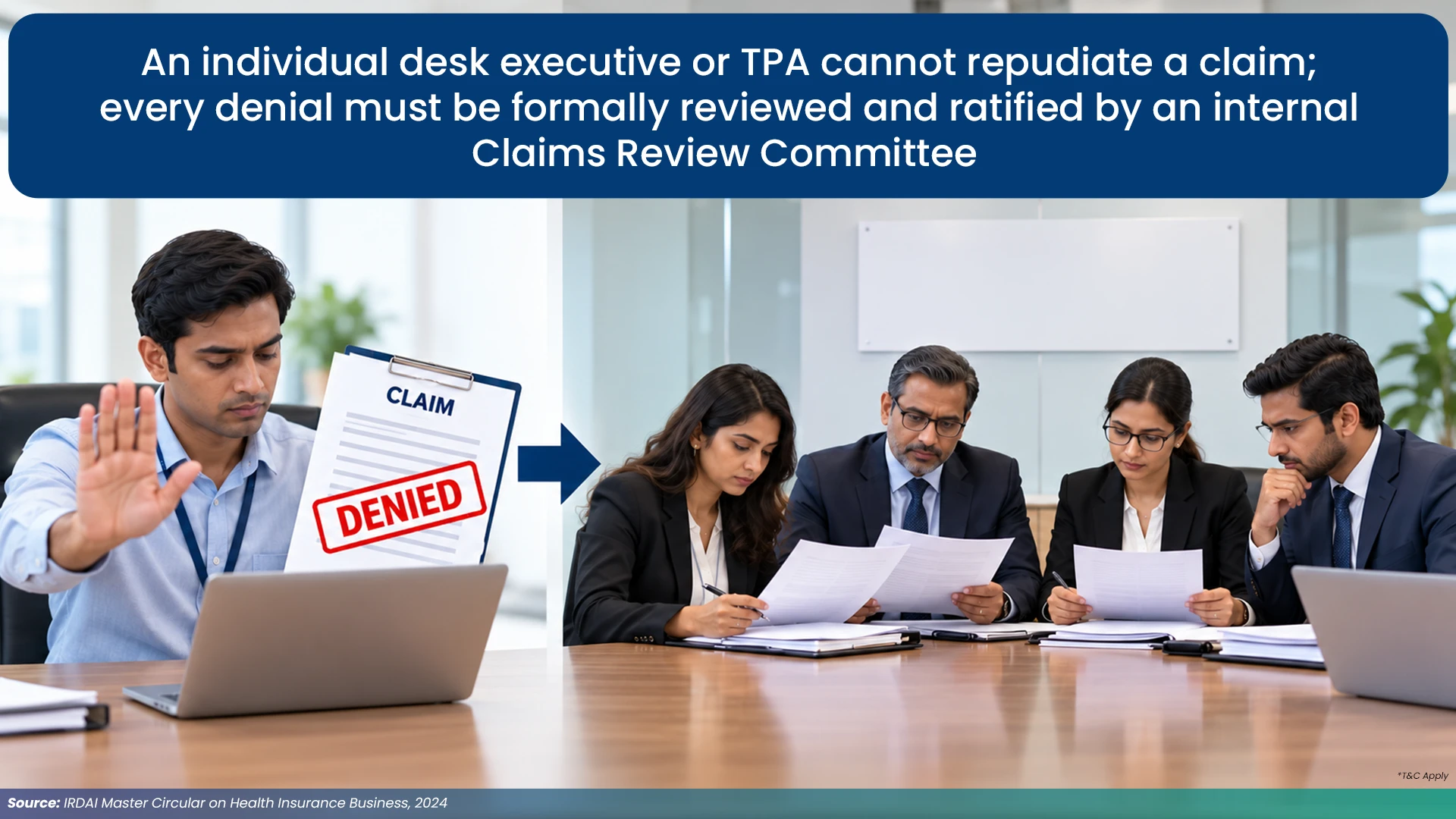
Common reasons include delayed intimation, non-disclosure of medical history, incomplete documentation, active waiting periods, lapsed policies, and admissions deemed medically non-essential.
No. IRDAI guidelines guarantee lifetime renewability for health insurance in India. The insurer cannot cancel your policy due to a claim, though your accumulated no-claim bonus may adjust upon renewal.
Disclaimer: The information provided in this article is strictly for general educational and informational purposes only and should not be construed as legal, medical, financial, or tax advice. Insurance is a subject matter of solicitation. Policy terms, coverage limits, sub-limits, waiting periods, network hospital tie-ups, exclusions, and claim settlement procedures vary significantly between insurers and products and are governed strictly by the specific policy wordings and regulatory directives issued by the Insurance Regulatory and Development Authority of India (IRDAI).
Neither this platform nor the authors guarantee claim approval or settlement, as all claims remain subject to underwriting review, documentation verification, and the sole discretion of the respective insurance company or Third Party Administrator (TPA). Readers are strongly advised to thoroughly examine the policy terms, conditions, prospectus, and schedule document before purchasing or initiating a claim and to consult a licensed insurance advisor or qualified professional for specific guidance.
Share :
Like:
0