
Nov. 13, 2026

11 Min read

Travel

Share :


This guide simplifies trip planning for Indian travellers taking their first holiday to Vietnam. Direct 4- to 5-hour flights and affordable domestic air connections make it easy to experience the historic North, coastal Central region, and modern South within a single week without wasting time in transit. Ahead, you will find practical breakdowns on visas and entry documentation, regional weather patterns, ideal travel durations, flight and accommodation bookings, currency and connectivity, a realistic 7-day day-by-day itinerary, budget factors, and how to choose the right tour package.
Here is how the journey actually unfolds from gathering your documents to stepping out into the lantern-lit glow of Hoi An.
Vietnam stretches about 1,600 km from top to bottom, and that shape decides almost everything about planning a trip there. You are not visiting one place. You are choosing between a cool, old, noisy north, a calmer middle with beaches and a lantern town, and a hot, busy south that never really sleeps. Most Indian travellers on their first visit do a slice of each. This guide from Tripround Powered By Finkeda explains how to split your days, when to go, what to sort out before you fly, and what a real 7-day plan looks like, with the small practical details that usually get left out.

Note: This advice is general guidance. Rules, weather, timings and prices change, so use this guide to plan and check the details before you book anything.
Every remarkable journey begins with understanding the rhythm of the place you are walking into.
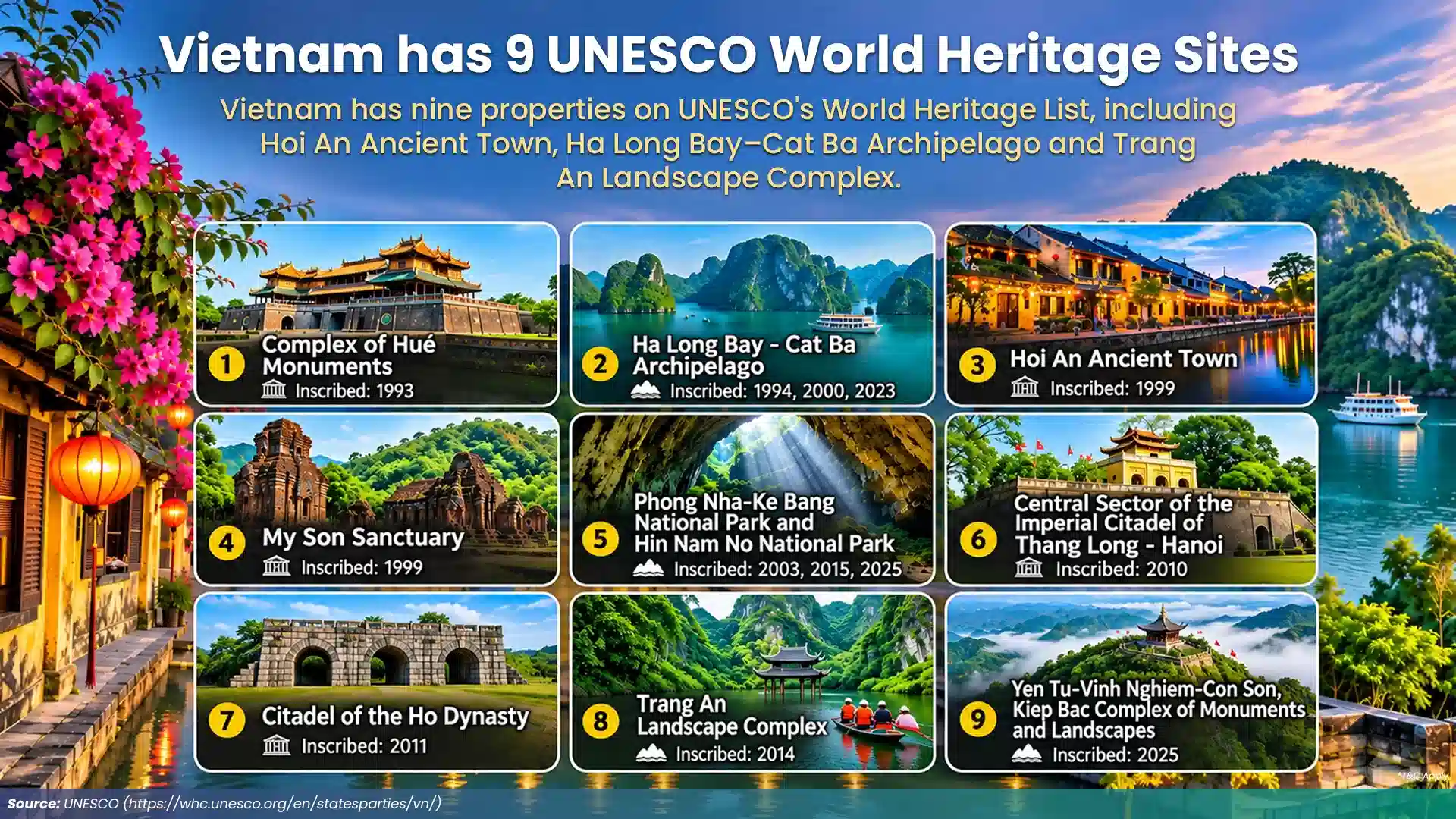
Stepping onto the tarmac at Noi Bai Airport, the air feels crisp. Hanoi greets you with an electric hum, a chorus of millions of motorbikes threading through the narrow lanes of the historic Old Quarter. Crossing these streets for the first time is an initiation: you must walk steadily, smoothly, and without hesitation, letting the river of two-wheelers anticipate your stride and part gracefully around you.
By evening, as steam rises from tiny pavement stalls serving pho and the rich froth of whipped egg coffee, you find yourself settled into a slow cyclo ride toward Hoan Kiem Lake, followed by the enchanting music of the water puppets dancing on shimmering water.
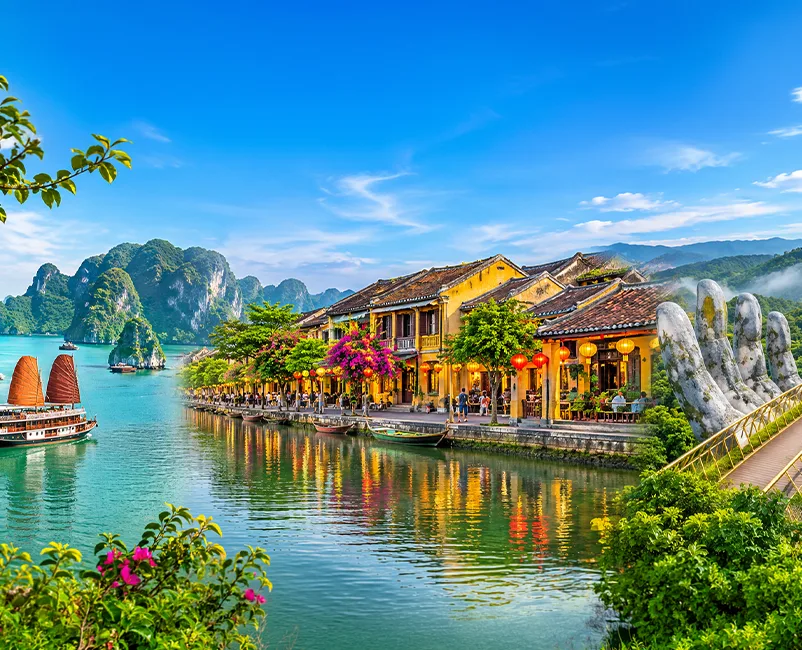
Just a few hours’ drive east lies Halong Bay. The moment your boat glides past the harbor, the noisy city fades into absolute silence. Thousands of limestone karst islands rise out of emerald water like ancient sleeping dragons. Whether you spend a long, dramatic day cruising through hidden sea caves or stay overnight watching the dawn mist dissolve over the bay, it is a landscape that stays etched in memory forever.
Traveller’s Note: The road journey between Hanoi and Halong Bay takes approximately 2.5 to 3 hours each way. While Tripround Powered By Finkeda arranges comfortable transfers with vetted local operators, all Halong Bay sailings and cave visits operate under official port authority safety guidelines. Weather disruptions (such as dense winter fog or sea squalls) may lead to delayed or restricted sailings. Sightseeing sequences and pick-up windows are subject to local operational conditions.
Leaving the capital behind, a short flight carries you to Da Nang, where the cool breeze of the north gives way to open sands and wide coastal roads. Nearby lie the five limestone summits of the Marble Mountains, sheltering centuries-old grottoes and pagodas, right beside the sculptors of Non Nuoc village.
High above the coastline, a long cable car glides through cool mist toward Ba Na Hills. Suddenly, emerging from the clouds, is the sight you have seen across countless screens: the colossal stone hands of the Golden Bridge, holding a golden walkway suspended against the mountain sky.
As twilight falls, the road leads to Hoi An. The modern world vanishes entirely. Yellow colonial shopfronts line the cobblestone alleys. tailor shops display rolls of vibrant silks, and thousands of handmade lanterns glow softly along the Thu Bon River. It is a town built for unhurried walking, fitting sessions for bespoke clothing, and quiet riverside dinners.
Traveller’s Note: While Central Vietnam is pleasant and sunny from February to August, late autumn (particularly October and November) can bring heavy rainfall and coastal storms. Keep your day-by-day plans flexible, pack a light waterproof layer, and make sure your travel insurance covers weather-related tour adjustments.
Fly further south, and the temperature rises alongside the heartbeat of Ho Chi Minh City (Saigon). It is fast, dynamic, and full of contrasts: grand landmarks like the Central Post Office, Notre Dame Cathedral, and the Reunification Palace stand alongside soaring glass towers.
The history deepens at the War Remnants Museum, followed by a visit out to the forested grounds of the Cu Chi Tunnels. Crawling through a few meters of these tight, subterranean wartime passageways offers a visceral sense of courage and survival that textbooks can never convey.
Traveller’s Note: The War Remnants Museum features intense historical exhibits; visitor discretion is advised for families with young children. Entering the Cu Chi underground tunnels is entirely optional and self-assessed based on personal comfort and mobility. Site access, monument interiors, and operating schedules remain subject to local regulations, maintenance, and weather conditions; safe alternative viewpoints or route adjustments will be provided if access is restricted.
How long do you need to uncover this story?
Our Advice: For a first trip, avoid packing more than three regions into a 7-day schedule; domestic airport transits, highway drives, and flight check-ins consume half a day on every transfer. Always schedule a comfortable 3-hour buffer between internal flights and scheduled tours.
Please Note: These duration frameworks are illustrative planning guides. Exact sightseeing sequences, inter-city flight timings, and hotel check-in slots depend on real-time seasonal schedules, airline operations, and supplier availability. All finalized inclusions, routes, and cancellation terms are confirmed in writing prior to booking.
Hanoi (2 Nights) ➔ Da Nang & Hoi An (2 Nights) ➔ Ho Chi Minh City (2 Nights)
A seamless adventure depends on getting the small groundwork details right before taking off.
Because Vietnam’s three regions experience entirely different weather patterns, pack with care:
Traveller’s Note:
Seasonal transitions vary annually, and coastal squalls or dense winter fog can occasionally affect maritime clearances in Halong Bay or outdoor activities in Central Vietnam. Pack breathable layers alongside a light waterproof jacket, and ensure your comprehensive travel insurance covers weather-related itinerary adjustments. Exact seasonal touring conditions remain subject to prevailing regional forecasts.
Fact to Add: Indian passport holders require a valid visa, which is easily secured through an e-Visa via the official Vietnamese government immigration portal. Ensure your passport carries at least six months of validity beyond your return date. Always travel with a printed folder containing your approved e-Visa copies, internal flight tickets, hotel vouchers, and comprehensive travel insurance.

Traveller’s Note:
Our Advice: Apply for your e-Visa at least 10 to 14 working days before departure, and ensure every detail – full name, passport number, and date of birth – matches your passport exactly, as minor typographical errors can lead to boarding denials at the airport.
Please Note: Visa approvals, entry permissions, and border policies are governed exclusively by the Vietnamese Immigration Department. Tripround Powered By Finkeda does not control government processing timelines, visa rejections, or sudden changes to immigration regulations. While travel insurance is not a mandatory condition of entry, comprehensive coverage covering medical emergencies and flight or tour cancellations is strongly advised.
Vietnam is built around street food, from crisp banh mi and fresh herb rolls to steaming bowls of broth. However, if you are vegetarian or Jain, note that fish sauce (nuoc mam) is a foundational seasoning. Look for dedicated Indian restaurants across major cities or have dietary requests printed in Vietnamese to hand over at dining tables.
Dining Tip: In Vietnam, ordering “vegetarian” does not automatically mean fish sauce or meat stock has been omitted. Major metropolitan hubs like Hanoi, Da Nang, and Ho Chi Minh City boast excellent Indian dining options in central districts. For day tours and excursions, alert your tour manager in advance in writing, and keep translated dietary phrases handy on your phone for street food stalls.
The Vietnamese Dong (VND) involves multiple zeros. While hotels and larger restaurants accept international travel cards, local market stalls, small cafes, and souvenir shops operate exclusively on cash. Pick up a local eSIM or airport SIM upon landing, and keep offline navigation maps downloaded.
Financial & Travel Security Advisory: Travellers are advised never to display large wads of banknotes openly in crowded street markets. Distribute currency across multiple pockets or bags rather than keeping total funds in one wallet. Use ATMs affiliated with reputable international or major domestic banks located within secure premises to avoid skimming risks. Unplanned transportation expenses or communication charges incurred outside confirmed package transfers are not reimbursable.
The travellers who return with the brightest smiles are almost always those who take their mornings slowly, leave room for serendipity, and start their Halong Bay cruises early enough to catch the mist parting over the limestone peaks.
Every journey changes depending on your pace, whether you prefer private guided excursions or shared group tours, intimate boutique stays in the Old Quarter or coastal beach resorts in Da Nang.
Share your travel dates, group size, and preferred style with Tripround Powered By Finkeda, and let us curate a seamless, tailor-made itinerary for you.
Disclaimer: This travel feature is for informational and planning purposes only. Visa regulations, airfares, weather conditions, local operational schedules, and government taxes (including TCS) remain subject to change. Custom itinerary details and final inclusions are confirmed at the time of booking.
Start with your dates and number of days. Then pick your cities, one each from the north, centre and south for a first trip. Check the visa and flights early, and book hotels and the main tours after that.
Hanoi, Halong Bay, Da Nang, Hoi An, Ba Na Hills, Ho Chi Minh City and the Cu Chi Tunnels. Add Phu Quoc, Sapa or Ninh Binh if you have extra days.
Two nights in Hanoi with Halong Bay, two in Da Nang with Ba Na Hills and Hoi An, and two in Ho Chi Minh City with the Cu Chi Tunnels. The full day-by-day plan is above.
It depends on your dates, hotel level, number of cities, tour style, flights and group size. Share your plan and ask for a quote based on it.
The best travel package is the one that fits your pace and budget, lists inclusions clearly, tells you which tours are shared or private, and spells out cancellation terms.
It depends on the region. The north is better from autumn to spring, the south is drier from about November to April, and the centre is usually best in spring and early summer.
It is not usually a condition of entry, but it is strongly recommended. Please check current rules with official sources.
Generally yes, and an e-visa is commonly used. Apply through the official portal or a trusted agent, and check current rules before you travel.
Disclaimer: This guide is for general information only. Prices, availability, hotels, inclusions, visa and entry rules, taxes (including TCS), timings, flights and weather can change without notice. The sample itinerary is illustrative and is not a confirmed booking or a fixed offer. Final itinerary, costs and terms are shared in writing at the time of booking. Tripround Powered By Finkeda is not responsible for decisions made solely on the basis of this guide. Please confirm all details with your travel consultant and check official government, airline and weather sources before you travel.
Share :
Like:
0