
Oct. 30, 2026

15 Min read

Loan

Share :


This guide compares a personal loan and an education loan for students in India on six things across six key factors : interest rates, eligibility, fees and charges, when repayment starts, tax benefits and approval speed. It also shows what the personal loan on the Finkeda Prime app looks like on paper, what a lender checks before saying yes, and how to apply step by step.
You’ll find EMI examples on ₹5 lakh, five tables and three real-life situations. It’s written for students planning fees, working professionals considering a course, and parents about to pay.
Ananya got into a good engineering college last week. The first-year fee is ₹1.6 lakh, and the hostel costs extra. Rahul is 26, works at an IT company, and wants to do a part-time MBA that costs ₹1.5 lakh. Both need a loan, and both will probably Google the same thing tonight.
But the loan that suits Ananya is not the one that suits Rahul. That’s what this guide is about. We’ll compare an education loan vs. a personal loan based on the factors that affect the overall cost, including interest, eligibility, fees, when the EMIs start, and tax.
Disclaimer: Ananya, Rahul and Meera are fictional examples created for illustration only.
Short answer: if you’re a full-time student with no income, an education loan may be suitable for students depending on the course, loan amount, repayment structure and lender criteria. The rate is lower, repayment starts after your course, and there’s a tax benefit. A personal loan may be considered by applicants who meet the lender’s income and eligibility requirements and need funds for permitted personal expenses, or need to cover costs; an education loan won’t. And if you want to apply for a personal loan, routes start in the same place: the Finkeda Prime app.
An education loan is built for one job: paying for a course. It covers tuition, hostel, books, a laptop, and exam fees. The lender often pays the college directly, and it usually wants a parent or guardian to sign as co-applicant. In return you get a lower rate and a breathing period before repayment begins.
A personal loan doesn’t care what you spend it on. The money lands in your bank account, and you decide whether it goes to fees, a visa, flights or a security deposit. The trade-off is a higher rate and EMIs that start almost immediately.
| Feature | Education loan | Personal loan via (Finkeda Prime) |
| Purpose | Course fees and related costs. | Anything you need. |
| Who applies | Student, with a co-applicant. | Salaried adult with income. |
| Interest rate | Roughly 8% to 14% (varies by lender). | 18% to 24% a year. |
| When EMIs start | After course + moratorium. | Once the loan is disbursed, Repayment usually begins from the next billing cycle. |
| Collateral | Often not required up to a specified limit; may be required above that limit | Not needed. |
| Loan size | Can run into lakhs or crores. | ₹50,000 to ₹5,00,000. |
| Repayment period | Up to 15 years. | 24 to 36 months. |
| Tax benefit on interest | Yes, with conditions. | No. |
| Process | Documents, co-applicant and college checks; takes days to weeks. | Fully digital, with income and bank statement checks. |
Disclaimer: The above EMI and interest figures are illustrative only and are based on the stated assumptions. Actual EMI, interest and total repayment may vary depending on the lender, applicable interest rate, disbursal schedule, fees and other charges.
Based on the illustrative rates used in this article, the education loan example has a lower interest cost than the personal loan examples. Public sector banks start from around 8.33%, while NBFCs start from about 10.5%, and many public banks offer an interest rate concession of around 0.5% for girl students. The personal loan interest rate on Finkeda Prime falls between 18% and 24% a year, depending on your profile.
Here’s what that looks like on ₹5 lakh repaid over 3 years:
| Loan | Rate | Monthly EMI | Total interest |
| Education loan | 10% | ₹16,134 | about ₹80,800 |
| Personal loan (lower end) | 18% | ₹18,076 | about ₹1.51 lakh |
| Personal loan (upper end) | 24% | ₹19,616 | about ₹2.06 lakh |
On the same tenor, the personal loan costs you roughly ₹70,000 to ₹1.25 lakh more.
Disclaimer: The above EMI and interest figures are illustrative only and are based on the stated assumptions. Actual EMI, interest and total repayment may vary depending on the lender, applicable interest rate, disbursal schedule, fees and other charges.
Two honest caveats, though. First, an education loan is usually stretched over 5 years or more, which drops the EMI (₹10,624 a month over 5 years at 10%) but adds interest. Second, the meter starts running before you graduate. Take ₹5 lakh, a 2-year course and a 6-month moratorium at 10%. That’s about ₹1.25 lakh of simple interest by the time repayment begins, if you don’t pay any of it along the way. Lenders release money in instalments, so the real figure is usually lower. Paying just the interest while you study works out to about ₹4,167 a month for this loan, and it stops the balance from growing.
While education loans may have lower interest rates, the total cost can also depend on the repayment period, moratorium and other applicable charges.
With personal loan processing fees, the fee on Finkeda Prime can go up to 3% of the loan amount. On ₹3 lakh that’s up to ₹9,000, and on ₹5 lakh it’s up to ₹15,000, plus applicable taxes. The exact figure appears on the final summary screen before you accept, so you never have to guess.
Education loans vary. Some public banks charge little or nothing on domestic loans. For study abroad, private lenders often charge around 1% to 1.25% plus GST, and some banks ask for margin money, which means you pay a slice of the cost yourself (often 5% to 15%). Ask about it before you assume the loan covers 100% of your fees.
Disclaimer: The fee examples above are illustrative and based on the stated percentage. Actual processing fees, GST and other applicable charges may vary and will be disclosed in the applicable loan documents/KFS.
This is the difference most students miss, and it matters more than the rate.
An education loan comes with a moratorium. It typically runs for the course duration plus one year, and repayment can then stretch up to 15 years. A personal loan has no such pause. If you borrow ₹5 lakh at 18% for 36 months, you pay ₹18,076 every month, whether you’re still in a classroom or not. A student with no income can’t do that. Someone with a salary can.
Product note: Loan amount, interest rate, tenure, processing fee and eligibility criteria are subject to the applicable lender/product terms and may change. The actual offer shown in the Key Fact Statement will prevail.
Education loan eligibility is about the student, but it is mostly about the family behind the student. Lenders generally look for:
Your course and college matter too. Lender lists of approved institutions differ, and a course outside the list can slow things down.
To put this into perspective. A personal loan for students works only for some students. Personal loans are generally intended for applicants with a regular source of income and are subject to the lender’s eligibility criteria.
Here’s what the personal loan eligibility looks like on the Finkeda Prime app:
| Criteria | Requirement |
| Age | 21 to 58 years. |
| Employment | Salaried. |
| Minimum income | ₹15,000 per month. |
| Work experience | About 3 years overall, with 2 in the current company. |
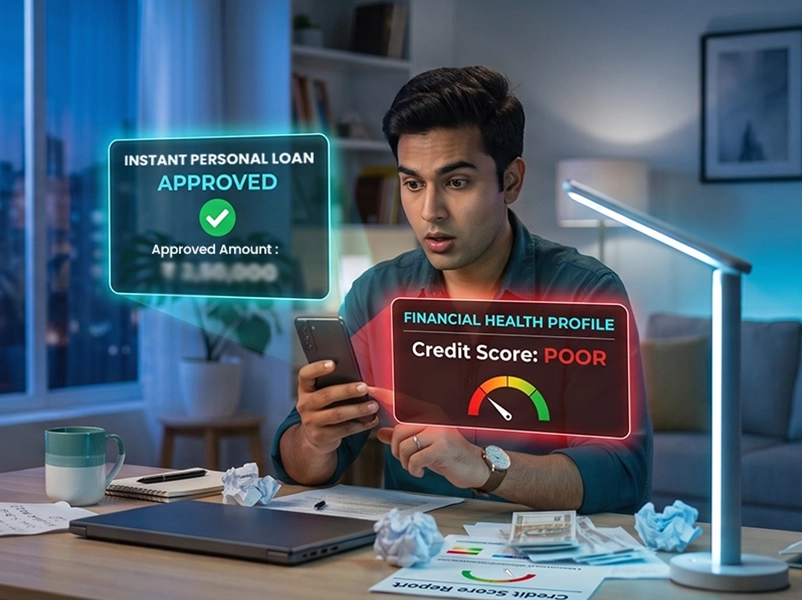
| Credit score | 650 or above.May still be assessed based on their bank statements and other eligibility criteria |
| Existing EMIs | Not more than 50% of income (FOIR). |
| Documents and checks | 6 months of bank statements, video KYC and a video personal discussion. |
Note: The eligibility criteria mentioned above are indicative and may change. Actual eligibility, loan amount, interest rate and approval are subject to the applicable lender’s policies and assessment.
So a personal loan for higher education fits a working professional doing a part-time MBA, a certification or a study-abroad move. It also fits a salaried parent paying for a child’s course.
That 50% FOIR rule deserves a quick example. Say you earn ₹40,000 a month. Your total EMIs shouldn’t cross ₹20,000. A ₹5 lakh loan at 18% for 36 months needs ₹18,076, which only works if you have almost no other EMIs running.
Disclaimer: This example is for illustration only. Actual eligibility and loan approval depend on the lender’s assessment, income, existing obligations, credit profile and applicable policy.
| Check | What the Lender Looks for |
| Overdue on existing loans | The overdue amount should not exceed ₹5,000. |
| Late payments (active accounts) | No payments should have been more than 30 days overdue in the last 3 months or more than 60 days overdue in the last 6 months. |
| Serious delays (all accounts) | No payments should have been more than 90 days overdue in the last 12 months, whether the account is active or closed. |
| Settlements and write-offs | None on any term loan in the last 12 months. |
| Recent personal or business loans | Not more than 1 such loan started in the last 6 months. |
| Loan enquiries | Not more than 3 in the last 30 days. |
| Bounced payments | No EMI bounce in the last 90 days, at most 2 EMI bounces and 3 bounces overall in the last 180 days, and at most 1 bounce in the last 90 days. |
If you’re planning to apply, a few weeks of preparation helps: clear small overdues, keep your account free of bounces, and don’t apply to five lenders in one week.
A personal loan without collateral is the default. You never pledge property, gold or a fixed deposit, and you don’t need a guarantor.
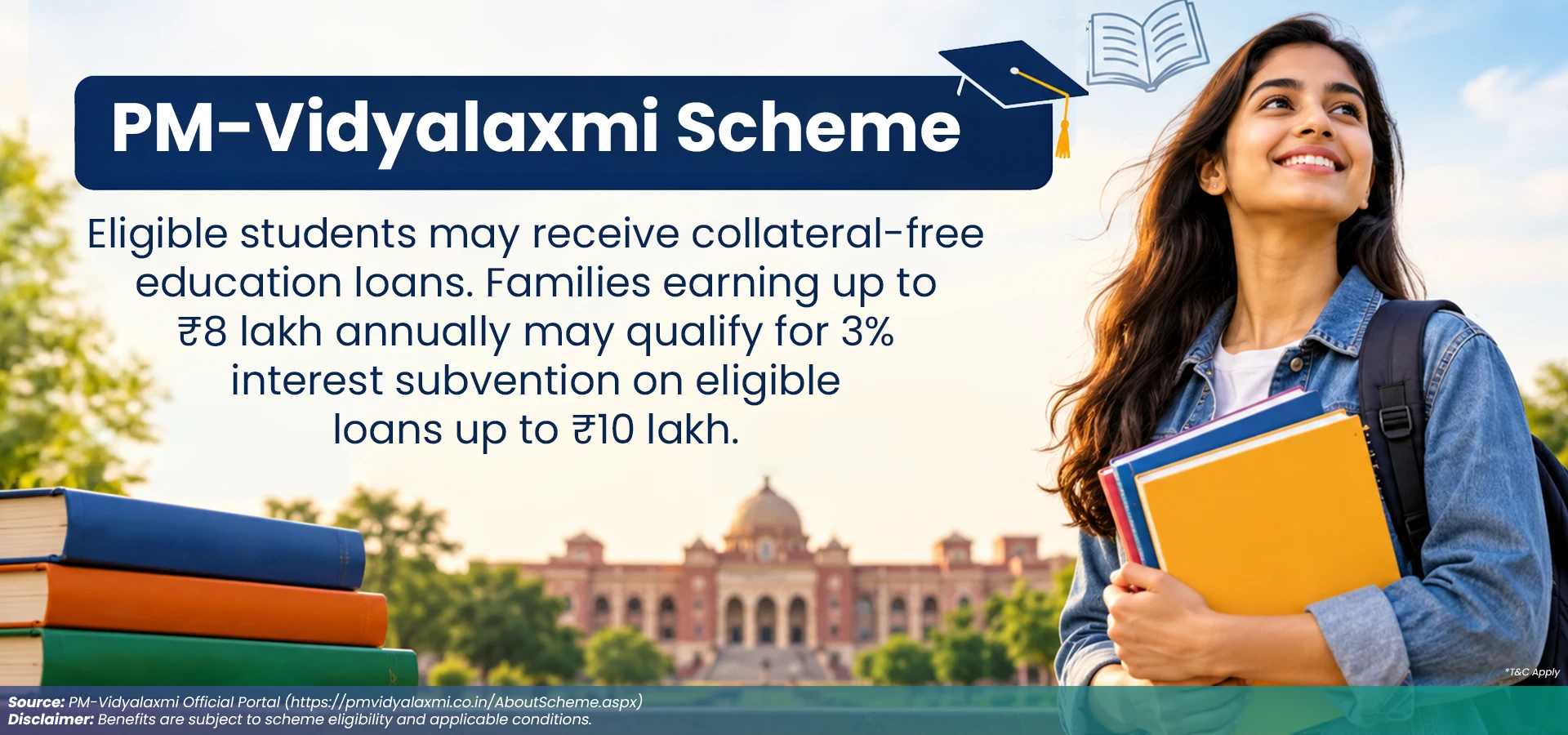
Education loans can be either secured or unsecured. Many banks skip collateral up to a certain amount. There’s also a government route worth knowing about. Under PM-Vidyalaxmi, students in top-ranked institutions can get collateral-free, guarantor-free loans, with a 75% government credit guarantee on loans up to ₹7.5 lakh. There’s a catch, though. It applies only to a specific list of institutions (about 860), and students admitted under the management quota aren’t eligible. Check your college on the official portal before you count on it.
The main education loan benefits are these:
A lower rate. You saw it in the table above.
A repayment pause. No EMIs while you study, which is the whole reason it suits people without income.
Bigger amounts and longer tenor. You can borrow well beyond ₹5 lakh and spread repayment over years.
A tax deduction. Interest on an education loan can be deducted from your taxable income with no upper limit, for up to 8 years. This works under the old tax regime, and from Tax Year 2026-27 the same rule sits in Section 129 of the Income Tax Act 2025 (earlier Section 80E). Take ₹5 lakh at 10% over 5 years. Year-one interest is about ₹46,300. In the 30% slab, that saves roughly ₹14,000 in tax. A CA can tell you if the old regime actually works out better for you.
Government subsidies. Students from families earning up to ₹8 lakh can get a 3% interest subvention during the moratorium on loans up to ₹10 lakh under PM-Vidyalaxmi. Lower-income families may qualify for full interest support.
The personal loan benefits are mostly about speed and freedom.
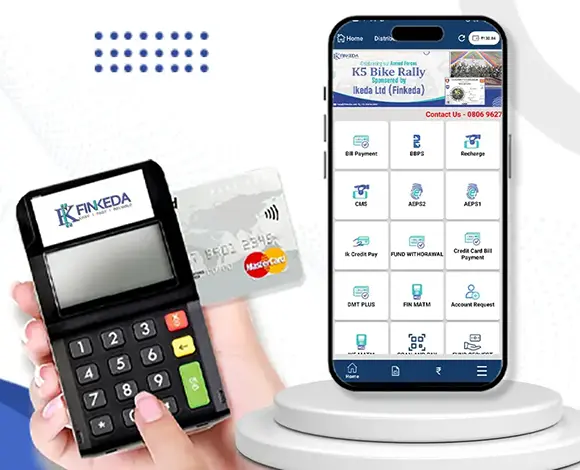
It’s digital. You can apply from your phone. Register, verify, choose your amount and tenure, and see your EMI before you accept.
You can spend it on anything. Tuition, yes. But also the visa fee, a flight, a laptop, the accommodation deposit, and exam prep. These are the costs education loans tend to skip or reimburse late.
No collateral, no co-applicant. If you qualify on your own income, you don’t need your parents’ salary slips or anyone’s property papers.
Fixed EMIs. You know the exact amount and the end date from day one.
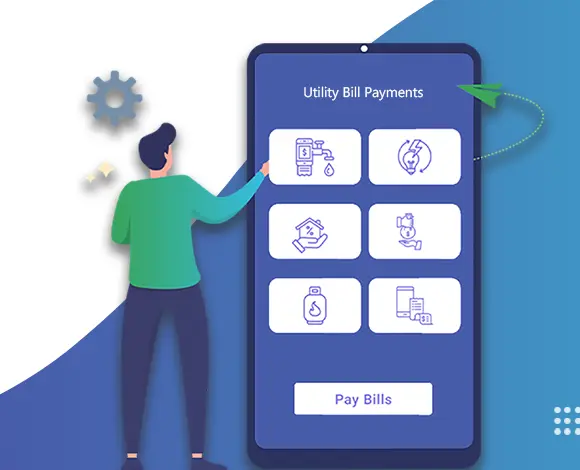
Everything in one app. Once you have the money, you can pay school or college fees online through the same Finkeda Prime app, so you don’t need a second platform for the fee payment.
Generally, no. The deduction is tied to loans taken specifically for higher education. A personal loan that you happened to spend on college fees usually doesn’t qualify. If tax saving is a big part of your plan, so that’s a point in favour of the education loan. Confirm with a tax professional for your case.
Disclaimer: The tax-saving figure is illustrative and depends on the applicable tax regime, income, tax slab and eligibility. Actual tax benefits may vary. Please consult a qualified tax professional.
The entire thing takes place on your phone. Here’s how it goes, step by step:
| Step | What to do and what to look for | |
| 1 | Download & Register | Download the Finkeda Prime app from the Google Play Store and sign up using your primary mobile number. The process takes approximately two minutes. |
| 2 | KYC Complete | Fill in your details and complete the paperless KYC process. Keep your last six months’ bank statements ready and be prepared to complete a video KYC, if required. |
| 3 | Apply for the loan | Pick a loan amount between ₹50,000 to ₹5,00,000 and a tenure of 24 to 36 months. |
| 4 | Check the terms | Check the summary screen for interest rate, processing fee and EMI breakup. |
| 5 | Authorise | Verify the loan agreement with an OTP your bank will send you. The approved amount is then credited to your linked bank account. |
Note: The steps, loan amount, tenure, fees and eligibility criteria mentioned above are indicative and may vary based on the applicable lender’s policies and your eligibility. The actual interest rate, charges, EMI, repayment terms and other applicable details will be provided in the Key Fact Statement (KFS) and loan agreement. Please review these documents carefully before accepting the loan.
One safety habit worth building: never share your OTP, card PIN or CVV with anyone, including someone who says they’re from customer support.
Back to our three people.
Ananya is 19, in her first year, with no income, and her family earns ₹6 lakh a year. She should go for an education loan. Her father can be the co-applicant; the moratorium covers the four years of college, and if her college is on the PM-Vidyalaxmi list, she might avoid collateral altogether.
Disclaimer: Ananya, Rahul and Meera are fictional examples created for illustration only.
Rahul earns ₹45,000 a month and needs ₹1.5 lakh for a part-time MBA. A personal loan of ₹1.5 lakh at 20% over 24 months means an EMI of about ₹7,634 and around ₹33,200 in interest, plus a processing fee of up to ₹4,500. The EMI is about 17% of his salary, comfortably under the 50% FOIR limit. If the college deadline is this week, this may be an option if the applicant meets the lender’s eligibility criteria and can manage the applicable EMI. If he has a month to spare, it’s worth asking what an education loan would cost.
Disclaimer: The EMI, interest and processing fee figures in this example are illustrative and may differ from the actual offer based on the applicable rate, tenure, fees and lender terms.
Meera’s family is planning an MS in the US, with an estimated cost of ₹35 lakh. A personal loan capped at ₹5 lakh can’t carry that. They’d take an education loan for the main cost and might use a personal loan for the gaps, like visa fees, flights, the first month’s rent and a laptop.
Disclaimer: Illustrative example only. Actual loan availability, amount and terms depend on lender eligibility and approval.
If you want a quick cheat sheet:
| Your situation | Better fit |
| Full-time student, no income | Education loan. |
| Fee due within days | Personal loan. |
| Total cost above ₹5 lakh | Education loan. |
| Working, doing a part-time or upskilling course | Personal loan (or education loan if time allows). |
| Want a tax deduction on interest | Education loan. |
| No co-applicant, no collateral | Personal loan if you qualify; PM-Vidyalaxmi if your college is listed. |
| Need money for non-tuition costs | Personal loan. |
Disclaimer: The comparison is for general information only. The suitability of a loan depends on the applicant’s financial circumstances, eligibility, lender terms and repayment capacity.
Yes, and some borrowers may consider using both types of loans for different financial requirements, subject to lender eligibility and repayment capacity. Education loans for the big, predictable costs, personal loans for the small, urgent ones. Just keep your EMI total inside that 50% comfort zone, and don’t apply to five lenders in one week. Lenders look at how many loan enquiries you’ve made recently, and a burst of them can get you rejected even when your income is fine.
A few come up again and again.
Comparing only the EMI. A low EMI over a long tenor can hide a much higher total cost, so compare the total you’ll repay.
Ignoring moratorium interest. The interest that piles up while you study gets added to what you owe. Even partial payments help.
Borrowing the maximum you’re offered. Take what you need. Borrowing only the amount you need can help limit your overall repayment obligation.
Skipping the fine print. Processing fee, margin money, prepayment charges, and whether the rate is floating or fixed. Ask for all of it in writing.
Not checking free money first. Scholarships and PM-Vidyalaxmi benefits can reduce what you need to borrow before you sign anything.
If you have no income and the course is long or expensive, an education loan may be considered after comparing its interest rate, repayment period, moratorium, fees and eligibility requirements. The rate is lower, you start paying after you graduate, and you may get tax and subsidy benefits. If you earn a salary, need money now, or have costs an education loan won’t cover, a personal loan is a sensible tool, as long as the EMI sits comfortably inside your monthly budget.
Whichever way you lean, you can begin from the Finkeda Prime app: apply for a personal loan, check your EMI before you accept, and pay your fees from the same place. Borrow only what you can repay without stress.
Yes. A personal loan has no restriction on how you use the money, so you can put it towards fees, exams, a visa or living costs.
An education loan. Rates on education loans generally sit around 8% to 14%, while personal loan rates on Finkeda Prime run from 18% to 24%.
Usually not. Personal loans depend on your income, so a full-time student with no salary typically won’t meet the criteria. A working parent or a salaried student aged 21 or above might.
In most cases, yes. Lenders usually want a parent or guardian to co-sign, and their income and credit history count as much as yours.
Yes, under the old tax regime, with no upper limit, for up to 8 years from when repayment starts. The deduction has moved to Section 129 under the new Income Tax Act. Ask a CA if it’s right for you.
The current policy asks for a score of 650 or above, along with a clean repayment record on existing loans. If you’re new to credit, your bank statements may be used to assess eligibility.
Up to ₹5,00,000, repaid over 24 to 36 months.
Yes. School and college fees can be paid online through the app to listed educational institutions.
Disclaimer: This blog is for general information only and does not constitute financial, legal or tax advice. Loan approval, interest rates, fees, tenure and eligibility are subject to the lender’s policies and your individual profile. The rates, amounts and examples mentioned are indicative and may change; your Key Fact Statement (KFS) and loan agreement will prevail. Education loan, tax and government scheme information is based on publicly available information as of September 2026 and may vary based on applicable rules, lender and scheme eligibility. Examples are illustrative, and actual EMI, interest and total repayment may differ .Loans are subject to lender approval and applicable terms and conditions. Please review all loan documents carefully before applying. Never share your OTP, PIN, CVV or passwords, and make payments only through authorised channels. This document is not an offer or a solicitation. Loans are subject to lender approval. Terms and conditions apply.
Share :
Like:
0