
Oct. 16, 2026

9 Min read

Investments

Share :


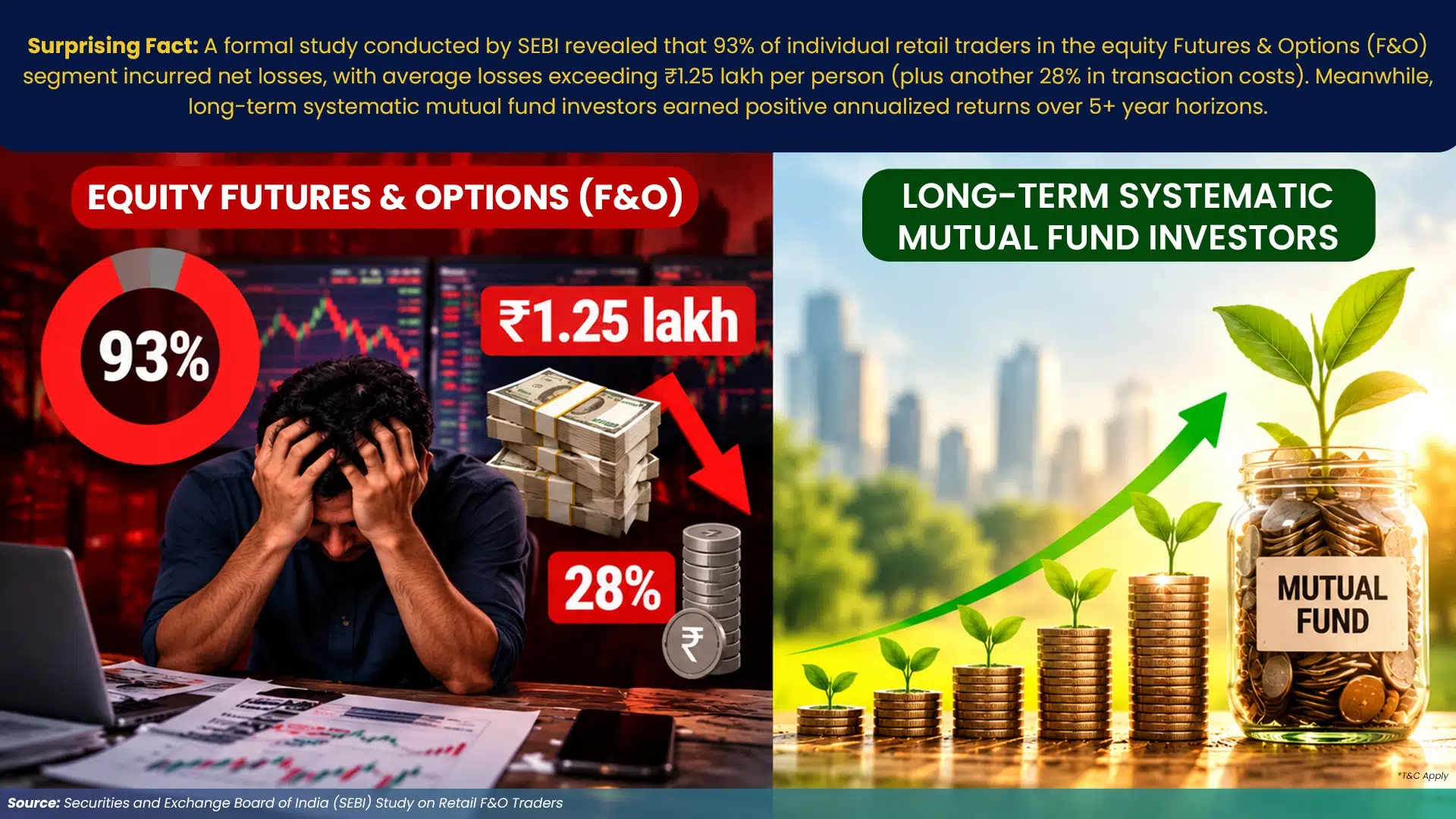
Nobody becomes financially secure by accident. It happens because someone sits down, thinks seriously about their money, and then sticks to a plan for years. That plan is what investment planning really is; it’s the bridge between the salary you earn every month and the wealth you actually want, whether that’s a house, your kids’ education abroad, or a retirement where you’re not stressing over bills. If you leave your money in a regular savings account and do nothing else with it, inflation and taxes will gradually reduce its value over time, even though the number on your passbook keeps going up.
That is why you must develop a plan tailored to your life stage. The strategies required by a 22-year-old who has recently secured their first job, a 35-year-old who is operating a small business, and a 58-year-old who is preparing to retire are all distinctly different. To make this happen the right way, you will have to make sure that every rupee you spend is actually working towards a goal and not just lying there doing nothing.
A real investment plan is one that links your real-life goals paying off debt, funding higher education, buying your first home, building a retirement fund to the right investment for each one, based on how much risk you’re actually comfortable with. This means not investing every time you remember or only trying to save tax in the last week of March.
This guide tells you about the four major types of investment: equity, fixed income, real estate and commodities. It tells you whether you should invest a lump sum or small amounts every month. It tells you how to balance safety, liquidity and long-term growth to keep your money safe, whatever the market is doing.

Investment planning is simply getting out your calculator and figuring out what you want your money to do. Being honest with yourself about how much money you have and how much risk you can handle, then diversifying that money into several different investments so you can meet your goals on time. This is one of the most important parts of financial planning overall, because it specifically deals with growing wealth, protecting what you have and managing risk sensibly.
A random stock tip from a friend, or a viral video you saw last night, is not a strategy. A real plan examines factors such as:
For example, suppose two persons – Priya and Rohit – draw the same salary. Priya deposits all her savings in a regular bank account that pays an interest of 3.5%. Instead, Rohit invests a portion of his money in equity mutual funds every month through a SIP that averages about 12% in the long run. Fifteen years later, Rohit’s money has grown many times more than Priya’s – not because he was lucky, but because he had a plan and stuck to it, while Priya’s savings quietly lost ground to inflation.
Disclaimer: Priya and Rohit are fictional examples used only to illustrate the concept. The returns mentioned are hypothetical, not guaranteed, and mutual fund investments are subject to market risks.
| Stage | What goes on here? |
| 1. Check on your financial health. | Set Investment Goals |
| 2. Set your goals first. | Split them into short-, medium- and long-term goals. |
| 3. Know your time horizon and risk. | Work out how much you can afford to risk and how long you can stay invested. |
| 4. Diversify your money. | Spread it across in stocks, bonds, gold and real estate. |
| 5. Execute and evaluate. | You can start your SIPs or lump sum investments and then rebalance once a year. |
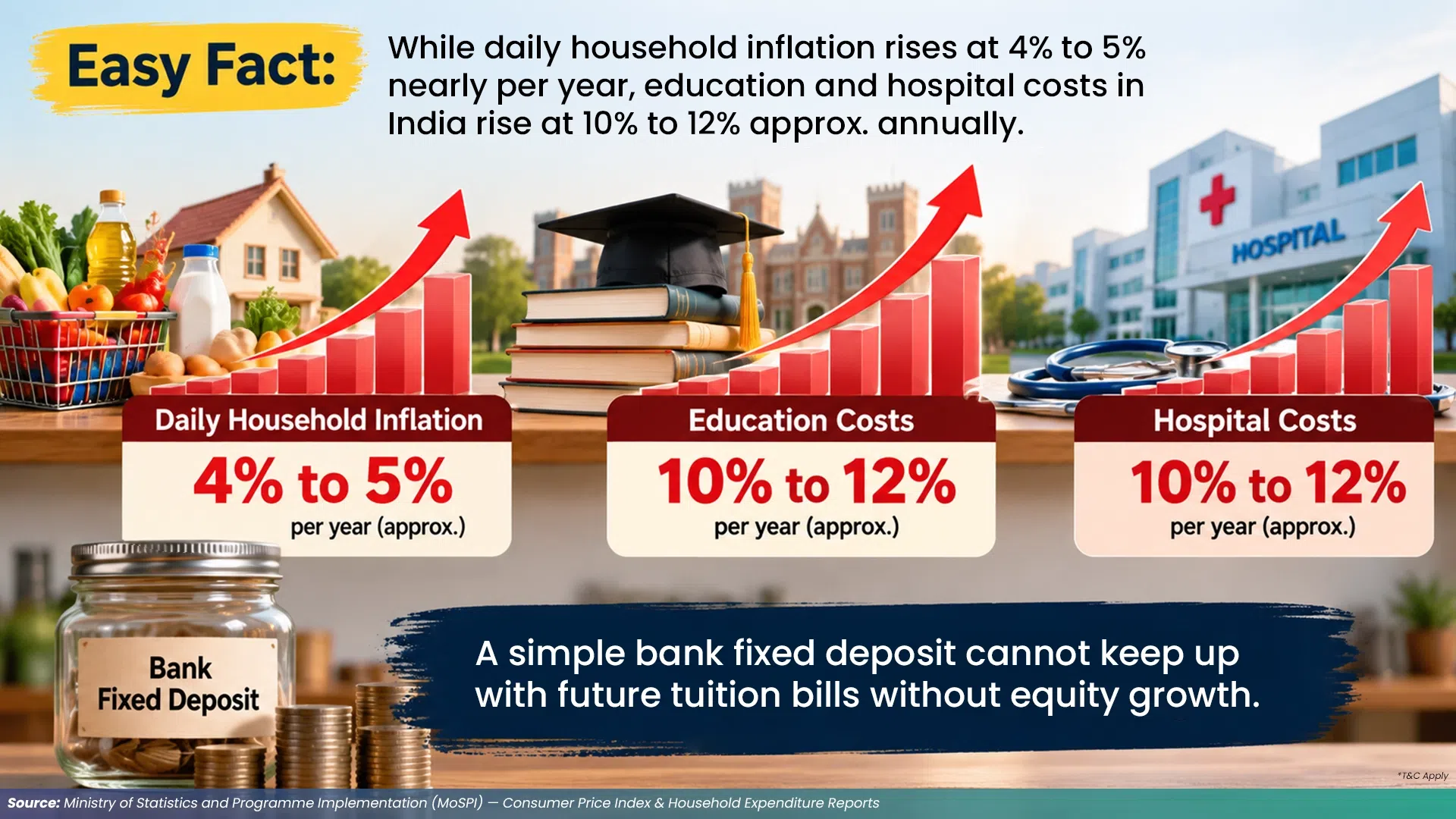
Money in a regular savings account will often lose real value over time, and most people don’t even notice it happening. Technically, if inflation is, say, 6% a year, and your savings account is only paying 3.5%, your money is shrinking every year – even when the balance keeps growing. Here’s what gives you a real shot at beating inflation, rather than just quietly losing to it: Allocating a substantial chunk of your savings to growth assets like equities.
Compounding is when your money makes money, and the sooner you start investing, the more time your money has to grow on itself. Even if you save a small amount regularly each month, over a period of fifteen to twenty-five years it can mount up to an incredible amount.
Example: If you invest Rs 5,000 every month from the age of 25 until 50, you would have more than Rs 90 lakhs, assuming an average annual return of 12 percent. In this case, you would have contributed a total of Rs 15 lakhs of your own money over 25 years.
Disclaimer: This example is hypothetical and for illustration only. Actual returns depend on market performance and are never guaranteed.
They all have a need for money that is ready and available at a moment’s notice – buying your first home, sending your child to college, starting a business, building a retirement fund. Planning for specific goals means you have the cash when the moment arrives, rather than having to sell investments at a loss when the market dips because you’re short on cash.
A smart investment plan in India also factors in tax rules. Products like Equity Linked Savings Schemes (ELSS), the National Pension System (NPS), and Sovereign Gold Bonds (SGBs) let you legally cut down your tax bill while still growing your money so more of what you earn actually stays with you.
Most investment options today fall into one of four broad categories. Knowing where each one fits helps you figure out where your money actually belongs.
| Investment Category | Common Options | Risk Level | Suggested Time Horizon | Best Suited For |
| Equity & Growth Assets | Direct stocks, actively managed mutual funds, index ETFs, ELSS. | Moderately High to High. | 5+ Years. | Long-term wealth creation, beating inflation. |
| Fixed-Income & Debt | Public Provident Fund (PPF), Bank Fixed Deposits, Corporate Debt Funds, Government Securities. | Low to Moderate. | 1 to 15 Years. | Capital safety. Steady income. Backup in an emergency. |
| Balanced & Hybrid Funds | Dynamic Asset Allocation Funds Aggressive Hybrid Funds Multi-Asset Funds. | Somewhat | 3-5 Years Experience. | 3-5 Years Experience. |
| Commodities and Real Assets | Physical Real Estate, REITs, Sovereign Gold Bonds, and Gold ETFs. | High to low. | 3-10+ years. | Diversification, inflation hedge. |
Almost every investor faces this question at some point: should you invest a fixed amount every month or put in a large sum all at once? Both have their place.
| SIP (Systematic Investment Plan) | One-Time Lump Sum | |
| How it works | It automatically takes out a fixed amount every month and invests it. | A lot is going on, all at once. |
| Main advantage | Rupee cost averaging when the prices are low, you buy more units, and when the prices are high, you buy fewer units. | Maximum time to compound, with full market exposure from day one. |
| Best for | People who have a fixed salary per month | Business profits, bonuses, inheritance or sale proceeds |
| Risk in volatile markets | Lower naturally, as spread over time | Higher if it’s right on a market top |
Example: Using an STP for a lump sum: Say you get a ₹10 lakh bonus and want to put it into equity mutual funds, but you’re worried the market’s near a high. Instead of investing it all at once, you park it in a liquid debt fund first, then use a Systematic Transfer Plan (STP) to move a fixed amount — say ₹50,000 — into equity every month. You still get the benefit of rupee cost averaging, even with a lump sum, while cutting down the risk of investing everything right before a downturn.
Disclaimer: This is a hypothetical example only. STP does not eliminate market risk or guarantee returns. Mutual fund investments are subject to market risks.
| Short-Term (Under 3 Years) | Long-Term (5 Years and Beyond) | |
| Main focus | Keeping your money safe and easy to access | Beat inflation and grow wealth |
| Good instruments | Liquid funds, arbitrage funds, high-yield fixed deposits, debt funds of short duration | Equity, flexi-cap mutual funds, real estate, index funds, direct stocks |
| Typical use cases | Emergency fund, planned vacation, saving for a down payment on a house | Children’s Education, Retirement, Generational Wealth. |
Example: Saving for a foreign trip next year? Putting that money into equity mutual funds is risky; a sudden market dip right before your trip could shrink your travel budget. A short-term debt fund or a high-interest fixed deposit is a far safer bet. But if you’re saving for your child’s college fifteen years from now, equity mutual funds are a better choice, because you have enough time to weather any short-term fluctuations.
Disclaimer: This example is for illustration only and doesn’t count as investment advice. The right choice depends on your own goals, risk appetite, and market conditions.
Finkeda Authorised Partner Axis Securities
With thousands of mutual fund schemes, changing tax regulations and market fluctuations, planning investments independently can feel overwhelming. Building a well-structured portfolio aligned with your financial goals requires careful analysis, an understanding of risk and informed decision-making.
That is where Finkeda, an authorised partner of Axis Securities, can help you explore investment opportunities and navigate your financial planning journey.
Whether you are considering a monthly Systematic Investment Plan (SIP), a lump sum investment or planning for long-term goals such as retirement, Finkeda aims to make investment options more accessible and help you make informed financial decisions.
Take a thoughtful approach to your financial future by understanding your goals, investment horizon and risk appetite before choosing suitable investment options.
Start planning your financial future with Finkeda.
It’s about matching your financial goals, your monthly cash flow, and your comfort with risk to the right mix of investments: equities, debt, real estate, and gold so your wealth grows steadily and safely over time.
It protects your money from losing value to inflation, lets you benefit from long-term compounding, makes sure cash is ready when you need it for big life events, and helps keep your tax bill as low as legally possible.
Start by working out what’s left over each month after expenses, and set up an emergency fund first. Then sort your goals by timeline – short, medium, and long-term – figure out how much risk you can take, decide on your equity-to-debt split, automate your investments through SIPs, and review everything once a year.
An SIP automatically invests a fixed amount into mutual funds every month. It builds discipline, removes the temptation to try and time the market, and lowers your average cost per unit through rupee cost averaging.
Short-term planning for goals under 3 years away is about keeping your money safe and accessible through fixed deposits and debt instruments. Long-term planning for goals 5 years or more away is about maximising growth by riding out some market volatility through equities and other growth assets.
Disclaimer: Mutual fund investments are subject to market risks. Please read all scheme-related documents carefully before investing. The examples used in this article are hypothetical and for illustrative purposes only and do not constitute investment advice.
This blog is intended solely for educational and informational purposes. Content reflects data at time of publication and may not accurately reflect current premiums, terms, or regulations. Readers are encouraged to confirm the accuracy and relevance of the data before making any significant decisions.
Share :
Like:
0