
Sep. 04, 2026

8 Min read

Insurance

Share :


Understanding risk in a practical way is essential for long-term financial security. When you look closely at your finances, it becomes clear that life insurance and health insurance solve two entirely different problems, even though people often group them together when they first start planning. Life insurance provides financial protection for your dependents if you are no longer there to support them. Health insurance shields your existing savings from unexpected medical expenses during your lifetime. Finkeda’s digital ecosystem enables individuals and families to manage their entire insurance portfolio in one place, hopping between personal life insurance policies, individual health plans and corporate group medical covers without having to jump across multiple platforms just to compare what is actually available to them. This guide has been created to outline the key differences between life and health insurance in simple terms, to explain how each type of policy works in practice when it is needed most, and to show how the two work together as part of a single, fairly complete financial plan through Finkeda.
This comparison guide looks at the different ways life insurance and health insurance protect a family’s financial future. It explains how a life insurance payout is an income replacement mechanism for the people left behind when a primary earner dies, how a health insurance policy protects savings from the ever-increasing cost of medical care, and more. In addition, the guide compares individual retail health plans with corporate group health insurance that many employees already have through work, touches on the tax deduction benefits available under Section 80C and Section 80D, and closes with a few practical steps for choosing the right combination of coverage. As with any content regarding insurance and tax rules, this guide is designed to offer general information rather than personalized financial advice. Readers are advised to confirm current rules and product details with Finkeda or a licensed advisor before making a final decision.

Safeguarding your family against the unexpected is essential, but assuming life and health insurance are interchangeable creates serious gaps in your financial security. While both serve as vital risk-protection tools, they address fundamentally different needs: life insurance protects your family’s financial future by providing a guaranteed lump-sum payout to your nominees to replace lost household income, whereas health insurance protects your existing savings from expensive medical treatments while you are living. Whether through cashless hospital settlement or reimbursement for surgeries, admissions, and diagnostic care, health insurance manages the immediate cost of healthcare today, while life insurance guarantees long-term stability for your dependents tomorrow, making both policies critical components of a complete safety net.
| Feature / Parameter | Life Insurance | Medical Insurance |
| Primary Goal | Financial cover for dependents in the event of the policyholder’s death | Protection against growing medical expenditures, treatment costs, hospital fees |
| Main Beneficiary | Nominees / Dependants (family member) | The policyholder and covered family members when living |
| Payment Basis | A fixed sum promised on death of the insurance holder | Indemnity based on real hospital costs or a daily set amount |
| Payment System | Lump sum distribution to beneficiaries (or structured income stream) | Cashless settlement to network hospitals directly or bill reimbursement. |
| Policy Duration | Does not pay for hospital stays, operations or basic medical care | Covers doctor fees, ICU charges, surgeries, diagnostic tests, and pre/post hospitalisation expenses |
| Tax Advantages | Exemptions under Section 10(10D); deductions under Section 80C | Deductions under Section 80D for self, spouse, children and parents |
Where you decide to allocate your premium budget will depend largely on your existing financial commitments, your family situation and any benefits your employer may already be providing. Rather than looking at it as a choice between one or the other product, it usually works best to consider both needs together with a few fairly simple criteria.
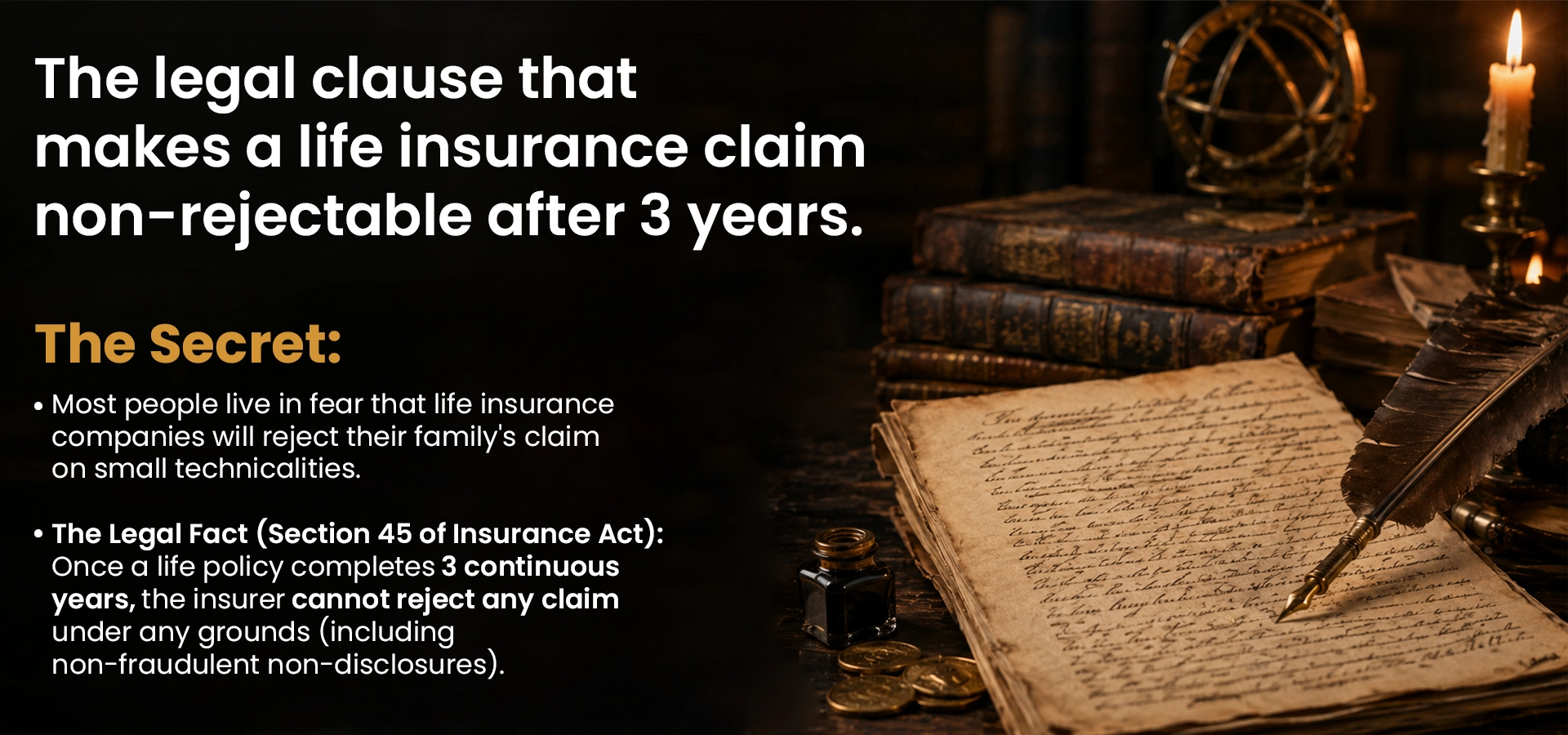
If you have a spouse, children or elderly parents who depend directly on your monthly income for housing, education or loan repayments, then getting life insurance through Finkeda is generally the first priority worth addressing, because not having that income would result in an immediate, fairly severe gap.
If an unexpected medical emergency or multi-day hospital stay would practically compel you to liquidate assets or take out a high-interest loan only to meet the expense, then acquiring individual or family health insurance coverage becomes just as critical, if not more so, in the near term.
If your company already provides group health insurance through a platform such as Finkeda, then you are likely already enjoying immediate coverage with no waiting period attached, which is genuinely valuable, but it is worth remembering that this kind of cover usually ends the moment you change jobs or retire, which is precisely why adding an independent personal health policy alongside it tends to guarantee a more lasting form of protection.
Relying on a single form of insurance sometimes leaves a substantial vacuum in a family’s overall financial strategy, and the concurrent existence of life and health coverage provides a sort of double layer of security that each product cannot provide in isolation.

A serious illness can cost several lakhs of rupees as hospital charges alone. This is where health insurance gets its value from. It takes care of the bills directly and keeps a family’s savings and long-term investments largely intact, instead of being forced to liquidate them under pressure.
In the event that the breadwinner in a household dies, it is the life insurance money that replaces the salary, and this often makes a big difference in whether a household can continue to operate as normal and whether any debts are paid off without additional stress.
It also tends to maximise the annual tax savings available under Indian tax law, as premiums paid toward life insurance generally qualify for deductions of up to 1.5 lakh rupees a year under Section 80C, while amounts paid for individual or family health insurance qualify for a separate deduction of up to 25,000 rupees, or up to 50,000 rupees for senior citizens, under Section 80D.
The death of a breadwinner results in a fairly severe amount of financial stress as well as the emotional grief involved, and life insurance is really designed to act as a direct financial replacement during exactly this kind of period, giving the surviving family a genuine buffer while they adjust.
Amit (34) | ₹2.2L monthly salary | ₹65L home loan | ₹18L savings.
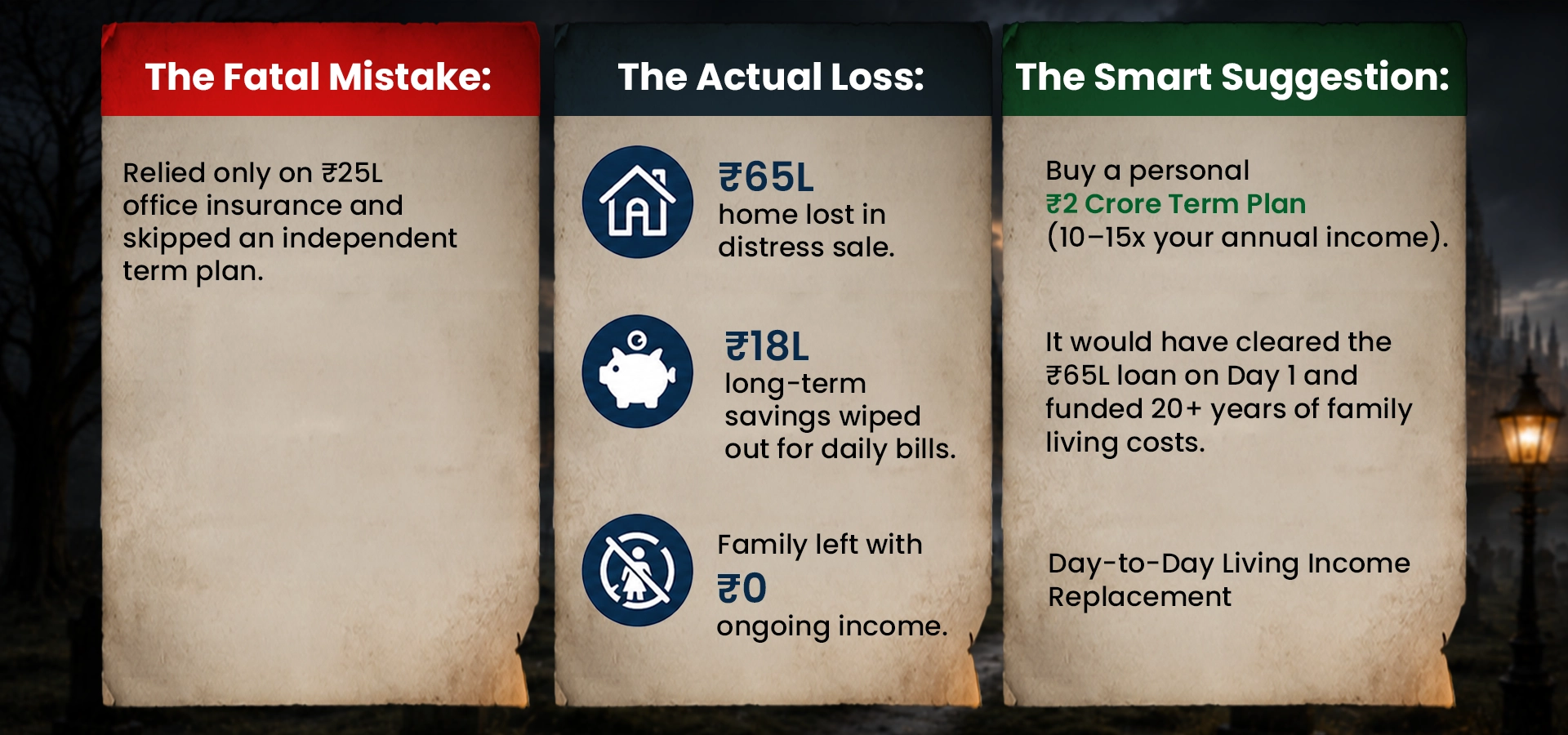
A life insurance policy provides money to replace the loss of regular income. This benefit typically allows surviving family members to continue paying rent, buying groceries, paying utility bills, and maintaining a similar standard of living without everything falling apart all at once.
Whether it’s a home loan, vehicle financing, or personal loan, liabilities don’t just disappear when a borrower passes away. In most cases, beneficiaries can use the tax-free proceeds of a life insurance policy to pay off these debts in a relatively short period of time, avoiding situations such as bank foreclosure or the forced sale of family assets.
Life insurance also helps keep longer-term milestone goals on track, such as funding a child’s higher education or eventually helping set up a business for them, because these plans don’t have to be abandoned just because the family is now facing unexpected financial uncertainty.
Life insurance isn’t one size fits all – it depends on what stage of life you’re in and what you’re truly attempting to protect. The majority of individuals like to start with term insurance because of the cheap premium and huge cover, whereas whole life insurance remains active throughout the policyholder’s life and is frequently preferred for legacy planning. Endowment plans and ULIPs combine protection with savings or market-linked investments; money-back policies introduce periodic liquidity in the endowment structure, child insurance plans are structured to fund a child’s education or wedding, and retirement plans convert a working-years corpus into a steady post-retirement income. How each of these works is broken down in the table below.
| Type | Main idea | Trigger of Payout |
| Term Insurance Life Insurance | Pure protection, high cover, low premium | Death during the term only (no maturity payout unless a Return of Premium option is selected) |
| Whole life insurance | Coverage up to 99-100 years of age | Death benefit paid out when it occurs, at any time during the life of the policyholder |
| Endowment Schemes | Covered by insurance and strict in saving | Sum assured on death, or lump sum plus accrued bonus on maturity |
| Unit Linked Insurance Plans (ULIPs) | Market-linked investment with life insurance cover | Death benefit or fund value at maturity/withdrawal |
| Refund Policies | Endowment style with periodic liquidity | Fixed percentage payable at regular intervals, balance payable at maturity |
| Insurance Plans for Children | Funds a child’s education or marriage, with a Waiver of Premium benefit | Milestone payments are not stopped even if the parent dies |
| Pension & Retirement Plans | Builds a corpus during working years for post-retirement income | Converted to regular annuity payments after retirement |
Over the last few years medical inflation has consistently outstripped average income growth, and modern surgical treatments, specialist care and extended stays in intensive care can, with little warning, strain the savings of even a fairly healthy household.
Health insurance policies generally connect policyholders to a fairly wide network of empanelled hospitals and this arrangement allows patients to access quality treatment in a genuine emergency without having to arrange a large upfront cash payment before care can even begin.
The costs of medical care are usually far greater than just the rent on a room. A reasonably comprehensive modern health insurance policy will typically cover pre-admission diagnostic tests, specialist consultation fees, the surgery itself, day care procedures, ambulance charges and some of the recovery care needed after discharge.
One of the most common misconceptions is that life insurance on its own offers comprehensive protection. However, the truth is that the two policies are designed to cover different financial risks in their entirety. It is not possible for life insurance to pay for medical expenses. The majority of life insurance policies do not begin to pay out until after the insured person has passed away. Therefore, if you ever become ill or injured and find yourself in the hospital, a life insurance policy will not pay for the operation or reimburse you for the costs associated with the hospital.
Yes, it’s usually a good idea to have both policies in place, since they cover quite different types of risks, with life insurance protecting your family from the loss of income and health insurance safeguarding your funds from medical expenditures.
For guidance on choosing the right insurance, you can contact the Finkeda team directly. Their assistance team can help you understand the available options and answer your queries.
If your family relies on your income, getting term life insurance is generally more urgent, but you also need to get a basic health plan as soon as possible to guard against unexpected medical costs.
No. Critical illness riders attached to a life insurance policy usually pay a one-time, lump-sum benefit for a specific listed condition, but not for routine hospital admissions, room rent, day care surgeries, or the pre- and post-hospitalization expenses that a standard health insurance policy is designed to tackle.
This guide offers general information on how life insurance and health insurance typically work in India. This should not be taken as personalised financial or tax advice. Policy terms, tax rules and product availability can change, so it’s wise to check the details with Finkeda or a licensed insurance advisor before you make a final decision.
Disclaimer: This article is for general informational purposes only and should not be considered personalised financial, insurance, or tax advice. Policy terms, coverage, premiums, tax rules, and product availability may vary and are subject to change. Please review the policy documents carefully and consult Finkeda or a licensed insurance advisor before making an insurance decision.
Share :
Like:
0