
Sep. 16, 2026

11 Min read

Insurance

Share :


Most of us only think about insurance when something has gone wrong. A car gets scratched, a bike gets nicked or a hospital bill shows up out of the blue. General insurance is all about that safety net. It’s the kind of insurance that protects your car, bike, house, health & even a trip abroad. In life insurance, the policy pays you a pre-decided lump sum.
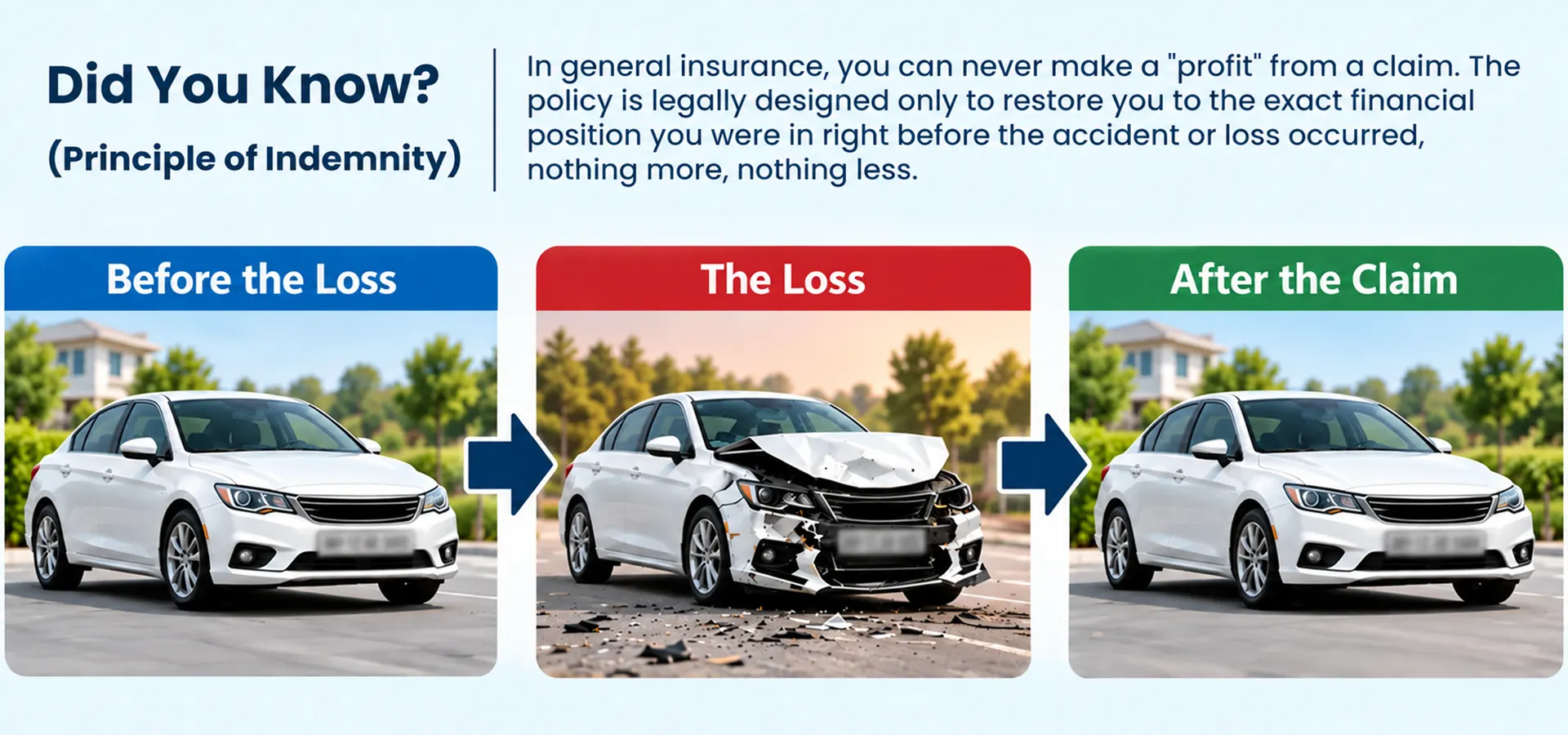
In any other insurance policy you are paid for the loss itself. This is the whole idea of the principle of indemnity if the insured item is damaged, stolen or lost. You get paid for what actually happened, no more, no less.
You get paid for what really happened, nothing more, nothing less. And nowadays, people in smaller towns are often finding this information through banks, agents and names like Finkeda, as well as through more traditional routes. In this article, we will see what is meant by general insurance, what the types of general insurance available in India are, how it differs from life insurance, how car insurance, bike insurance, and home insurance actually work, and what determines your premium.
General insurance is a broad term for all types of insurance that aren’t life insurance. It covers your car, two-wheeler, home, health, and travel plans. Unlike life insurance, which provides a fixed payout, general insurance reimburses you for your actual financial loss up to the insured amount.
The Insurance Regulatory and Development Authority of India (IRDAI) regulates this sector by setting rules for claim settlements, insurer solvency, and policyholder protection. Most general insurance policies are renewed annually, and missing the renewal deadline may result in the loss of benefits such as a no-claim bonus.
Car insurance covers accidents, theft, and third-party liabilities, while two-wheeler insurance provides similar protection, with third-party coverage being mandatory by law in India. Home insurance protects both your property and belongings against risks such as fire, theft, and floods. In many towns, people learn about and access these insurance products through banks, agents, and trusted platforms like Finkeda.
The premium you pay depends on factors such as the sum insured, the age and condition of the asset, its location, your claims history, and any add-on covers you choose. Understanding what general insurance is, what it covers, and how it works helps you avoid paying for unnecessary coverage while ensuring your valuable assets are adequately protected.
Life has a way of throwing curveballs. A fender-bender on your commute. A stove fire that spirals out of control. Your bike is gone from right outside your gate. Or just a sudden illness that turns into a hospital bill you weren’t expecting. General insurance exists precisely for moments like these; it’s built to absorb the financial hit so you don’t have to. In practice, it’s a category of insurance covering everything except your life itself: your vehicle, your home, your health, and your travel, all sitting under one shared set of rules and regulations. Here, we’ll get into what general insurance really means, the types you’ll find in India, how it stacks up against life insurance, and specifically how it protects your car, your bike, and your home.
General insurance, sometimes called non-life insurance, is built to cover you against loss from damage, theft, accidents, or legal liability. What it doesn’t touch is anything to do with human life or how long someone lives; that’s life insurance’s territory. In plain words, general insurance meaning boils down to this: you pay a premium, usually once a year, and the insurer promises to make good on your actual loss if something insured goes wrong within whatever limits and exclusions are written into the policy. It’s worth remembering that this type of insurance isn’t a savings product. If nothing happens during the year, you don’t get the premium back; you were simply paying for protection against something that, thankfully, didn’t occur.
There are three things worth knowing about any general insurance policy before you sign up: the sum insured (the ceiling on what the insurer will pay), the premium (your cost for that protection), and the exclusions (the specific situations the policy won’t cover normal wear and tear, say, or damage caused while driving drunk, in the case of a car).
General insurance is designed to protect a wide range of assets and financial risks that individuals and businesses may encounter. Since different assets face different types of risks, there are several categories of general insurance, each serving a specific purpose.
Motor insurance provides financial protection for cars, bikes, and commercial vehicles against unexpected events. It helps cover repair or replacement costs if an accident, theft, fire, or natural disaster damages your vehicle. It also protects you against third-party liabilities if your vehicle causes injury or damage to another person or their property.
Motor insurance is available in two forms:
Health insurance helps reduce the financial burden of medical emergencies by covering hospitalization expenses, surgeries, medical treatments, and other eligible healthcare costs. Depending on your needs, it can be purchased as:
Having health insurance ensures you receive quality medical care without worrying about unexpected healthcare expenses.

Home insurance protects one of your most valuable assets—your home. It generally provides two levels of protection:
Home insurance helps reduce financial losses caused by unforeseen events that may affect your property or possessions.
Travel insurance is designed to protect travelers against unexpected situations before or during their journey. Depending on the policy, it may cover:
Many countries also require travel insurance as part of their visa application process, making it an essential part of international travel planning.

Fire insurance provides financial protection for residential and commercial properties against losses caused by:
Businesses widely use it to protect factories, offices, warehouses, machinery, stock, and other valuable assets from fire-related damage.
Marine insurance protects goods and cargo while they are being transported by:
It covers financial losses that may occur due to damage, theft, or accidents during transit. Marine insurance is especially important for businesses involved in import-export, logistics, manufacturing, and supply chain operations.
Each category of general insurance comes with its features, coverage limits, waiting periods, exclusions, and policy conditions. Therefore, there is no single policy that suits everyone. The right insurance depends on the type of asset you want to protect, the risks involved, and your financial requirements.
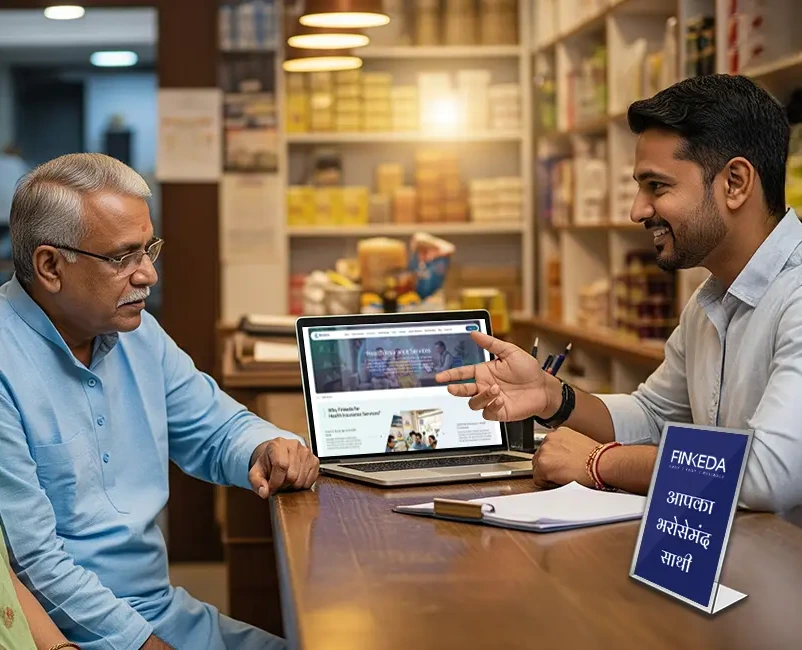
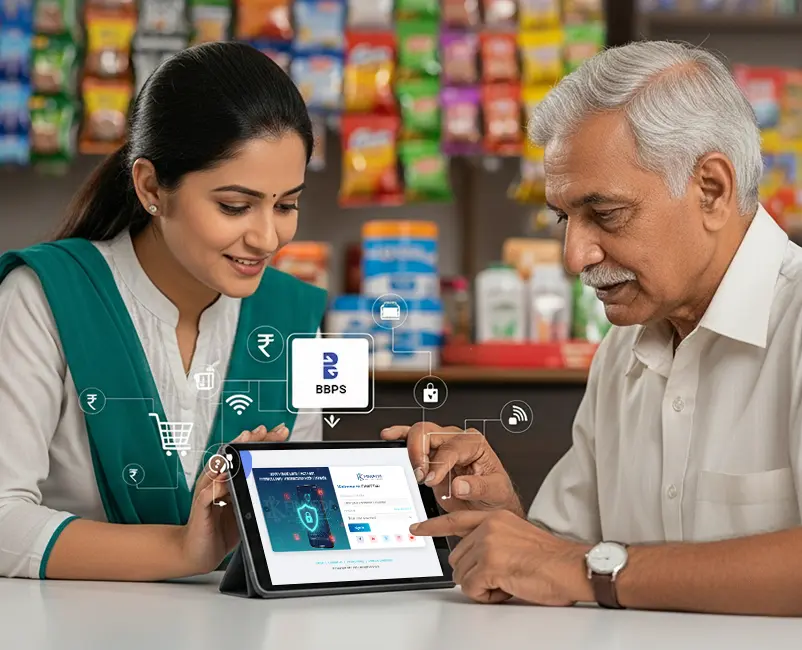
Today, many first-time buyers, especially in smaller towns, learn about and access these insurance products through banks, insurance agents, and trusted financial service providers like Finkeda, making insurance more accessible, understandable, and convenient.
The real difference lies in what you’re protecting and how the payout is made. Life insurance is linked to a person. The sum assured is paid as a one-time amount to the nominee upon the policyholder’s death. Many life insurance policies also offer a maturity benefit if the policyholder survives the policy term. It is a long-term commitment, typically lasting 10, 20, or even 30 years, and the payout amount is fixed from the beginning, regardless of the actual financial situation at the time of the claim.
General insurance works differently. It covers tangible assets and specific events, and the payout is based on the actual financial loss suffered, following the principle of indemnity, up to the sum insured. There is no fixed payout amount. For example, a car insurance claim is settled based on the actual repair cost or the vehicle’s depreciated value. General insurance policies are typically renewed every year, and if you miss the renewal, the coverage simply expires. Unlike some life insurance policies that may build cash value over time, general insurance does not accumulate any monetary value or benefits beyond the policy period.
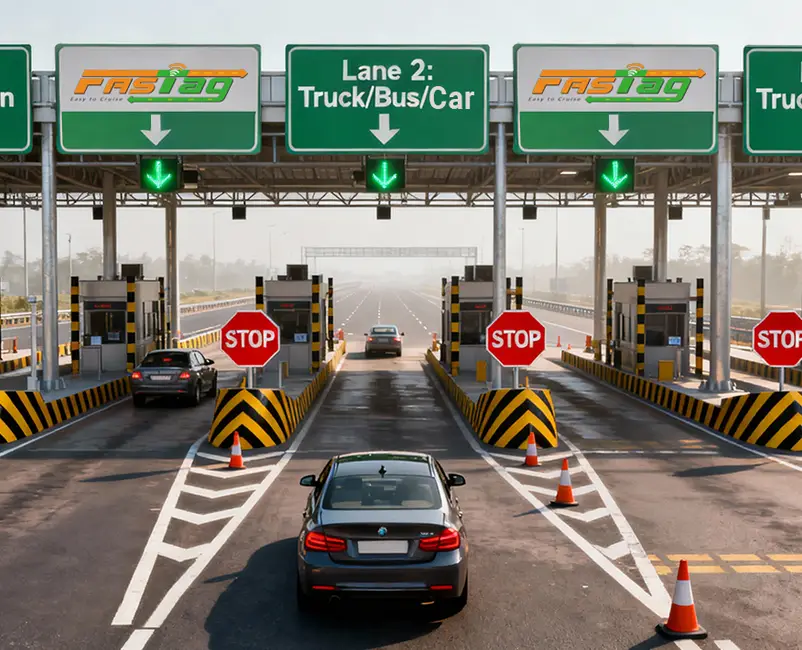
Car insurance is the four-wheeler version of motor insurance, and in India it comes in third-party only or comprehensive.
In India, car insurance is the four-wheeler version of motor insurance and is available in two types, third-party only or comprehensive.
Here is a typical list:
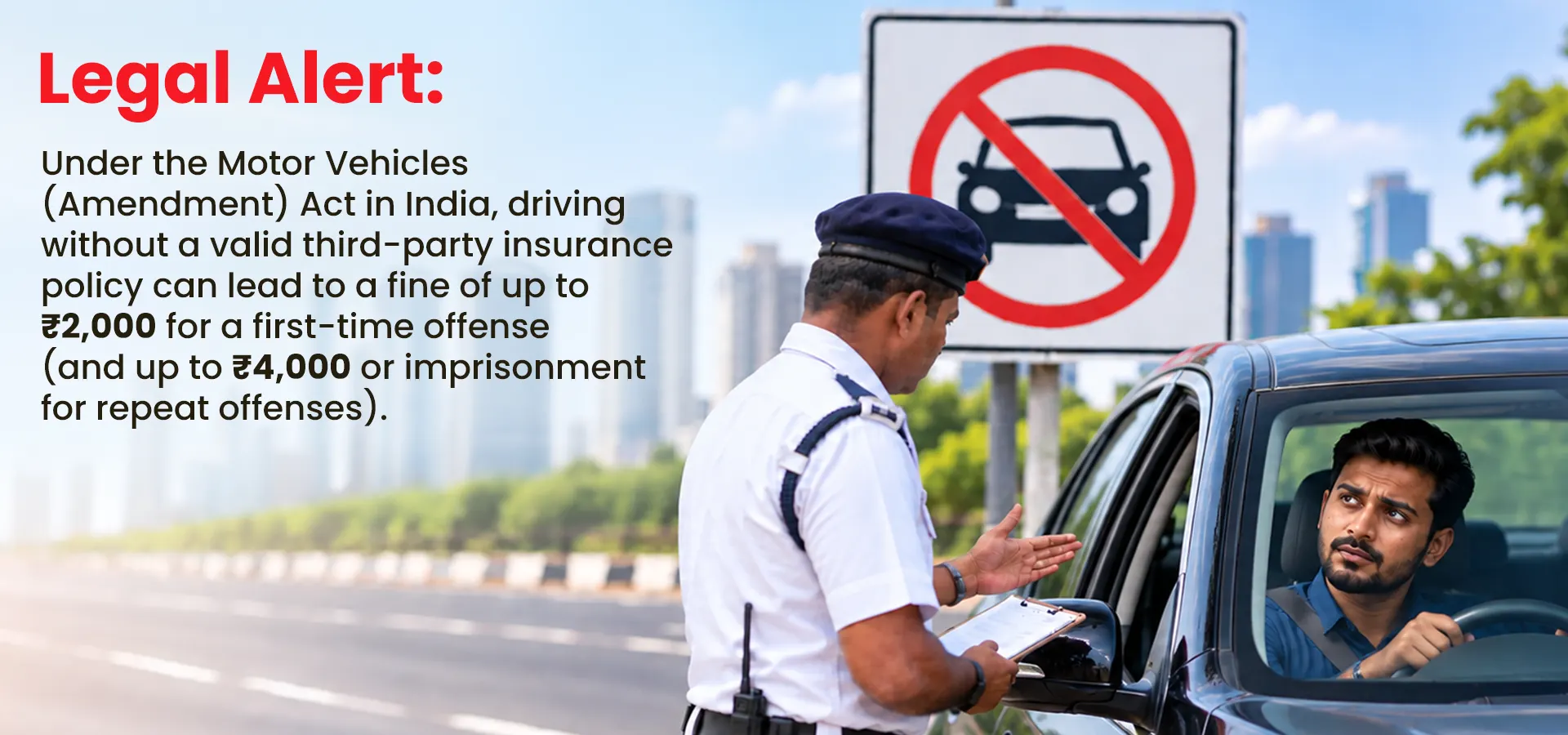
The Motor Vehicles Act makes third-party liability coverage mandatory and not optional. It pays for damage or injury you cause to another person, vehicle or property if you’re responsible. This is the legal minimum to drive in India alone. Own damage cover is included with a comprehensive policy, and it is what pays for repairs to your own car after an accident, fire, flood or storm. Theft cover is provided if your car is stolen and not recovered after a specified period, usually paying out the Insured Declared Value. Then there are the add-ons: zero depreciation cover so parts aren’t discounted in a claim, engine protection if you live in a flood-prone area, roadside assistance and return-to-invoice cover for total losses.
The idea behind car insurance is that you give the financial risk of an accident, fire or theft to someone else (the insurer) rather than keeping the risk yourself. Getting the IDV right, picking sensible add-ons and understanding how your No Claim Bonus works (that discount you earn for staying claim-free) all add up over time, both for and cost. Finkeda are part of everyday life alongside banks and online options, making it easier to access this cover away from the big cities.
The concept of bike insurance or two wheeler insurance is the same as that of car insurance, only it is made for motorbikes and scooters. It generally covers damage from accidents, fire or natural disasters such as floods and cyclones, theft (covering the bike’s Insured Declared Value) and third-party liability, which is not optional by law. Plus, you can generally add personal accident cover for the rider and any pillion passenger, zero depreciation cover and consumables cover.
Why does this matter so much for riders specifically? Because there’s no metal frame, no airbag, and no seatbelt, a rider is simply more exposed in an accident than someone in a car. India’s Motor Vehicles Act makes at least third-party cover mandatory, and skipping it isn’t just a financial risk; it can mean fines or even having your bike impounded. In smaller towns, riders increasingly get this sorted, buying, renewing, or just getting it explained in a language they’re comfortable with through Finkeda rather than making a special trip to a branch or wrestling with an app alone.
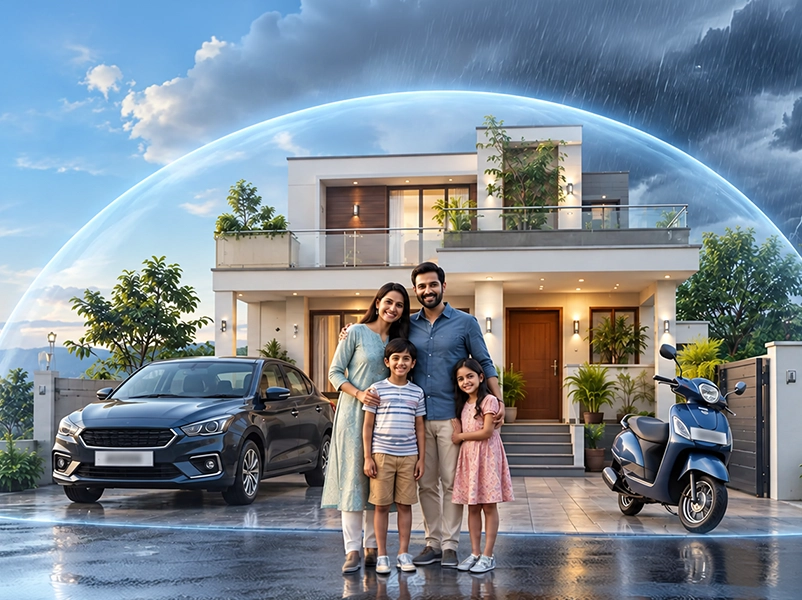
Home insurance is really about two things: the physical structure you live in and everything you’ve filled it with. It usually comes in two pieces that are bundled together. Structural coverage includes fire, floods, earthquakes, storms, or outright collapse and is priced on what it would cost to rebuild, not what the house would sell for. The contents cover protects what’s inside: furniture, electronics, jewelry, and appliances against theft, burglary, or damage from anything the policy covers. Some policies also cover additional living expenses, which would cover a temporary place to stay if your home becomes unlivable after something like a serious fire.
Most people’s biggest possession is their house, and home insurance is really just about making sure a fire, flood, or break-in doesn’t wipe that out in one awful afternoon. And yet, home insurance is one of the most skipped general insurance products in India, and not because they don’t need it, but most people just haven’t heard enough about it.
That is changing slowly, partly due to platforms like Finkeda. Since people already come to Finkeda for their banking and financial needs, it becomes easier for them to learn about and access basic home coverage in passing.
There are a few things that determine what you actually pay for a general insurance policy. Learning these can help you get more value for your money without cutting the coverage you really need.
The most obvious is the sum insured. Insure for more and the insurers’ maximum liability increases; therefore, so does the premium. It also depends on the age and condition of whatever you are insuring.
An older car, bike, or house is usually pricier to insure because the risk and cost of repairs or maintenance increase over time. Location is also important. Flood-prone areas, high-theft neighborhoods and disaster-prone regions typically have higher premiums because insurers price based on claims in the region. Your own claim history is very important make frequent claims and your premium may increase at renewal; have no claims and you normally receive a no-claims bonus which lowers the cost. Add ons also bump up the price but for good reason things like zero depreciation or personal accident cover really add to what you are covered for. And for health insurance (and some car policies), your own profile age, existing health conditions and driving record also feeds into the number.
It’s much easier to find the right balance once you understand what’s really behind your premium: enough coverage to be meaningful, without paying for things you don’t need or leaving something valuable dangerously exposed. It’s often easier to find that balance with someone walking you through it in plain language. Like Finkeda.
General insurance, or non-life insurance, protects you against financial loss from damage, theft, accidents, or liability on things like your car, bike, or home—everything, basically, that isn’t tied to human life. It pays out based on your actual loss, not a fixed amount, and runs on annual policies that need renewing.
The main types of general insurance are motor insurance, health insurance, home insurance, travel insurance, fire insurance, and marine insurance, each designed for a different asset or risk and with its terms and conditions.
Life insurance pays a fixed sum on death or at maturity and can run for decades. General insurance reimburses your actual loss on a specific asset or event, capped at your sum insured, and must be renewed every year.
It combines mandatory third-party liability cover with optional own-damage and theft cover, plus add-ons like zero depreciation and roadside assistance that reduce what you pay out of pocket during a claim.
It covers accidental damage, theft, and third-party liability, with add-ons like personal accident cover available. This matters because riders face greater exposure in accidents than car occupants, and at least third-party cover is legally required in India.
It covers the structure of your home against fire, floods, and earthquakes and your belongings, furniture, electronics, and so on against theft or damage, with some policies also covering temporary living costs if the home becomes unlivable.
Your sum insured, the asset’s age and condition, its location, your claim history and no-claim bonus, and any add-ons you’ve chosen all feed into the final premium.
Disclaimer: The information presented in this article is published strictly for educational and informational awareness and does not constitute formal insurance underwriting, financial advice, or a legal recommendation. Policy inclusions, coverage ceilings, exclusions, premium calculations, waiting periods, and deductible structures differ across insurance companies and are subject to the terms and conditions outlined in the respective policy contract, as well as prevailing Insurance Regulatory and Development Authority of India (IRDAI) guidelines. Third-party liability insurance is mandatory under the Motor Vehicles Act, 1988 (and its subsequent amendments). References to digital distribution or financial facilitator platforms are illustrative of the evolving financial distribution ecosystem and do not constitute an endorsement, solicitation, or warranty of insurance claims or service efficacy. Readers and prospective buyers must review the official Policy Wordings, Key Feature Documents, and Schedule of Charges issued by the respective licensed insurer prior to purchasing or renewing any insurance product.
Insurance is the subject matter of solicitation. For more details on benefits, exclusions, limitations, terms, and conditions, please read the sales brochure/policy wording carefully before concluding a sale.
Share :
Like:
0